
A credit union's data-loss rule looks for account numbers in uploads, but decryption is off, so matching files still leave. What must change for that identity?
Select an answer to reveal the explanation.
Short Explanation
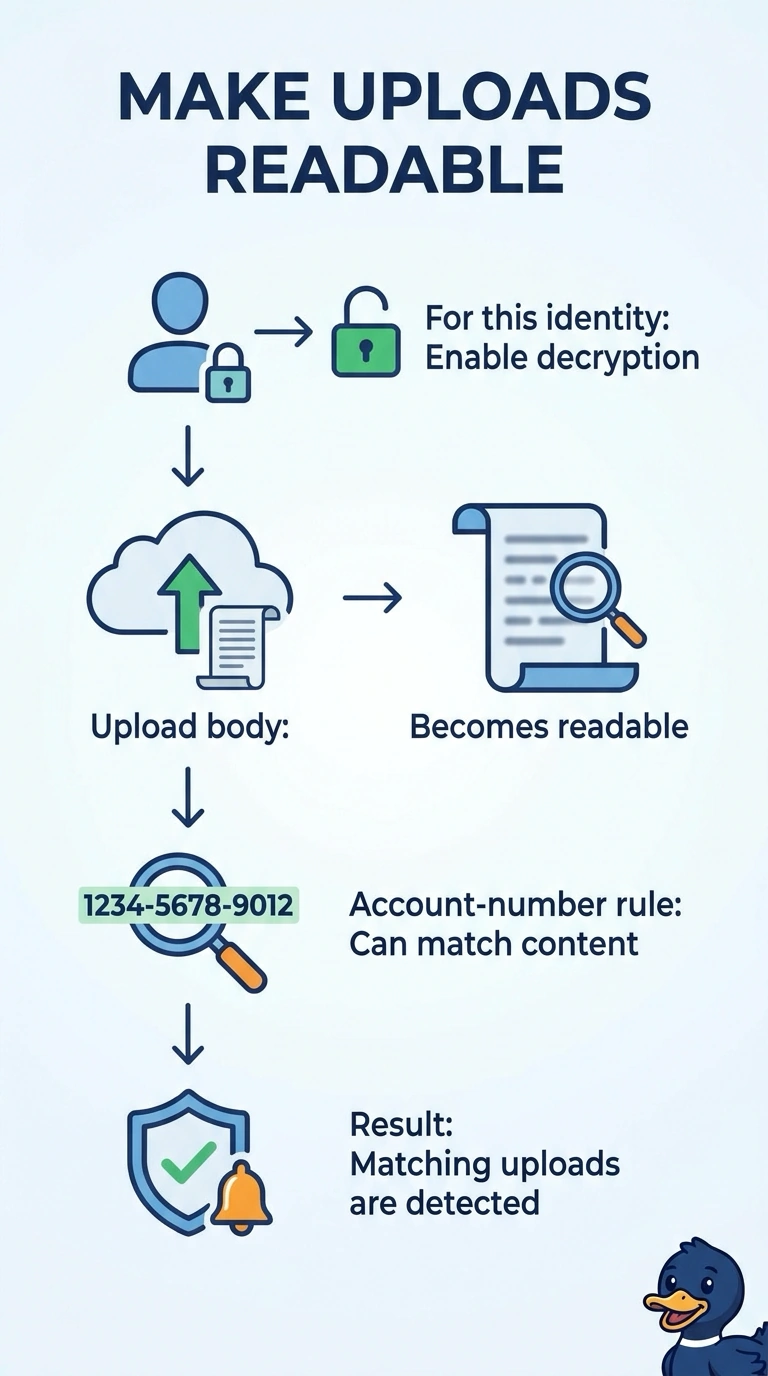
A sealed envelope will not trip a scanner that is forbidden to open the mail. You enable decryption for that identity so the upload body is readable and the account-number rule can match. A name-service block sees a name, not the numbers inside the file.
Full Explanation
The rule is written to match account numbers in the upload body. With decryption off, that body is invisible, so the match cannot fire. You enable decryption for that identity so the upload body is readable and the account-number rule can match the content. The choice to leave decryption off and match only the destination name, treating the upload body as something the content rule does not need, abandons the content match and would treat every file to that destination the same. The choice to replace the content rule with a DNS block of the destination name, which can see the lookup but not the uploaded body, moves the decision to a name, and DNS does not show the file body or the account numbers. The choice to switch the control to a quarterly discovery scan of file shares, which inventories data at rest and does not stop this live upload, replaces an inline rule with discovery, which is an inventory rather than a block of today's upload. Exam caveat: a category that is left encrypted on purpose limits what file inspection can do, and decryption has to be on or the upload body stays invisible. Operational check: confirm decryption is enabled for this identity, repeat a test upload that contains a canary account number, and verify the rule matches the body.