
An insurance office must allow a card-number classification to the official records site and block that same classification from personal storage. Non-sensitive transfers to personal storage should remain allowed. How should the rules be built?
Select an answer to reveal the explanation.
Short Explanation
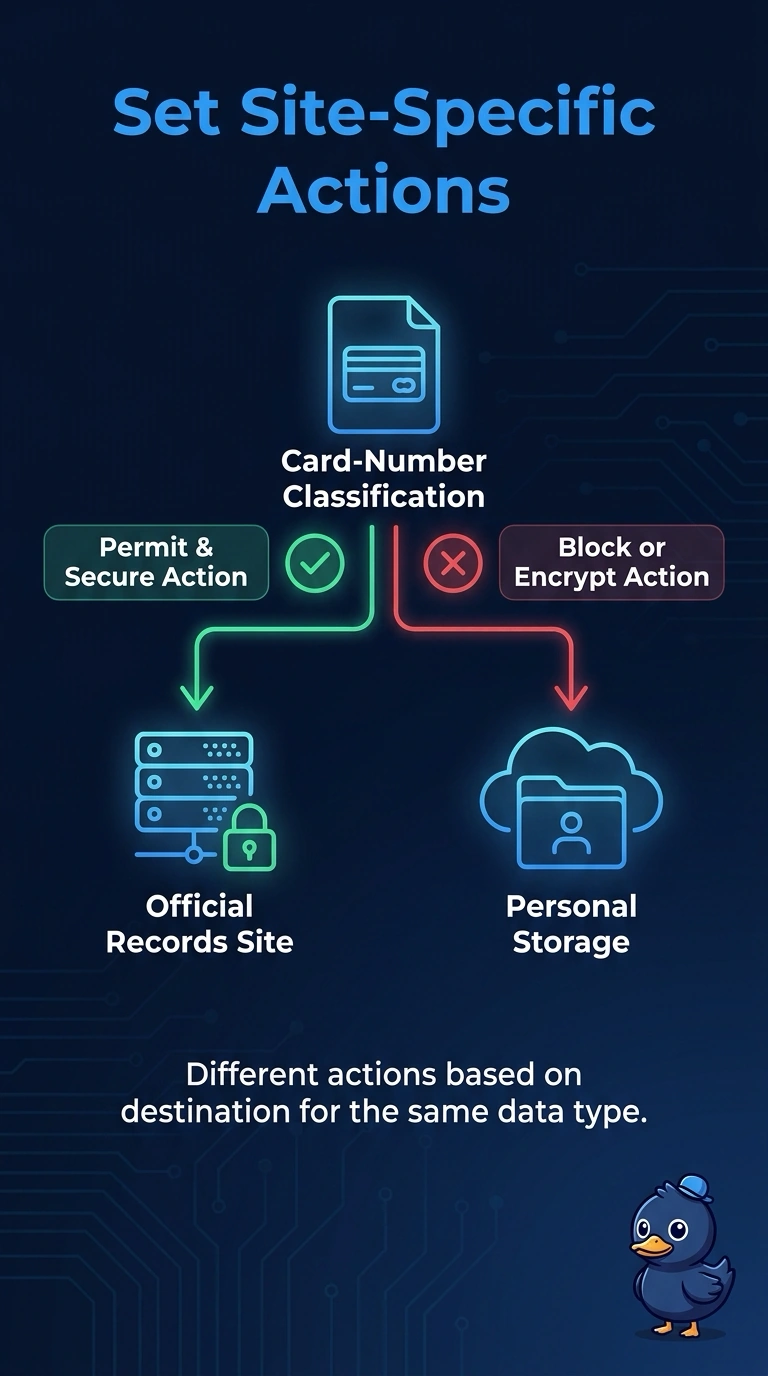
The same rubber stamp can clear one loading dock and stop another, if you bother to name the docks. You keep the card-number classification and apply a different action for the official records site than for personal storage. Blocking that classification everywhere also blocks the records site you still need.
Full Explanation
The sensitive content is the same in both cases, and the destination is what changes the action. You keep the card-number classification and set a different action for the official records site than you set for personal storage. That preserves a match on the card numbers and still lets the official records site receive them. A single rule that blocks the card-number classification to every destination, including the official records site the office must still use, meets the block and breaks the allow. The choice to drop the content classification and block the personal-storage application for every file, whether or not a card number is present, stops non-card files and no longer expresses the card-number requirement. The choice to allow both destinations for the time being and schedule a discovery inventory to note the copies after they have landed records the copies later, and discovery is not an inline block. Because non-sensitive transfers to personal storage stay allowed, the block is classification-specific and scoped to personal storage. Exam caveat: destination and classification are separate parts of the rule, and changing one does not require throwing away the other. Operational check: upload a canary card number to the official records site and confirm it is allowed, then upload the same marker to personal storage and confirm it is blocked.