
A hotel front-desk clerk prints a guest folio that includes payment details on a local printer behind the desk. Which data-loss path can see that print?
Select an answer to reveal the explanation.
Short Explanation
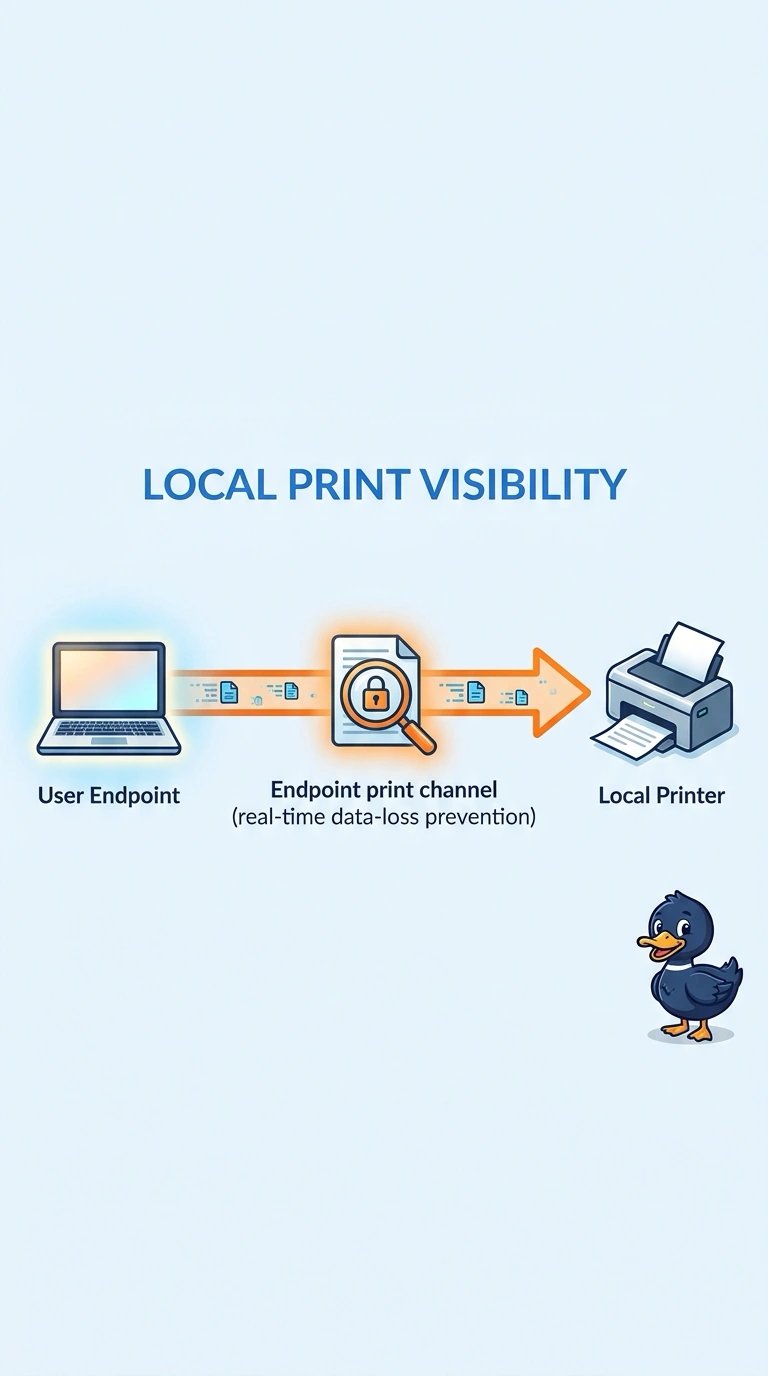
A filter on the front door does not stand next to the printer in the back office. You use the endpoint print channel of real-time data-loss prevention, because that is the path that sees a local print. The web proxy does not receive a job that goes straight to the desk printer.
Full Explanation
A local print is an endpoint channel, not a web session. The path that can see it is the endpoint print channel of real-time data-loss prevention, which is the path that can see this local print. Real-time rules cover endpoint channels such as removable media and print when that channel is in scope. The secure web gateway, on the theory that a job sent to the local front-desk printer counts as proxied web traffic, is aimed at web protocols, and a spooler job to a local printer is not a proxied browser upload. A SaaS API rule that reviews documents already stored in the hotel tenant, including files that never crossed today's proxy, sees files at rest in the tenant, not a page leaving a desk printer. A branch network tunnel that steers the hotel's web browsing to the security service edge for a policy check can carry web traffic toward cloud policy and still does not inspect a local print spool. Exam caveat: if the print channel is not in the real-time policy, the folio can leave on paper while every web rule stays quiet. Operational check: from a managed front-desk workstation, print a test page that contains a canary payment marker and confirm an endpoint print event for that job.