
An airline agent at a gate desk copies a passenger manifest that contains personal data onto a USB drive. Which control can see that copy?
Select an answer to reveal the explanation.
Short Explanation
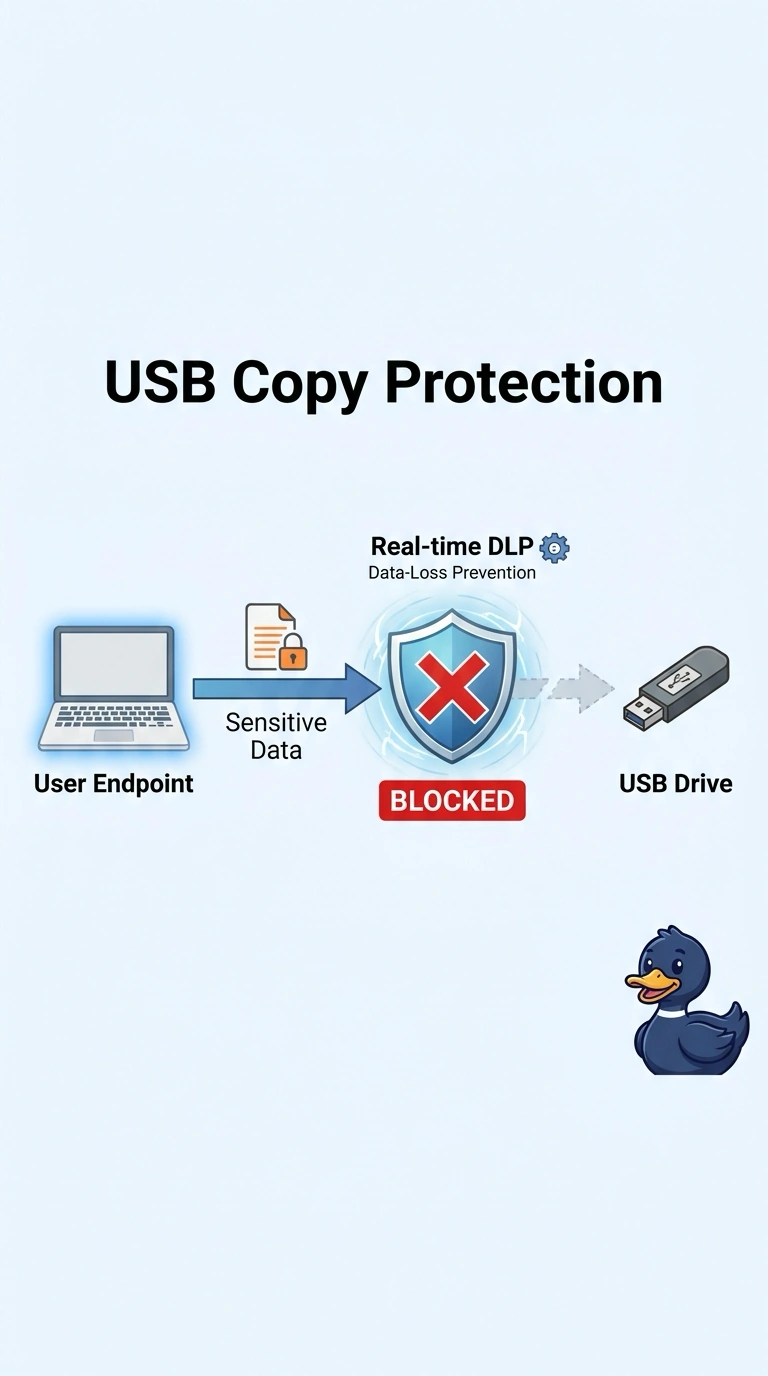
A guard at the terminal exit does not look inside the bag you packed at the desk. You use the endpoint channel of real-time data-loss prevention, because that channel covers a copy onto removable media. A cloud proxy rule is watching the internet path, not the USB port.
Full Explanation
The copy goes to removable media on the endpoint, so the control that can see it is the endpoint channel of real-time data-loss prevention, which covers a copy onto removable media such as a USB drive. Real-time data-loss prevention covers proxy traffic and endpoint channels such as removable media and print. A cloud proxy upload rule that inspects browser transfers into personal storage sites on the public internet sees a web upload, and a file copied to a local drive never takes that path. A SaaS API rule that reviews files already sitting in the airline tenant, including copies that never crossed today's proxy, sees data at rest in the tenant, not a USB stick at the gate. A DNS policy that blocks known file-sharing names at the protected resolver used by the gate desk computers can stop a lookup for a bad name and cannot see a file body or a local copy. Exam caveat: if the endpoint channel is out of scope, a perfectly good proxy rule still misses removable media. Operational check: on a managed gate workstation, copy a test file that contains a canary marker to removable media and confirm an endpoint data-loss event for that copy.