
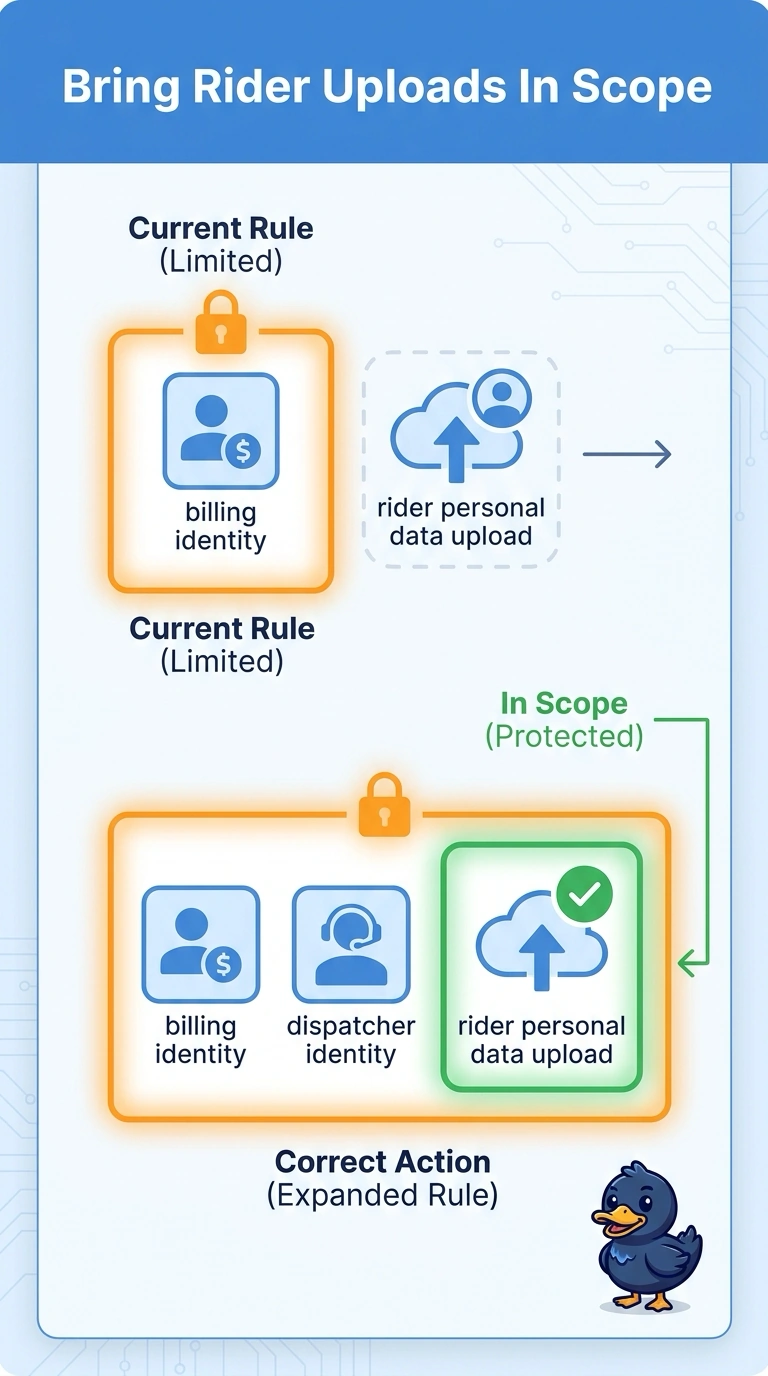
A transit agency's data-loss rule lists only the billing identity, so a dispatcher upload of rider personal data never matches. What should be changed?
Select an answer to reveal the explanation.
Short Explanation
A guest list that names only the cashier will wave the driver through without a second look. You add the dispatcher identity to the data-loss rule so the rider-data upload is actually in scope. Wiping the identity list, or blocking every spreadsheet, answers a different request.
Full Explanation
The content match can be right and the rule can still miss, because the identity scope does not include the person who uploaded the file. The change is to add the dispatcher identity beside billing on the data-loss rule so that rider-data upload is finally in scope. The choice to remove the billing identity from the rule so no user scope remains and every agency upload on the proxy is matched would catch the dispatcher by catching everyone, which is wider than a rule meant to cover billing and dispatch. The choice to replace the rider-data content match with a blanket block of every spreadsheet, no matter what the cells contain, stops harmless workbooks and no longer matches the sensitive rider data. The choice to point the dispatcher at an unmanaged resolver and expect a DNS policy there to read the body of the uploaded file sends the client away from the protected resolver, and a DNS policy does not inspect a file body. Exam caveat: a data-loss rule evaluates the identities it lists, so a correct classifier still misses a person who was left off the rule. Operational check: confirm the rule lists both the billing identity and the dispatcher identity, then repeat a test upload as the dispatcher and confirm it matches.