
A shipping port already matches card numbers in uploads, but the data-loss action is monitor, and those card uploads are still leaving. Which change stops them?
Select an answer to reveal the explanation.
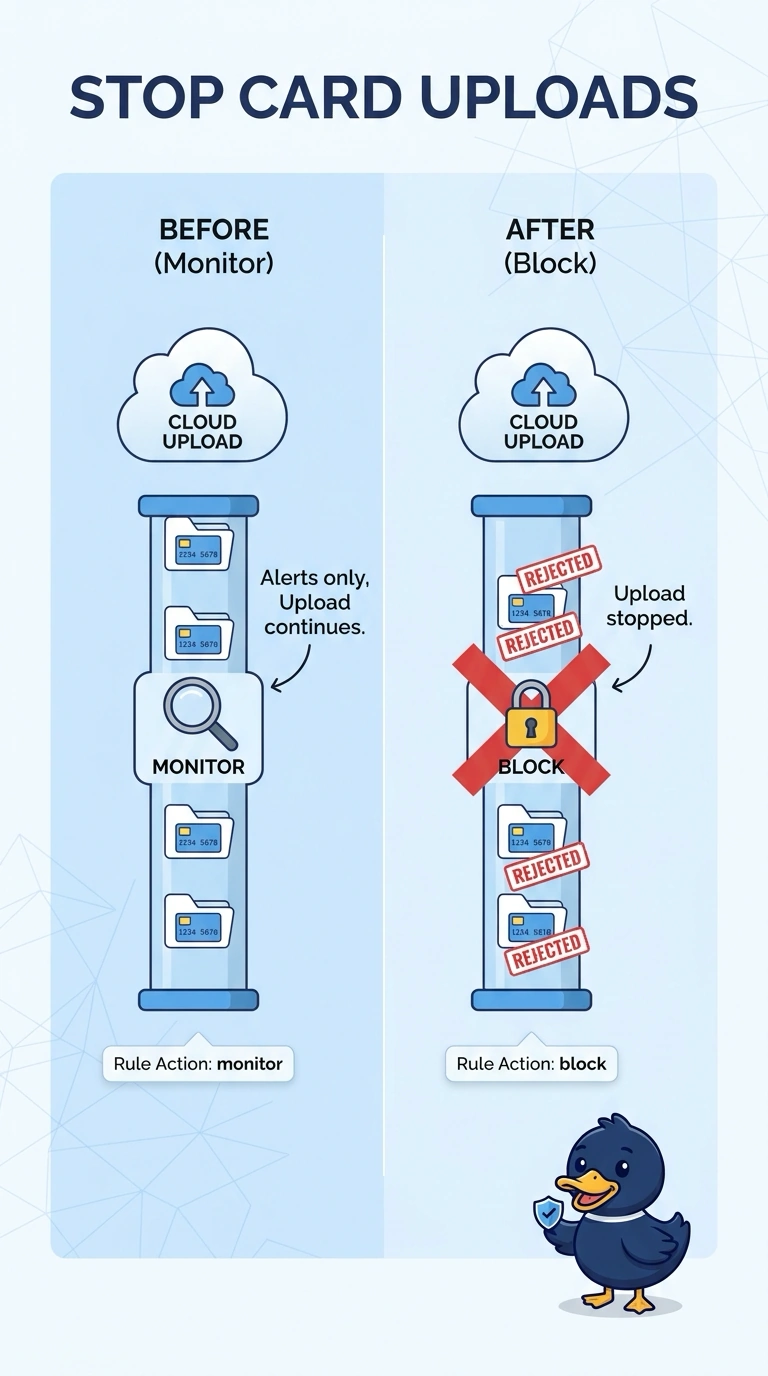
Short Explanation
A camera that records a theft and never locks the door has not stopped the theft. You change the action from monitor to block, because the rule already sees the card numbers and the requirement is to stop the upload. A weekly spreadsheet of matches is a record, not a gate.
Full Explanation
The rule already matches card numbers. What it does not do is stop the upload, because the action is monitor. The change that meets the requirement is to change the rule action from monitor to block so an upload that contains card numbers is actually stopped. The choice to leave the action on monitor and forward each card-number match into a weekly spreadsheet for the port auditors preserves evidence and still lets the file leave. The choice to remove the card-number match and block every file type a user at the port is able to upload to the internet would stop harmless files along with card data, which is the opposite of matching the sensitive content. The choice to replace the inline rule with an on-demand discovery scan, which inventories files at rest and does not stop the live upload, swaps an inline control for discovery, and discovery is an inventory, not an inline block. Exam caveat: monitor and block are different actions, and a correct classifier with a monitor action does not satisfy a stop requirement. Operational check: confirm the rule action is block, then attempt a test upload that contains a canary card number and verify the upload is denied.