
A hotel front-desk laptop keeps opening a known-bad reservation site even though the protected resolver would block that name. A hosts-file entry on the laptop pins the name to an address. Why does DNS security miss this visit?
Select an answer to reveal the explanation.
Short Explanation
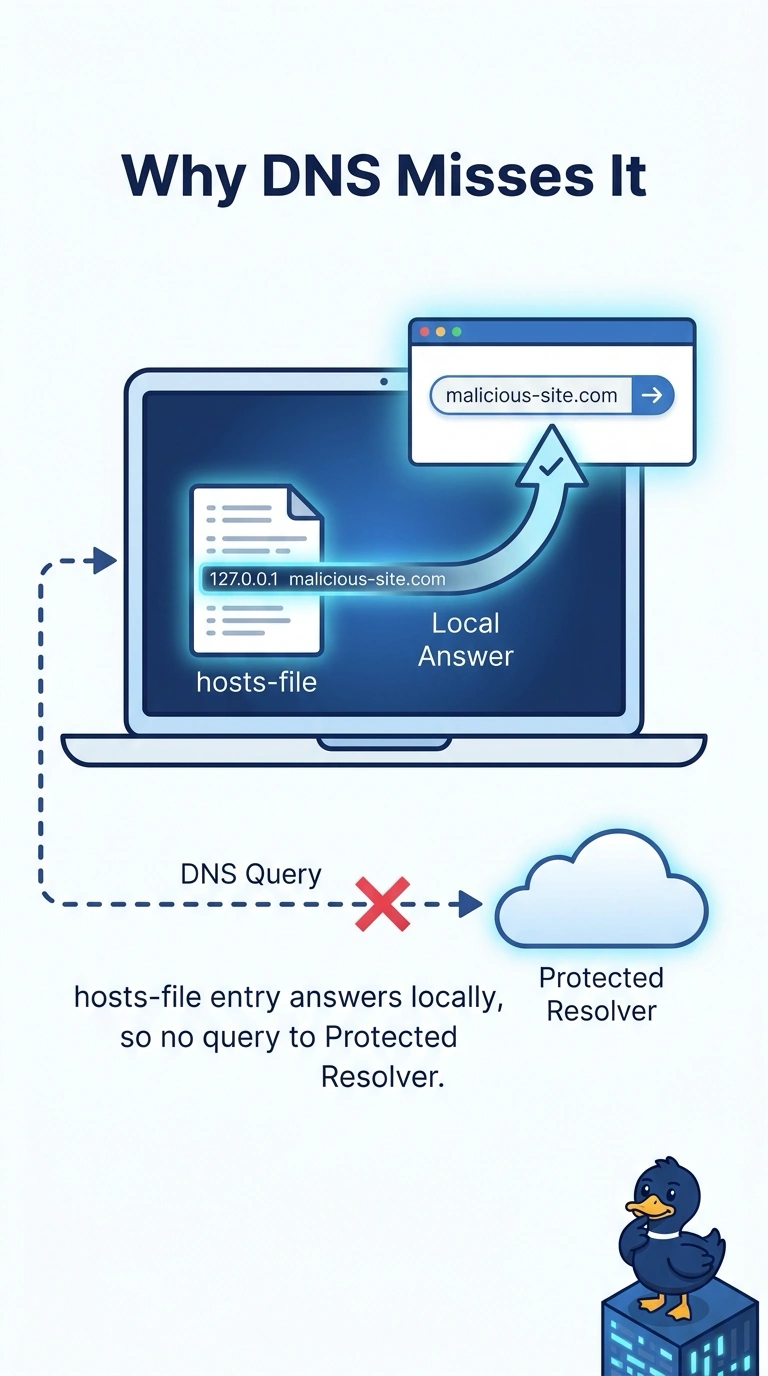
You can picture a sticky note on the laptop that already has the street number, so nobody calls the switchboard. You miss this visit because the hosts-file entry answers locally and the protected resolver is never asked. A warn-category decision or a later firewall deny cannot explain this lookup, because it never reached the resolver.
Full Explanation
DNS security can block a malicious name only when the client asks the protected resolver. Here, the hosts-file entry answers locally, so the laptop does not query that resolver for the name and the policy never evaluates the visit. The claim that the resolver evaluated the lookup and allowed it because the hotel category is set to warn describes a query that did not occur. DNS security does not inspect the URL path on the page, so it cannot decide that a path was safe for the front desk to open. A later firewall deny of the address is a separate event; recording that deny in the DNS log as a successful block of the name would invent evidence the resolver did not produce. Exam caveat: a hosts-file entry can bypass protected DNS even when the resolver’s policy would block the name. Practical check: review the laptop’s hosts file, remove the pin for that name, then confirm that the next lookup reaches the protected resolver and is blocked before a connection starts.