
A clinic sees lookups for a brand-new malicious name that is not listed in any web content category, and staff suggest blocking the gambling category. Which DNS control fits this name?
Select an answer to reveal the explanation.
Short Explanation
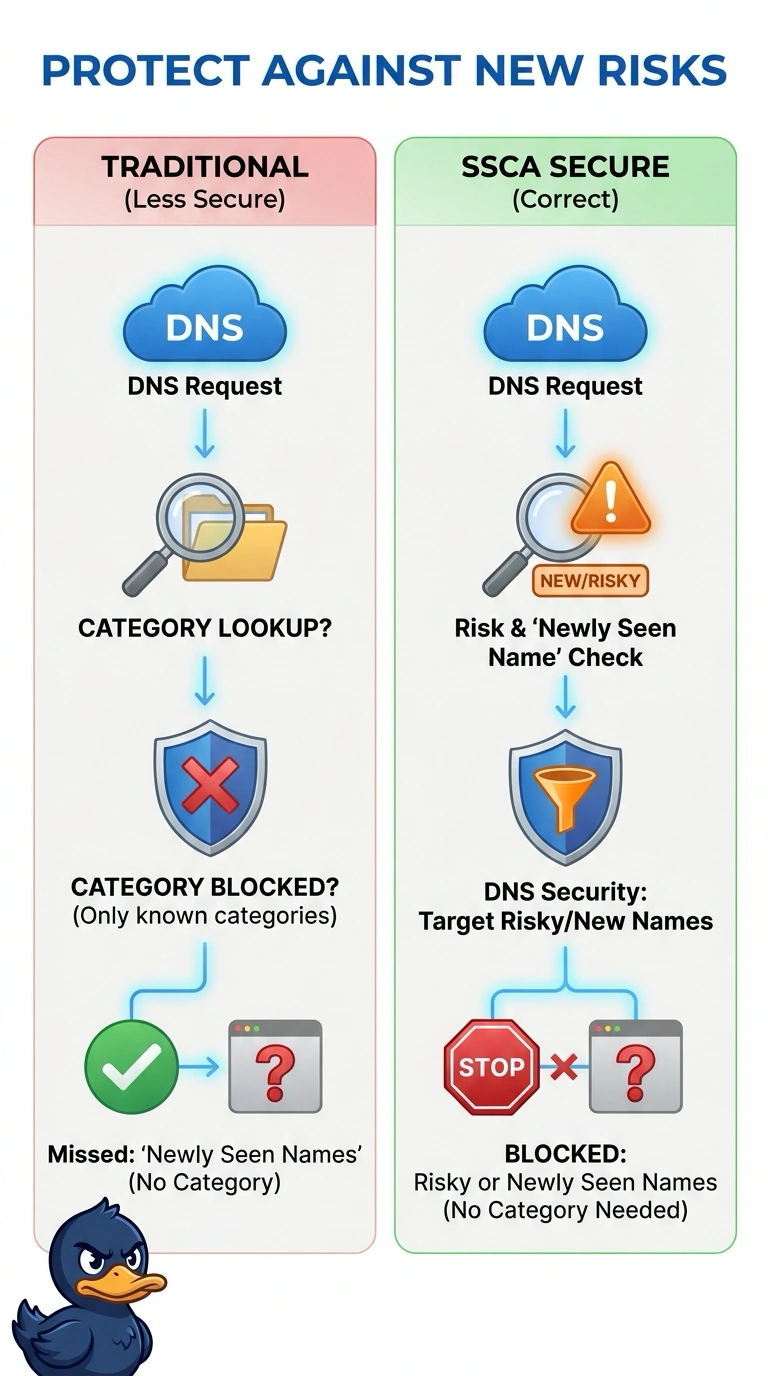
A new wanted poster does not belong in the restaurant section of the paper. This malicious name is not in a content category yet, so you do not fix it with a gambling block. Use a DNS security control aimed at risky or newly seen names.
Full Explanation
DNS security can treat a name as risky because it is new or already tied to malicious activity, and that decision does not require a web content category such as gambling. This name is brand new and uncategorized, so the fitting control is a DNS security control aimed at risky or newly seen names, which does not depend on a content category being present. Blocking the gambling content category and expecting that category to describe this brand-new malicious name fails because the name has not joined that category. Turning DNS security off until a content-category feed files the new name under an existing topic such as gambling removes the control that can act before a category exists. Allowing the name because it is missing from every content category, and treating an unlisted name as trusted by default, is how a new malicious name slips through a category-only design. On the exam, a newly seen malicious name is not solved by a content category that does not describe it. In operations, look this name up in DNS security policy and confirm it is handled as a risky or newly seen name, not by the gambling category.