
A school browser is sending encrypted DNS to a resolver the district does not manage, so the corporate DNS policy does not evaluate those queries. Which change puts the queries back on the protected path?
Select an answer to reveal the explanation.
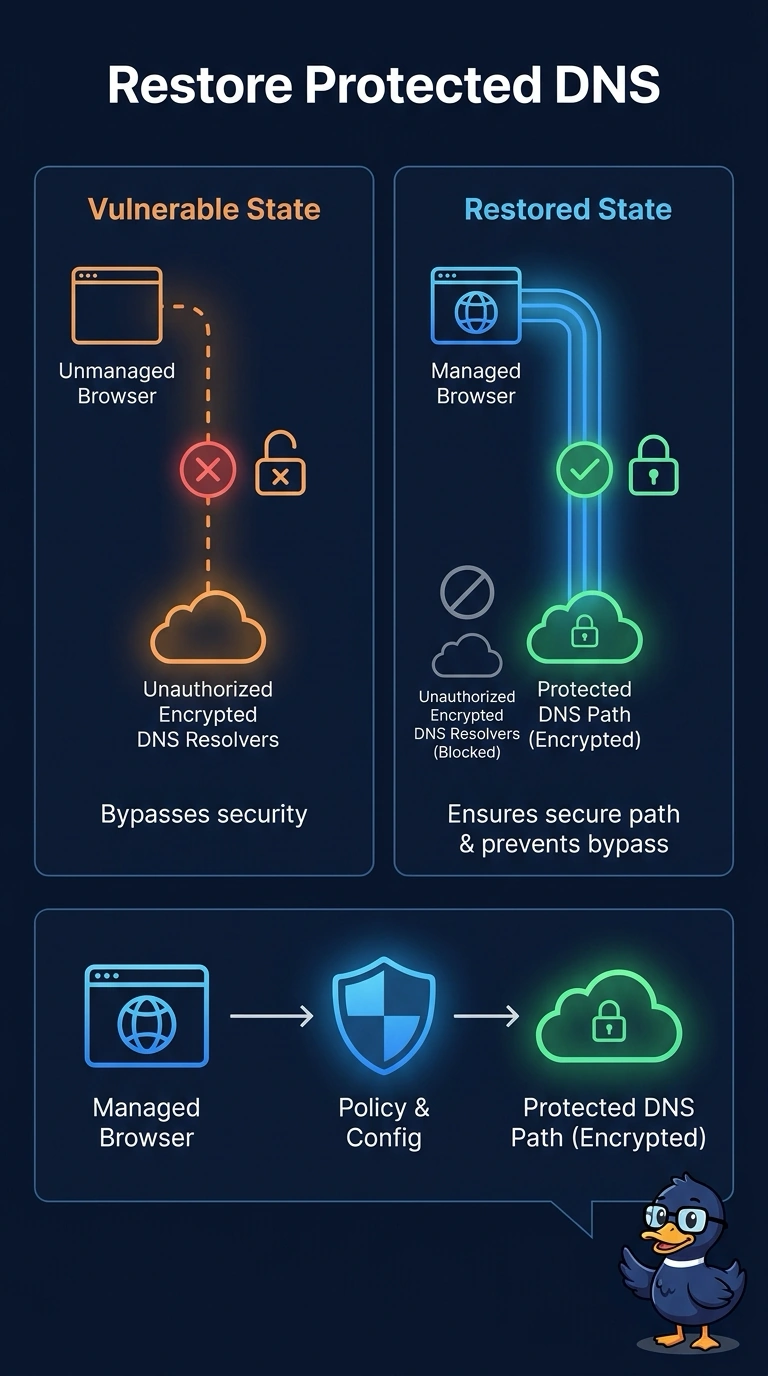
Short Explanation
Whispering a question to a stranger skips the receptionist who holds the block list. This browser sends encrypted DNS to an unmanaged resolver, so you do not get a policy decision on those lookups. Configure the browser to use the protected DNS path and prevent access to unauthorized encrypted DNS resolvers.
Full Explanation
Encrypted DNS, including DNS over HTTPS, sent to a resolver the district does not manage never reaches the protected resolver, so corporate policy is not consulted. Configuring the managed browser to use the protected DNS path and preventing access to unauthorized encrypted DNS resolvers puts the decision back where the block list lives. Blocking an external resolver alone does not guarantee the browser falls back to the protected path. Lowering the block sensitivity on the protected resolver does nothing for a browser that does not query that resolver at all. Lengthening the negative cache on the unmanaged resolver hopes a resolver outside your control will drop malicious names, and it does not move the client onto the protected path. Installing a new server certificate on the school web portal changes how that web server authenticates and leaves the browser sending encrypted DNS to the unmanaged resolver. On the exam, an unmanaged encrypted-DNS path is a bypass of DNS policy, not a certificate problem on a website. In operations, identify the resolver the browser actually uses and confirm the browser is configured for the protected DNS path and encrypted DNS toward unauthorized resolvers is prevented for that device.