
A utility analyst finds a substation workstation configured with a public DNS resolver rather than the company's protected resolver, so corporate DNS security does not see its lookups. Which change brings those lookups under the policy?
Select an answer to reveal the explanation.
Short Explanation
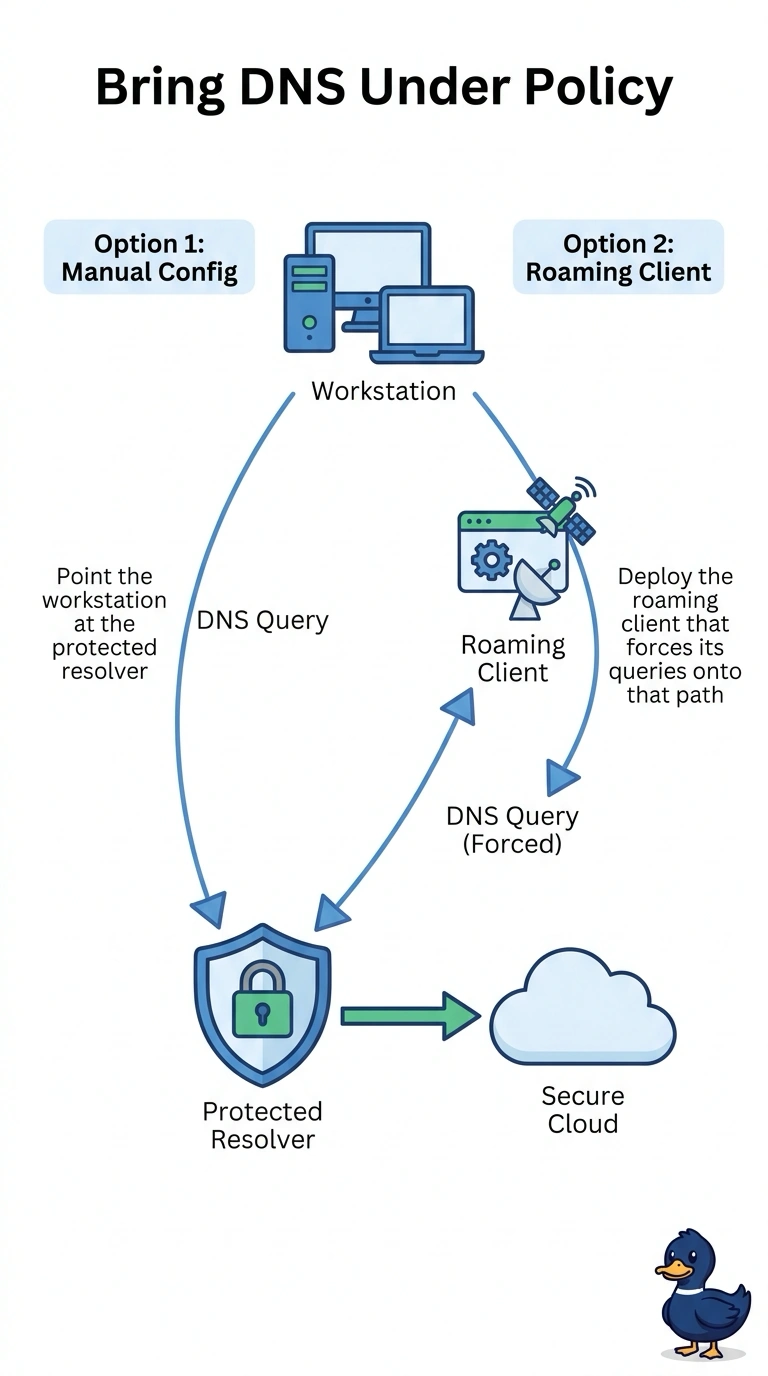
Posting a rule on a door people no longer use does not change their route. This workstation asks a public resolver, so you are not applying the protected DNS policy to its lookups. Point it at the protected resolver, or use the roaming client that forces that path.
Full Explanation
A DNS security policy evaluates lookups that arrive at the protected resolver. This workstation uses a public resolver, so those lookups do not arrive and the policy cannot block them. The change is to point the workstation at the protected resolver, or deploy the roaming client that forces its queries onto that path. Tightening the block list on the protected resolver while the workstation keeps using the public resolver improves a service this client does not ask. Encrypting the utility authoritative zone and leaving the workstation pointed at that public resolver, even as an attempt to hide names, still leaves corporate policy off the path the client uses. Shortening record lifetimes so the public resolver refreshes names faster does not cause that resolver to inherit the corporate blocks. On the exam, edits on a resolver the client does not use cannot change this workstation. In operations, check the workstation DNS configuration and a test query, and confirm the answer comes from the protected resolver rather than the public one.