
A utility turned on a blanket DNS block of every name that is not public, and the block is now breaking the company's own private zone. Malicious public names still have to be blocked. Which adjustment is appropriate?
Select an answer to reveal the explanation.
Short Explanation
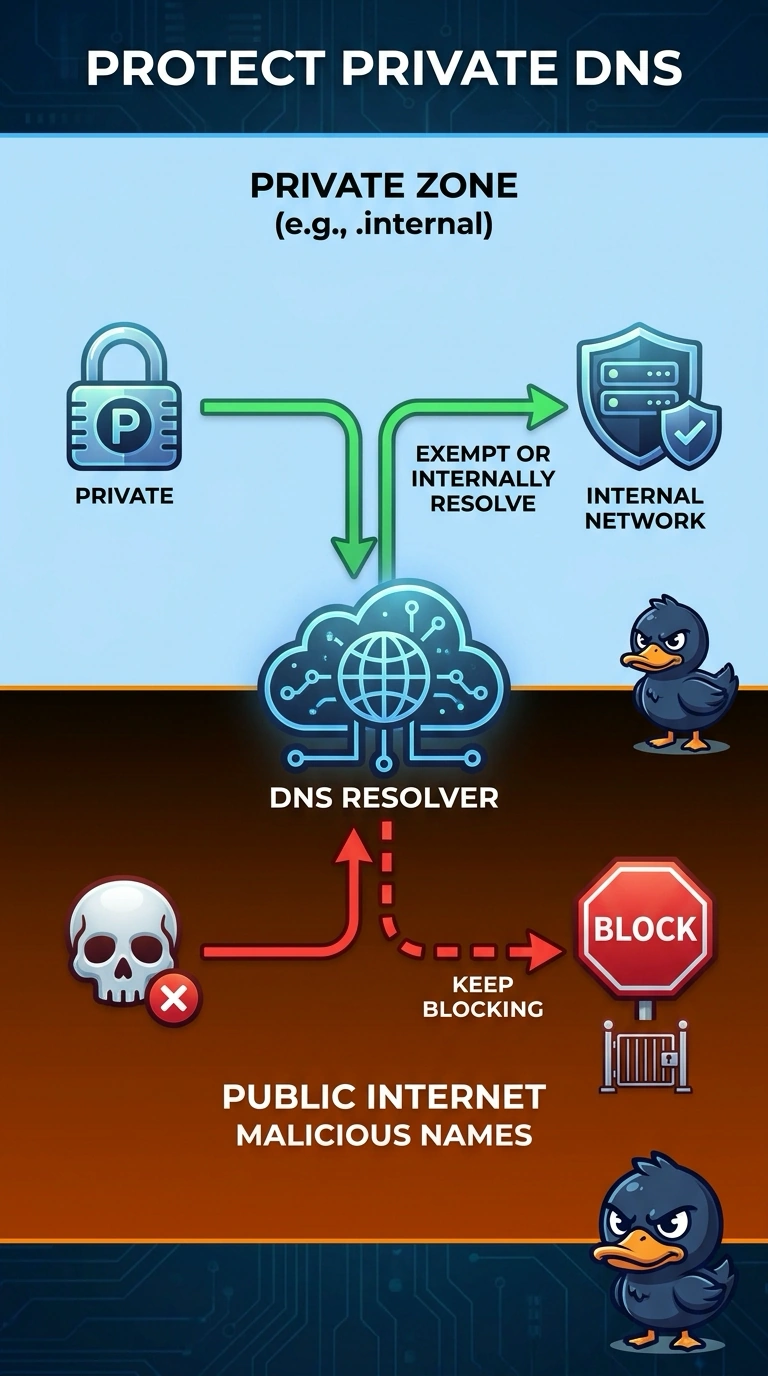
Boarding up every door that is not on the public street also locks your own supply closet. A blanket block of non-public names is breaking the utility private zone. You exempt or internally resolve that zone, and you keep blocking malicious public names.
Full Explanation
DNS security is aimed at malicious names. A private zone the utility still needs is not the same thing as a malicious public name. A blanket block of every non-public name takes out the private zone along with the unwanted names. The adjustment is to exempt or internally resolve the private zone, and keep blocking malicious names that exist on the public internet. Blocking every name that is not on the public internet, including the records in the utility private zone, is the breakage already happening, not the repair. Removing DNS security entirely so the private zone and the malicious public names are no longer handled separately restores the private zone by dropping the malicious-name block the requirement still demands. Publishing the private zone on the open internet so a blanket block of non-public names no longer matches the internal records exposes private names in order to dodge a policy that should have carved them out. On the exam, a private-zone exception can sit beside a malicious public-name block, and you do not drop one to keep the other. In operations, resolve a private-zone name and a known-malicious public name from the same internal client, and confirm only the malicious name is blocked.