
A startup with no data center or office servers runs FTD virtual appliances in AWS and Azure and wants one place to build policy for both clouds. Every appliance can open a management session to an address in AWS, and the budget covers one management instance. Which cloud management option gives them that single policy source?
Select an answer to reveal the explanation.
Short Explanation
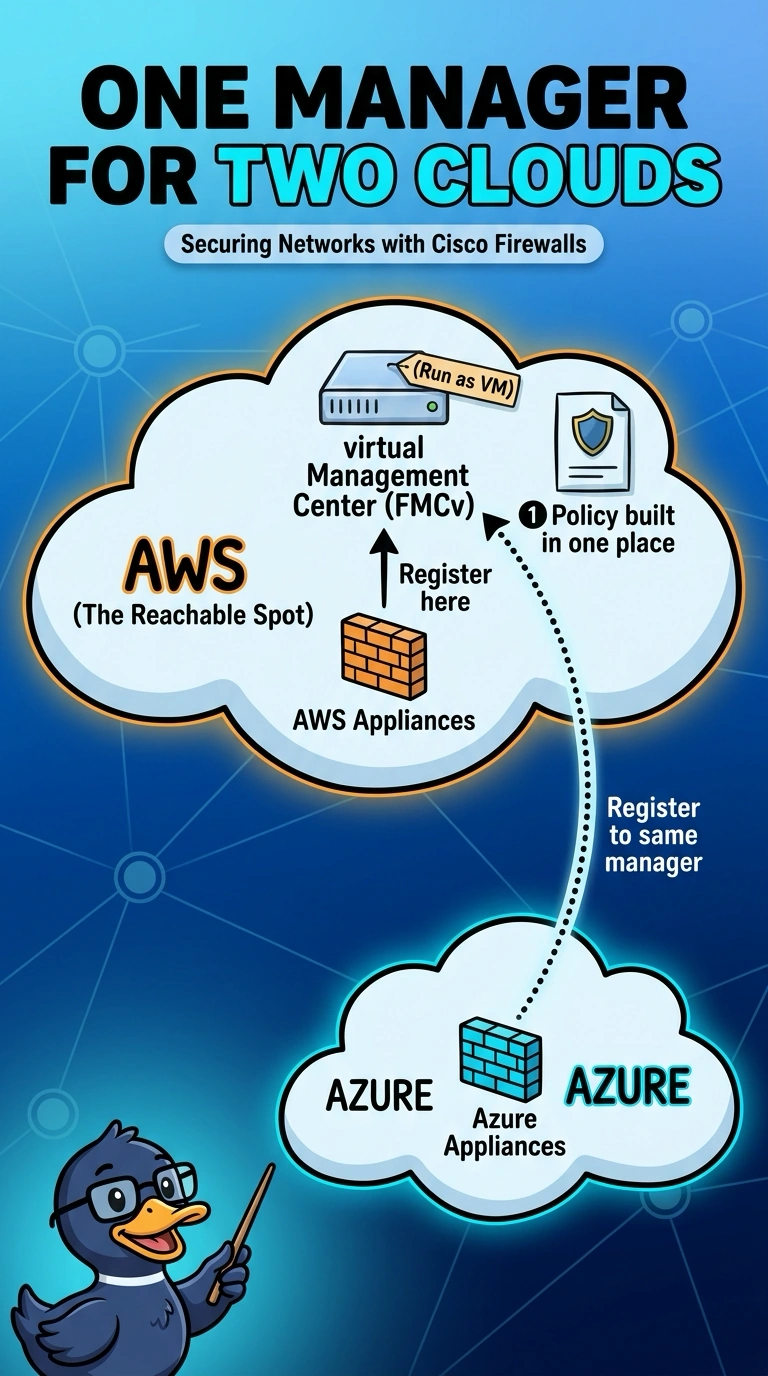
Reachability picks the winner here: your appliances can only get to an AWS management address, so that's where the manager belongs. One virtual appliance in AWS can serve both clouds from a single policy source.
Full Explanation
A single virtual Management Center in AWS provides the requested common place to build policy: both cloud environments’ appliances can initiate management sessions to an AWS address, and one manager fits the stated budget. The manager’s location does not prevent it from managing the Azure appliances when connectivity is available. Managing the Azure appliances with Device Manager leaves them outside the Management Center, so policy would be built in two places. Adding a separate manager for coordinated changes is sound when independent administration or scale is needed, but it defeats the one-manager budget and the single policy source. Pushing policy to Azure with external scripts bypasses the management plane, so the Management Center is not the single place where policy is built and deployed. Exam caveat: verify that the FTD versions and licensing support the intended workflow; one manager alone does not guarantee every policy element is portable. Practical check: confirm routing, firewall rules, and required management ports from both clouds to the AWS manager before registering devices.