
A bank is retiring the appliance its team still calls the Firepower Management Center, the product's earlier name, and has deployed a virtual Secure Firewall Management Center in its own data center. The new appliance has its address, DNS, and a Smart Licensing token, and it can reach all twelve device manager interfaces. The old manager still owns every device and its policies. What sequence should the team follow to register the devices with the new virtual Management Center?
Select an answer to reveal the explanation.
Short Explanation
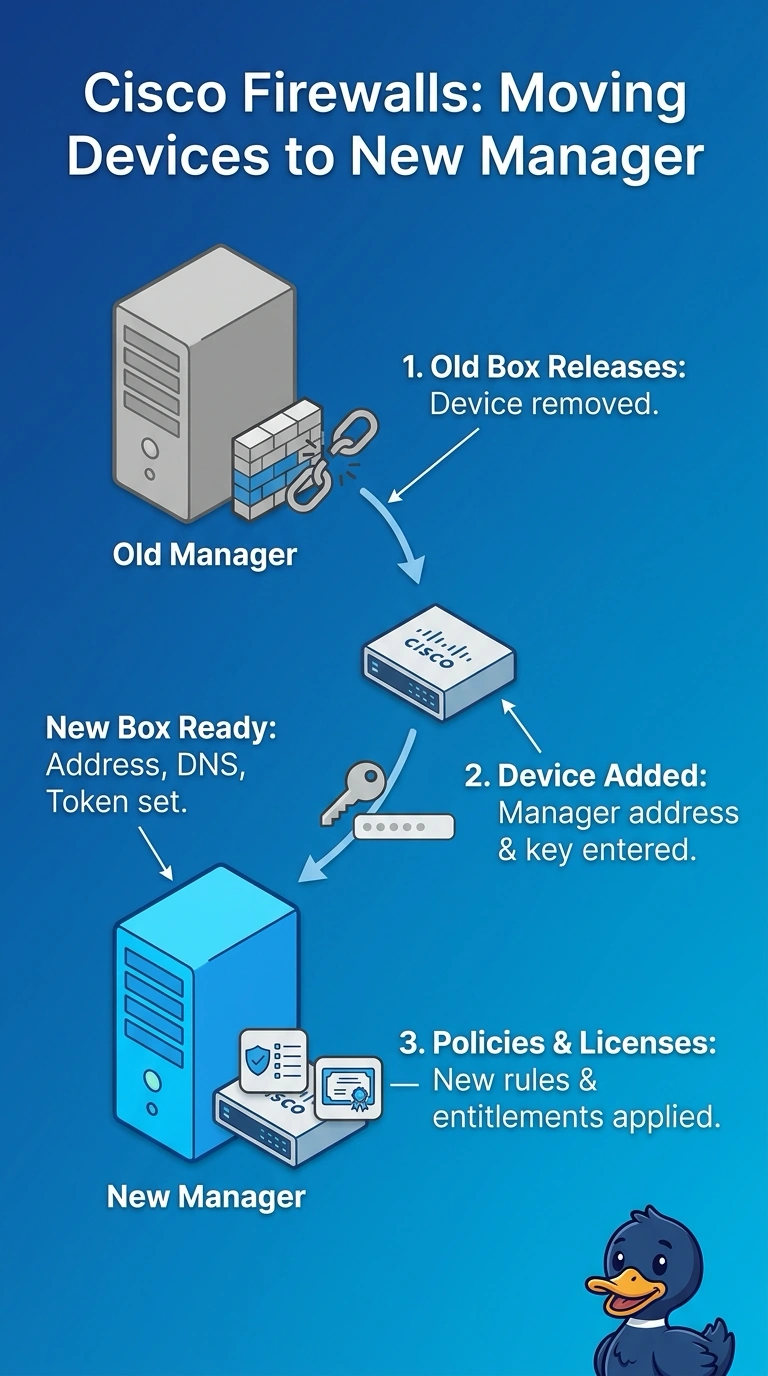
The old manager must release each device before the new one can take over. It's like a lease transfer, where the outgoing tenant signs off before your new one moves in. The new manager then manages the devices and assigns available licenses from its entitlements.
Full Explanation
Registration to a Management Center is a single-owner relationship: a managed appliance reports to one manager, which maintains its policies and objects. Unregistering the device from the old manager releases it, and adding it to the virtual appliance with its address and a registration key establishes the new registration. The new manager must have the appropriate policies ready, and those policies must be deployed to the devices. A device cannot be concurrently managed by both managers, so a second add while the old registration remains will fail. Smart Licensing is managed through the Management Center: the token registers the virtual Management Center with Cisco Smart Software Manager, and available entitlements are assigned to devices; the token itself does not provide unlimited licenses. Changing a DNS name or manager setting does not trigger registration automatically; registration is an explicit, authenticated exchange. Practical check: open Device Management on the new appliance, confirm each device shows a healthy status, and review the licensing page for its assigned licenses.