
A two-person team runs 30 FTD devices from one Management Center. In the next maintenance window they need fresh intrusion signatures and vulnerability data loaded, while the device software version stays exactly as it is. What sequence applies a new rule and VDB update to a managed FTD device?
Select an answer to reveal the explanation.
Short Explanation
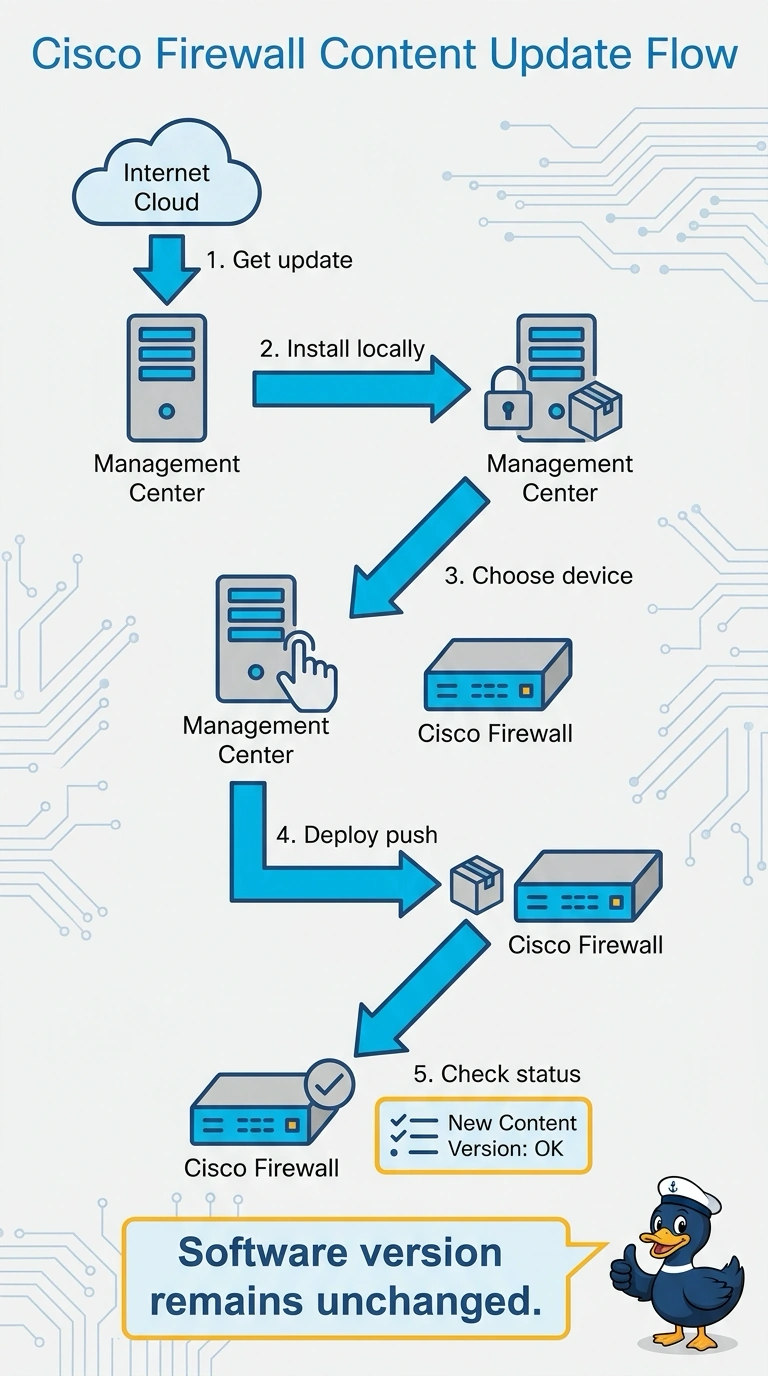
You install the content on the Management Center first, and it only reaches the appliance when you run a deployment, so the software version never moves. It's like a warehouse that receives the box and then ships it out to each store.
Full Explanation
Content updates and software updates are two separate streams in the Management Center, and this is the distinction the scenario turns on. An intrusion rule update and the vulnerability database are downloaded and installed on the Management Center itself, where they wait until you push them; the managed device receives that content through a deployment job that also carries the policy, and only then do the new signatures and vulnerability data take effect on the appliance. Installing a software upgrade first fails because product code and content are independent, so a device can keep its current version and still take a fresh rule and VDB update. Running a deployment before installing anything fails because a deployment only distributes what is already staged on the Management Center, never fetching new content by itself. Waiting for a nightly pull fails because FTD devices do not go looking for content on their own schedule; distribution begins when you deploy. One caveat is that the menu labels for software versus content updates have moved between releases, so confirm where your version keeps them. A practical check is to open the device update status after the deployment and verify that the new content version is listed.