
A payment processor runs a Secure Firewall Management Center (FMC) with sensors in three regions. The auditor requires that FMC and sensor event timestamps match the enterprise SIEM, that configuration is captured before every change window, and that only named administrators reach the GUI. Which FMC system setting satisfies the shared timestamp requirement?
Select an answer to reveal the explanation.
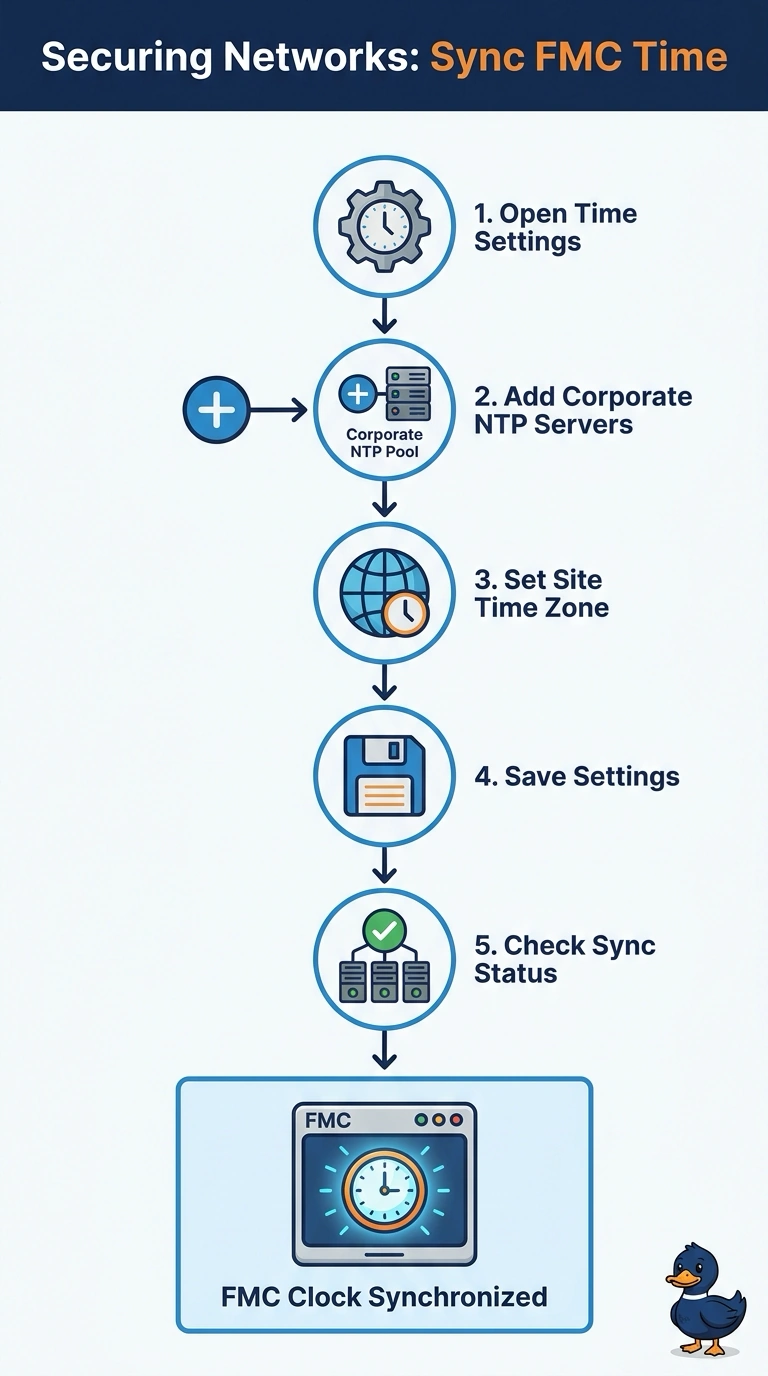
Short Explanation
Start with the clock, because every correlation you're building depends on matching timestamps. Setting NTP on the Management Center is like giving every device the same wristwatch, so your sensor records line up with the SIEM entries.
Full Explanation
Timestamp consistency is what makes correlation possible, and the Management Center records and correlates the events it receives on its own system clock, so its time setting anchors the deployment timeline. Configuring Network Time Protocol against the corporate servers therefore aligns that timeline with the SIEM, which is precisely the shared-timestamp control an auditor tests when logs from several regions must line up. A scheduled configuration backup protects recovery after a bad change or a hardware loss, but it captures state at a moment in time and never governs what that time is. Restricting the graphical interface to named accounts with short sessions is genuine administrative hardening that usually sits under an access control requirement, yet it does not shift a single event timestamp. Applying the latest platform update improves defects and detection content, but updates leave clock sources alone, so none of the other approaches touches the timing requirement. Exam caveat: events already stored keep their original stamps, so only records written after the change reflect the new clock. Practical check: after saving the servers, confirm each source reports as synchronized before you export logs for audit.