
A parks IoT AI edge backhaul wants to avoid oversizing chillers by right-sizing simultaneous training concurrency. What efficiency evaluation is most appropriate?
Select an answer to reveal the explanation.
Short Explanation
If you size chillers from average training power across seasonal schedules, you'll miss concurrency peaks and either undercool or oversize. Cap concurrency to what cooling can honestly handle and you stay efficient. Tracking GPU utilization efficiency with peak PUE trends still won't cap concurrency peaks, and ranking by energy per epoch still misses simultaneous peak heat, so both miss the point.
Full Explanation
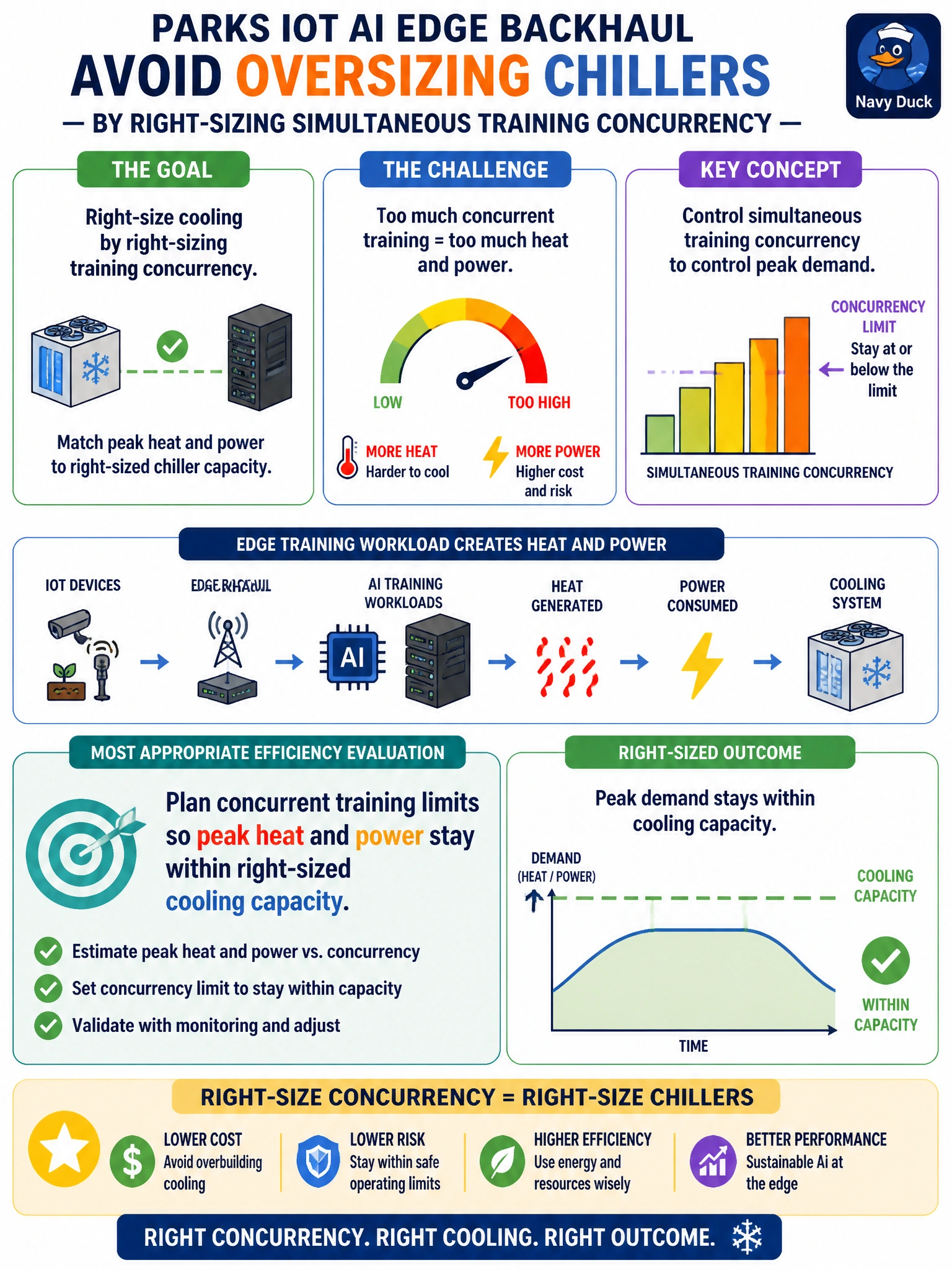
A parks IoT AI edge backhaul that wants to avoid oversizing chillers by right-sizing simultaneous training concurrency should plan concurrent training limits so peak heat and power stay within right-sized cooling capacity. Efficiency here is workload shaping: cap how many trainers run at once so thermal and electrical peaks match the cooling plant you intend to build or keep, instead of forcing chronic oversizing for rare stampedes.
Sizing chiller plant capacity from average training power across seasonal daily operating schedules misses concurrency peaks and risks either undersizing during surges or still oversizing for average load, without improving average civic insight delivery. Tracking GPU utilization efficiency with peak PUE trends to guide right-sized cooling capacity substitutes utilization metrics for the concurrency control needed to match cooling capacity; PUE trends reflect facility efficiency, not training concurrency, so they can't prevent oversizing chillers from simultaneous training peaks. Ranking training concurrency options by energy per completed epoch for cooling capacity planning optimizes per-work energy but does not cap simultaneous peak heat and power; without a concurrency ceiling, efficient epochs can still stack into surges that force chiller oversizing.
Exam caveat: Domain 2.4 links efficiency to power and cooling; concurrency policy is a valid facility control, but limits must still meet parks analytics SLAs or overflow paths must be explicit.
Operational check: measure power/heat at increasing trainer counts on the edge backhaul pod, set a scheduler concurrency ceiling below cooling trip margins, and verify queued jobs drain without sustained thermal alarms.
Prefer to study offline? Printable PDF study book + test engine ($7.50, unofficial). These questions stay free here.