
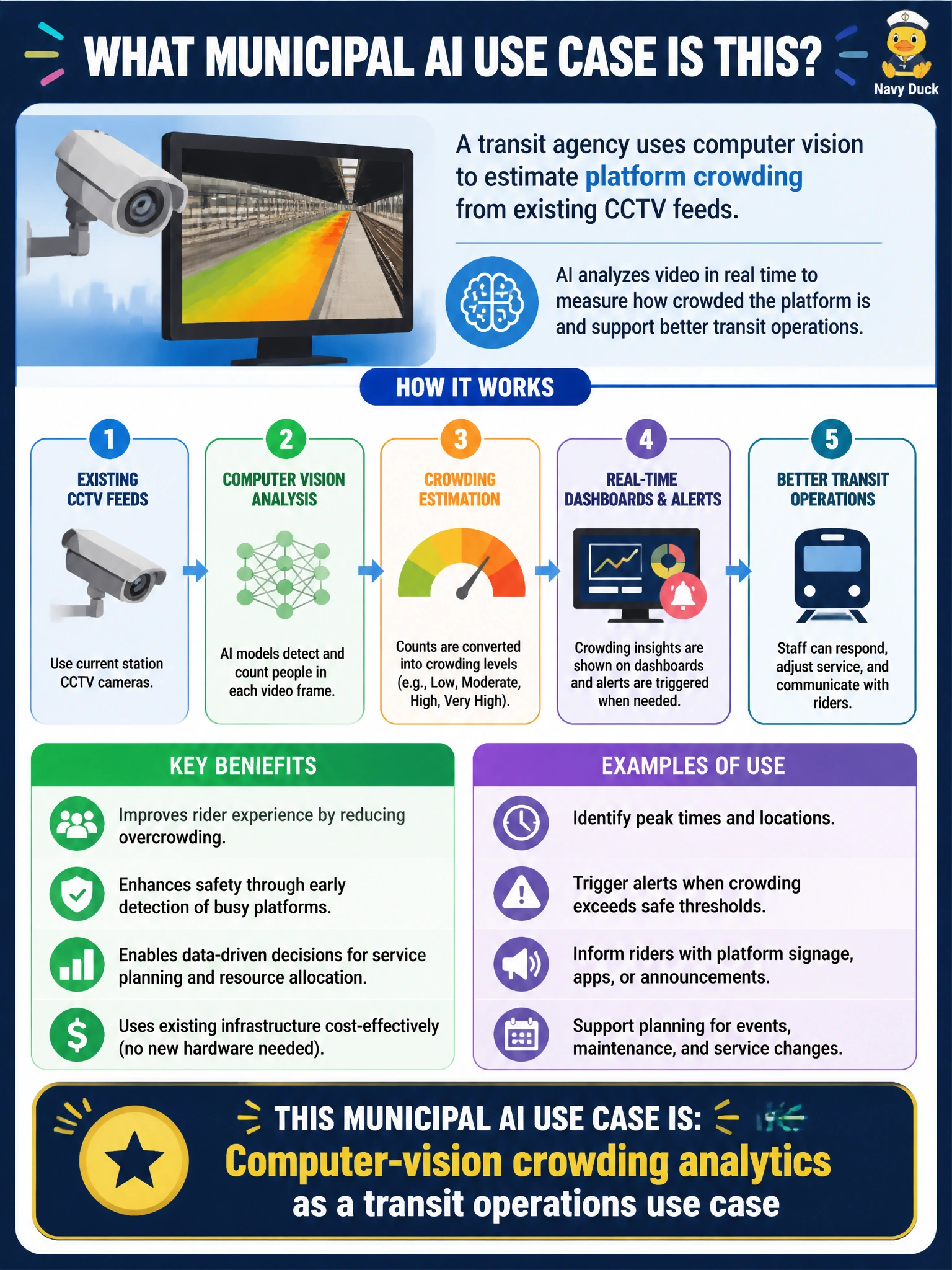
A transit agency uses computer vision to estimate platform crowding from existing CCTV feeds. Which municipal AI use case is this?
Select an answer to reveal the explanation.
Short Explanation
Same cameras, smarter eyeballs—count how packed the platform looks so ops can react. That’s CV crowding analytics for transit operations you’ll use for ops, not for rail maintenance, timetable publishing, or revenue protection.
Full Explanation
Using computer vision on existing CCTV feeds to estimate platform crowding is a transit operations AI use case: vision models infer occupancy or density so operations can adjust service, staffing, or passenger messaging in near real time. Computer-vision crowding analytics as a rail maintenance use case gets the technology right but the domain wrong; rail maintenance covers inspection and upkeep of rail infrastructure, not estimating platform occupancy from CCTV to support operations. Computer-vision crowding analytics as a timetable publishing use case gets the technology right but the domain wrong; timetable publishing covers releasing schedule data, not inferring live platform occupancy or density from video for operations. Computer-vision crowding analytics as a revenue protection use case gets the technology right but the domain wrong; revenue protection focuses on fare compliance, which is distinct from measuring platform crowding for transit operations. Exam caveat: CV crowding systems raise privacy, retention, and public-notice issues for municipal CCTV; architecture correctness on the exam does not waive policy controls or civil-liberties review for camera analytics. Operational check: validate crowding estimates against ground truth or manual counts at representative stations, ensure the pipeline uses approved camera feeds with retention limits, measure end-to-end latency for ops alerts, and integrate those alerts into transit operations workflows rather than into rail maintenance, timetable publishing, or revenue protection workflows.
Prefer to study offline? Printable PDF study book + test engine ($7.50, unofficial). These questions stay free here.