
An airport voice recorder runs only on the vendor kernel shipped with the appliance and must keep a guest boundary from other tenants on the same host. Which placement fits?
Select an answer to reveal the explanation.
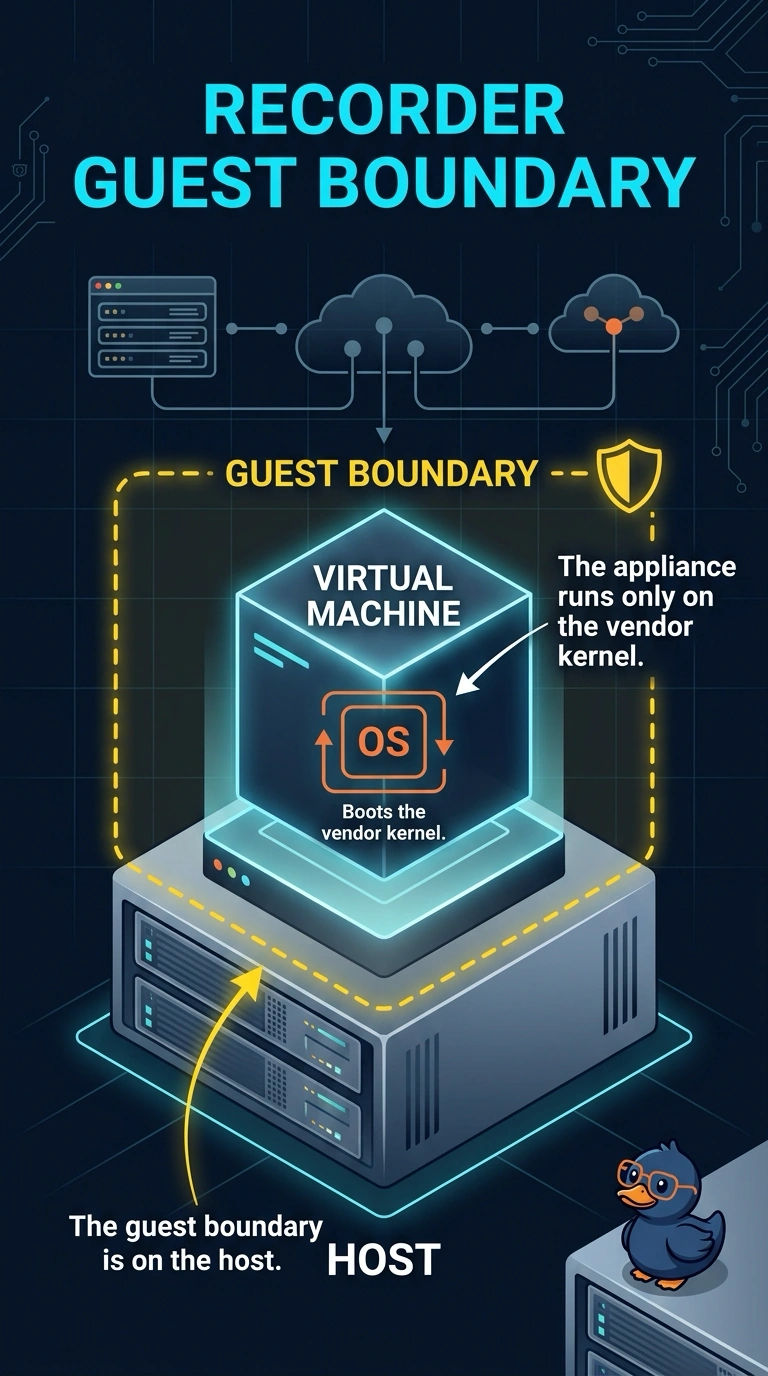
Short Explanation
A private workshop with its own tools is like a guest that brings its own kernel. You place the airport voice recorder in a virtual machine so the vendor kernel and the guest boundary both exist. A container, a process on the host kernel, and a bare-metal rebuild each miss that kernel or that boundary.
Full Explanation
A virtual machine boots a guest kernel and keeps a guest boundary. This recorder runs only on the vendor kernel shipped with the appliance, and it must stay apart from other tenants on the same host. A container shares the host kernel, so it cannot boot that vendor kernel. A process on the host kernel has no guest boundary. A bare-metal rebuild takes the whole host and is not a guest beside other tenants. A virtual machine that boots the vendor kernel and keeps that guest boundary on the host is the design that meets this requirement. A container that shares the host kernel and cannot boot the vendor kernel is the wrong fit because a container shares the host kernel and cannot boot the vendor kernel this recorder ships with the appliance. A process on the host kernel with no guest boundary from the neighboring tenants is the wrong fit because a process on the host kernel has no guest boundary from the other tenants that share that host. A bare-metal rebuild of the whole host whenever the recorder image must move is the wrong fit because rebuilding the whole host ties the recorder to hardware and does not leave a guest beside other tenants. Exam caveat: Keep the virtual machine while the recorder must boot its vendor kernel, and move it only if a later build is a process that can share the host kernel. Operational check: Confirm the recorder boots the vendor kernel inside a virtual machine and that neighboring tenants on the same host do not share that kernel.