
A virtual router at a grain elevator is already onboarded with its image, flavor, and day-0 path. The change window allows only a gRPC dial that must read and write the YANG datastore. Which interface fits?
Select an answer to reveal the explanation.
Short Explanation
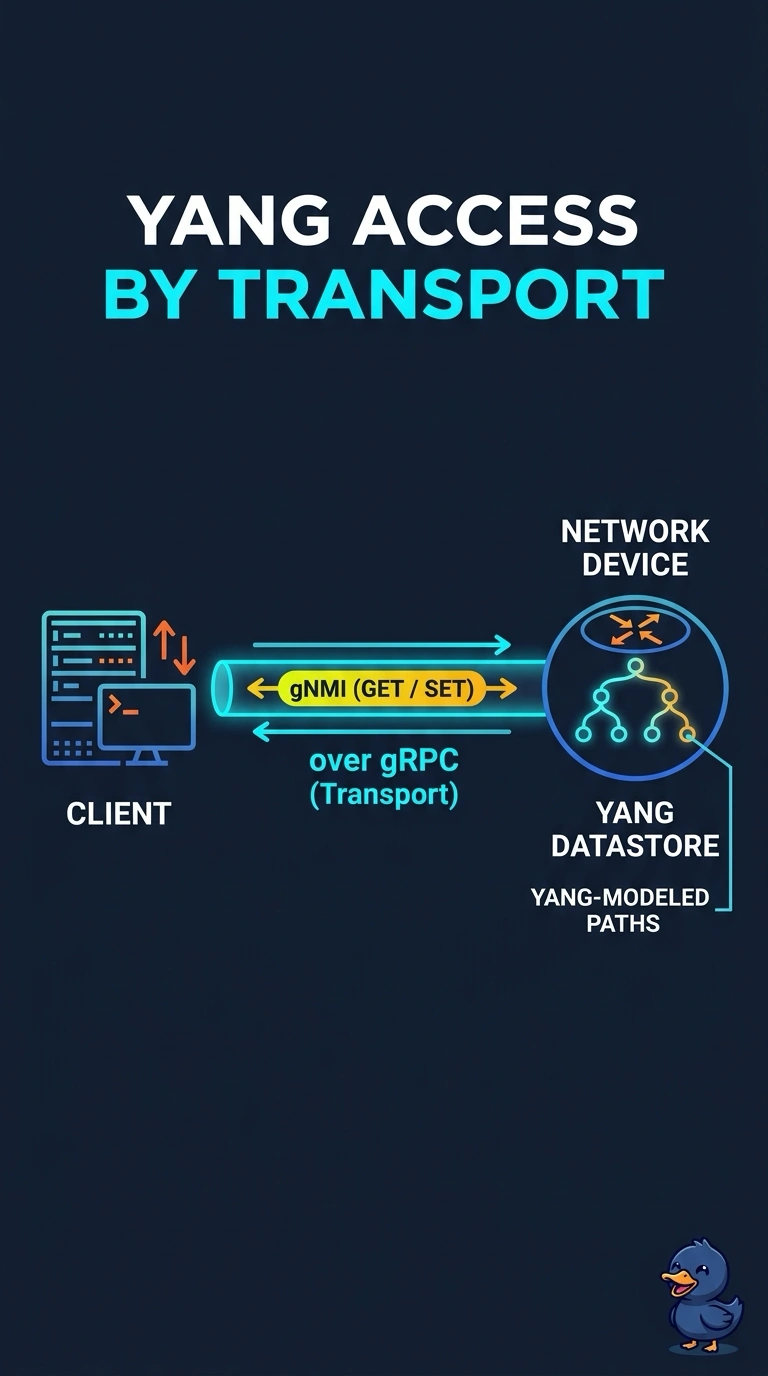
A loading dock that accepts only one kind of truck is like a change window that allows only gRPC. You use gNMI so the YANG datastore can be read and written on that dial. NETCONF over SSH, RESTCONF over HTTP, and a general REST call each use a different door or skip the YANG datastore.
Full Explanation
Use gNMI Get and Set over gRPC on supported YANG-modeled paths is the correct interface when only gRPC is permitted and the payload is the YANG datastore. This virtual router is already onboarded with its image, flavor, and day-0 path. The window allows only gRPC, so the YANG session must ride gRPC with Get for read and Set for write operations. Verify that the target exposes the paths and supports the requested writes. gNMI uses gRPC over HTTP/2, and it does not need a separate RESTCONF endpoint. NETCONF over SSH as a YANG dial when this window will not open an SSH session is the wrong fit because NETCONF carries YANG over SSH, and this change window will not open an SSH session to the router. RESTCONF over HTTP as a YANG API when this window will not open an HTTP session is the wrong fit because RESTCONF carries YANG over HTTP, and this change window will not open an HTTP API to the router. A general REST call that does not carry the virtual router YANG datastore is the wrong fit because a general REST call does not carry the YANG datastore, so it cannot read and write that router model. Exam caveat: gNMI fits because the allowed dial is gRPC and the payload is YANG, and a window that allowed only SSH would need the SSH YANG dial instead.