
Fifty virtual provider-edge routers already forward traffic, and one QoS policy must be described once and applied to every one of them. Which component does that job?
Select an answer to reveal the explanation.
Short Explanation
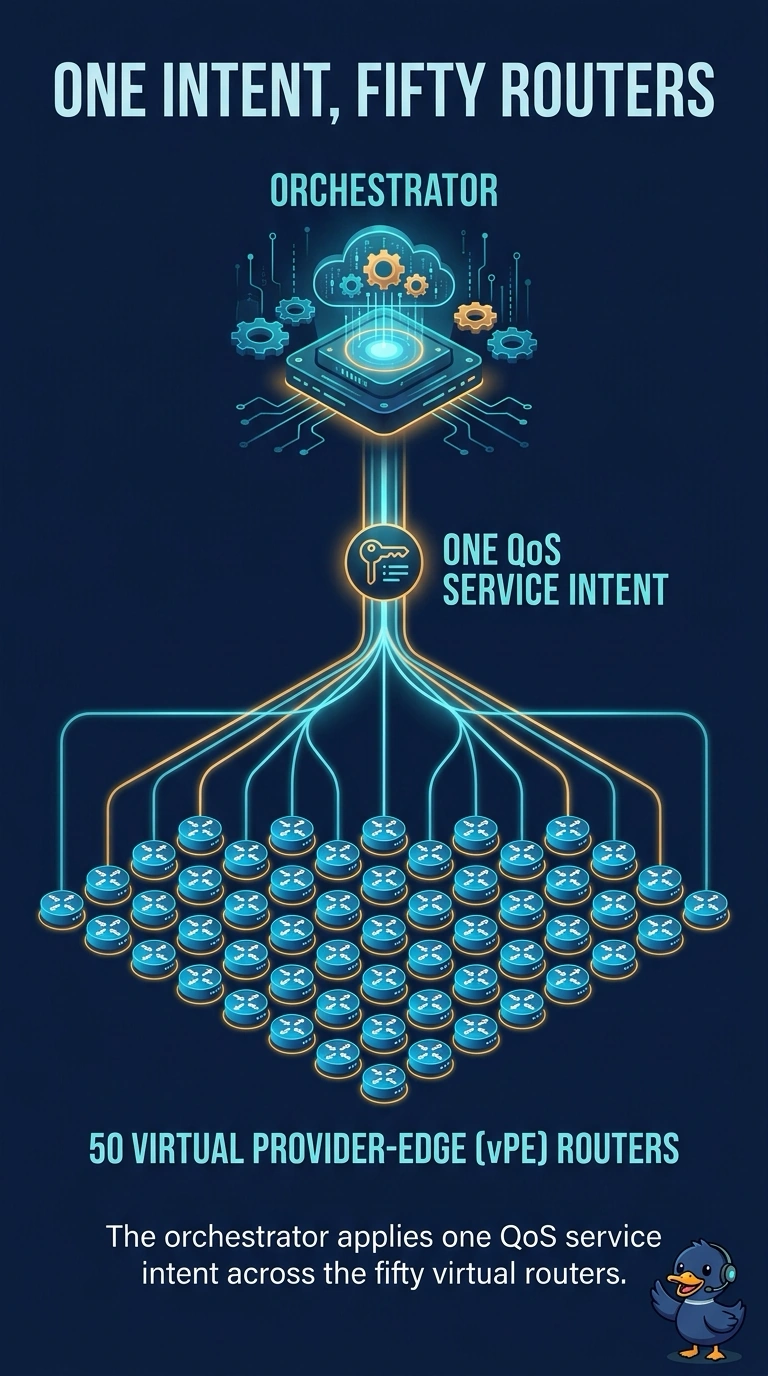
You can keep the forwarding routers in place and share one policy instead of rebuilding each one because the QoS rule changed. Use the orchestrator to apply one QoS service intent across all fifty virtual routers. Replacing them with a virtual firewall, restarting the existing virtualization program, or editing separate boot images does not apply that single intent to the routers already forwarding traffic.
Full Explanation
The orchestrator takes one service intent and applies it across devices, so you can deliver the same QoS policy to all fifty virtual routers that are already forwarding traffic. A new virtual firewall image would replace the routers with a different forwarding platform; it would not configure the existing routers with the requested policy. A fresh start of the network functions virtualization program is unnecessary because the routers already belong to that program, and restarting it does not apply one QoS policy. Fifty hand-built day-0 images would require you to edit a separate boot file for every router, baking the policy into individual images rather than expressing one intent for devices that already exist and forward traffic. Applying one QoS service intent across the virtual routers directly meets the requirement to describe the policy once and apply it everywhere. Exam caveat: Day-0 image work is relevant when the function does not yet exist, not when existing routers need one shared policy. Practical check: Push the QoS intent once, then inspect the policy on several virtual routers and confirm that it matches without booting a new image on any router.