
A carrier runs a virtual firewall on its own cloud pool and, during hall maintenance, places that same guest on a public provider pool. The tenant still patches the guest in both places. Who operates the pools in this design?
Select an answer to reveal the explanation.
Short Explanation
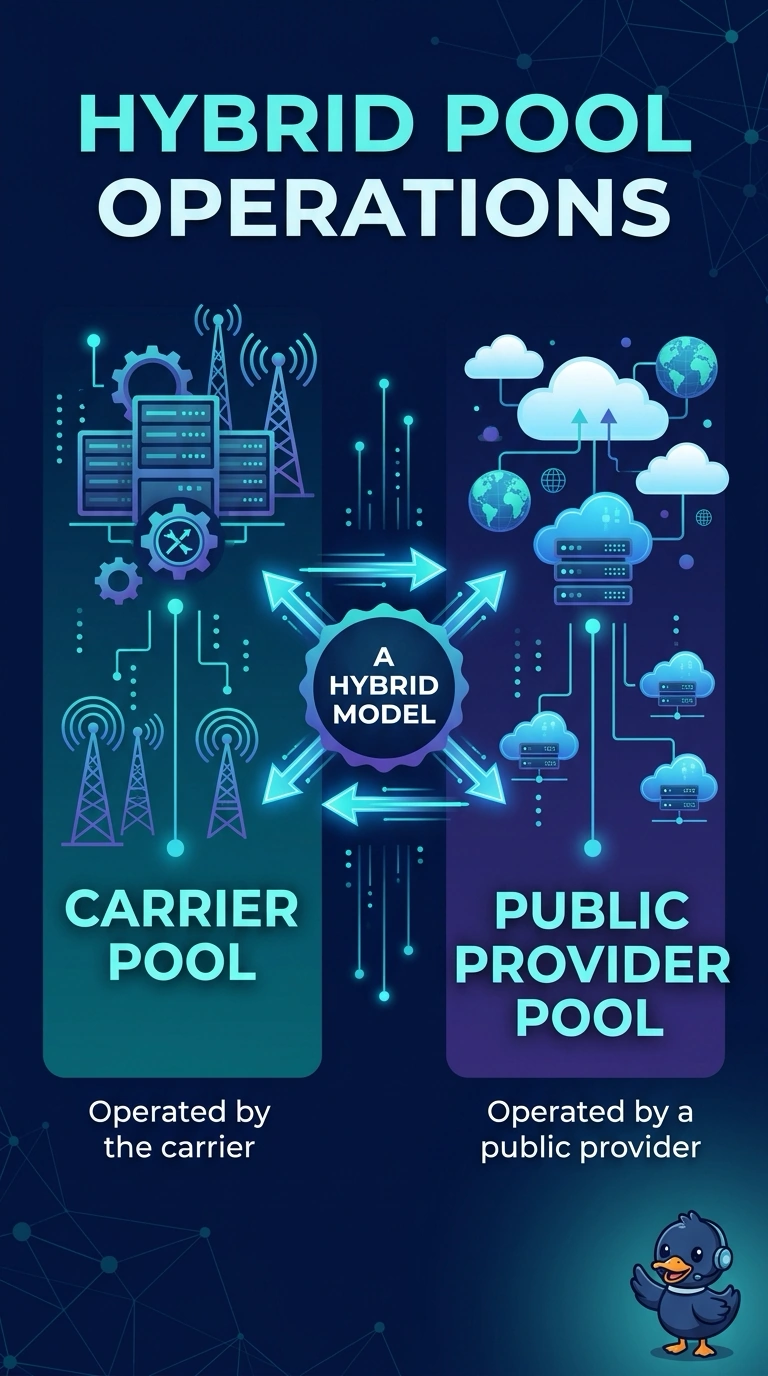
You get the same firewall meal in two kitchens: the carrier’s and the public provider’s. Hybrid cloud connects distinct cloud environments and enables data or application portability, so you can move the same guest workload between the private pool and the public cloud.
Full Explanation
Private, public, and hybrid describe deployment based on who operates the clouds and how they are linked. You still have a virtual firewall guest, and the tenant patches it on both pools, so the design retains a guest to maintain rather than leaving no guest behind. Hybrid cloud connects distinct cloud environments and enables data or application portability; here, the same guest workload can move between the carrier-operated pool and the public provider pool. A hybrid model, with the carrier operating one pool and a public provider the other, is correct because it accounts for both pools and the workload’s portability between them. A private model only, leaving out the public provider pool used in maintenance, fails because it omits the public provider pool that runs the same guest during maintenance. A public model only, leaving out the carrier-operated pool in the carrier hall, fails because it omits the carrier-operated pool used in normal operation. A function service that leaves no guest, although the tenant still patches one, fails because a function service leaves nothing to patch, while the tenant patches this firewall guest. Exam caveat: hybrid describes linked pools; it does not change the service model. As a practical check, identify who operates each pool and whether the tenant still patches a guest in both locations.