
A shipyard needs a virtual router that speaks BGP and forwards tenant packets in the hosted cloud. The orchestration system that pushes service intent is already running and healthy. What still has to be placed?
Select an answer to reveal the explanation.
Short Explanation
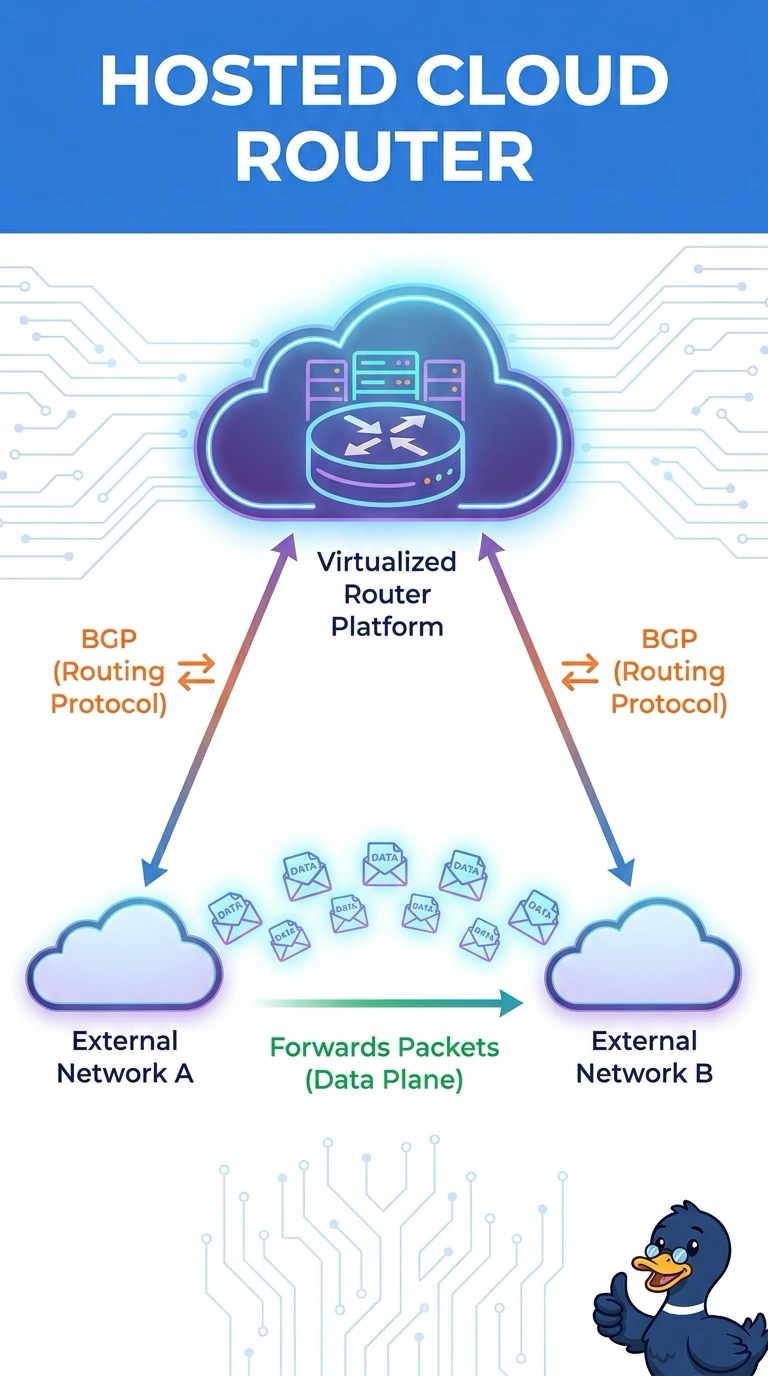
You already have a healthy orchestration system pushing intent; now you need the virtualized router platform to speak BGP and forward tenant packets. Place that router in the cloud, and let the existing orchestrator configure it.
Full Explanation
A virtualized router platform is the network function that speaks BGP and forwards tenant packets, so placing it in the cloud supplies the shipyard’s missing capability. The orchestration system pushes configuration intent and, through lifecycle-manager integration, can instantiate a VNF; it does not itself become the BGP speaker or packet forwarder. A second copy of the orchestration system would still be an orchestrator, not the virtual router that must perform forwarding. A YANG module describes configuration, but without a router in the cloud to apply it to, it cannot establish BGP or forward packets. A second VLAN identifier is only a tag and cannot speak BGP by itself. The virtual router must exist even when the orchestrator initiates its creation. Exam caveat: the virtual router is the VNF in this scenario, and NFV explains why it runs in the cloud rather than on a separate appliance. Practical check: confirm the new virtual router establishes BGP and forwards tenant packets, and verify that the existing orchestrator pushes intent to that router rather than standing in as the forwarder. Once the virtual router is up, point the existing orchestrator at it; do not expect another orchestration system to create a BGP session on its own.