
A power utility already runs many virtual CGNAT guests that operators edit by hand. Leadership wants one policy applied the same way on every guest. What role is missing?
Select an answer to reveal the explanation.
Short Explanation
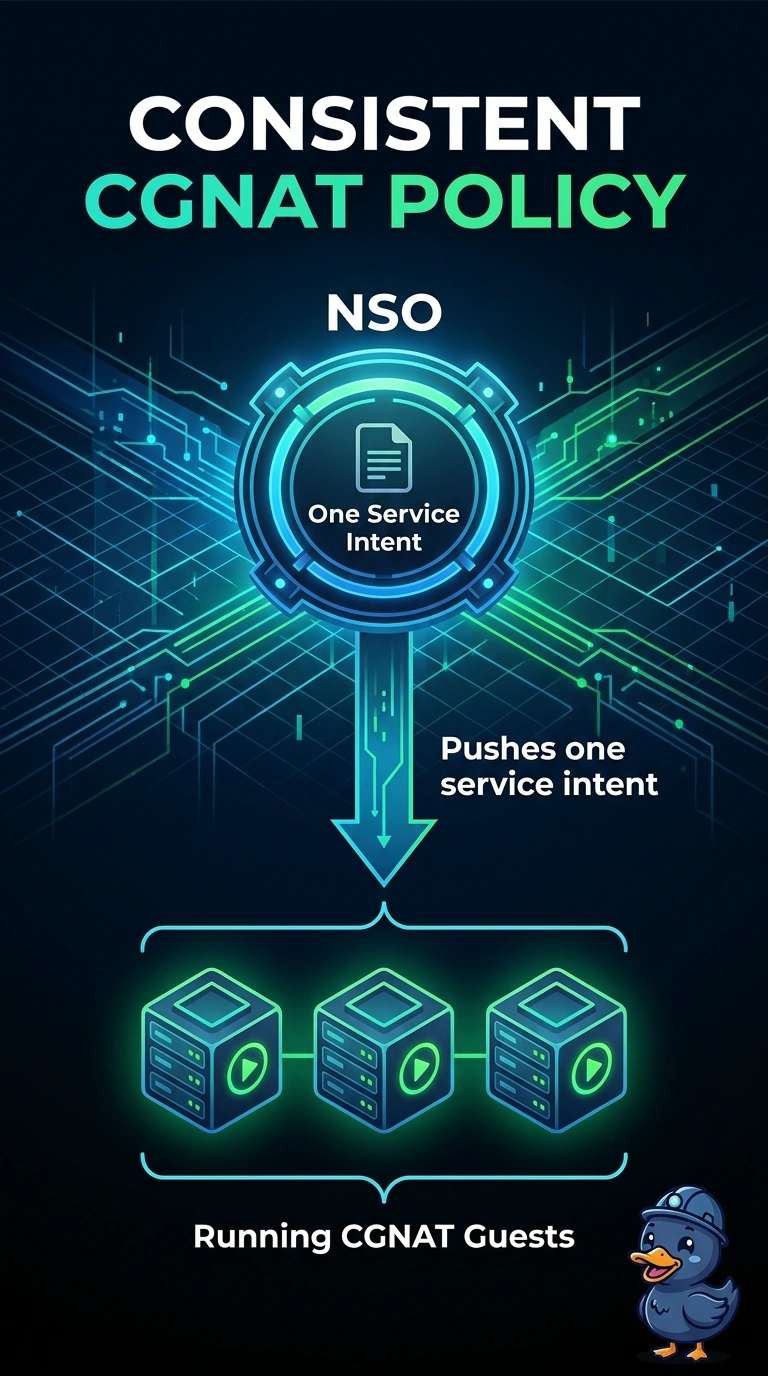
The cooks are already on the line, and the missing piece is one recipe they all follow. You use NSO to push one service intent to the CGNAT guests that already run. Another CGNAT platform, an NFV approach statement, and a VIM catalog entry do not push that shared policy.
Full Explanation
NSO is the orchestrator that pushes service intent onto functions that already exist. The utility already runs the virtual CGNAT guests and edits them by hand, so the missing role is one service intent pushed to all of them. Another CGNAT platform repeats a function they have. An NFV statement names the approach and does not configure guests. A VIM catalog entry boots instances and does not apply one policy everywhere. NSO pushing one service intent to the CGNAT guests that are already running is the design that meets this requirement. Another CGNAT platform that forwards packets the current guests already forward is the wrong fit because another CGNAT platform would forward packets, and the utility already has guests doing that job. An NFV approach statement that names the method and does not push the shared policy is the wrong fit because an NFV approach statement only names the method and does not push one policy onto the running guests. A VIM catalog entry that can boot another guest and does not apply one policy everywhere is the wrong fit because a VIM catalog entry can boot a guest and does not apply one service policy across the guests already up. Exam caveat: NSO, the virtual CGNAT platform, and the NFV approach are three roles. Having the guests already running does not mean the shared policy has been orchestrated. Operational check: Push one shared policy through NSO, then confirm each running CGNAT guest shows that policy and that no extra guest was booted just to carry it.