
A ferry operator still has unused 802.1Q identifiers inside 1 through 4094. The next tenant needs one isolated bridged segment and no other networks. Use the existing bridged fabric and minimize new infrastructure or encapsulation. What should be allocated?
Select an answer to reveal the explanation.
Short Explanation
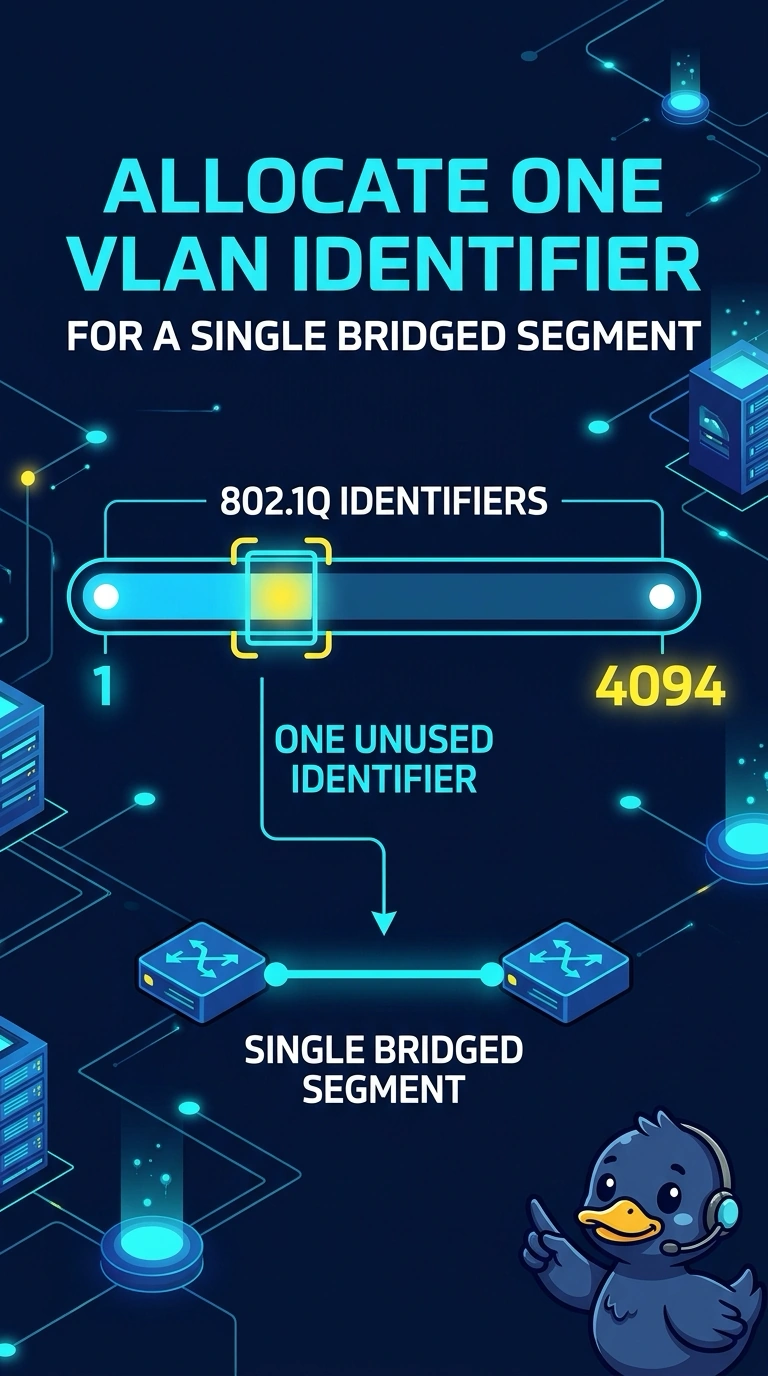
You can use an available bridged identifier before adding another layer of infrastructure. Allocate one unused VLAN identifier inside 1 through 4094 for the tenant’s single bridged segment. An overlay network, a routed network, or a VLAN already used by another tenant does not meet this requirement.
Full Explanation
A bridged segment uses one 802.1Q identifier, and usable identifiers run from 1 through 4094. Since free identifiers remain and the tenant needs only one isolated bridged segment, one unused VLAN identifier is sufficient. This uses the existing bridged fabric and minimizes new infrastructure or encapsulation. An overlay network could isolate the tenant, but it adds encapsulation when an available bridged identifier already meets the requirement. A routed network does not provide the single isolated bridged segment the tenant requested. A VLAN already used by another tenant is unsuitable because reusing it merges the tenants’ broadcast domains and removes their isolation. Exam caveat: If every identifier from 1 through 4094 is already assigned, another bridged VLAN is unavailable, so the next isolated segment must leave that bridge. Practical check: Confirm that the tenant receives an identifier no other tenant uses and that its broadcast traffic stays off the other tenants.