
A provider runs a virtual firewall as a workload on its cloud and uses a separate system to push service intent. What is that virtual firewall in the design?
Select an answer to reveal the explanation.
Short Explanation
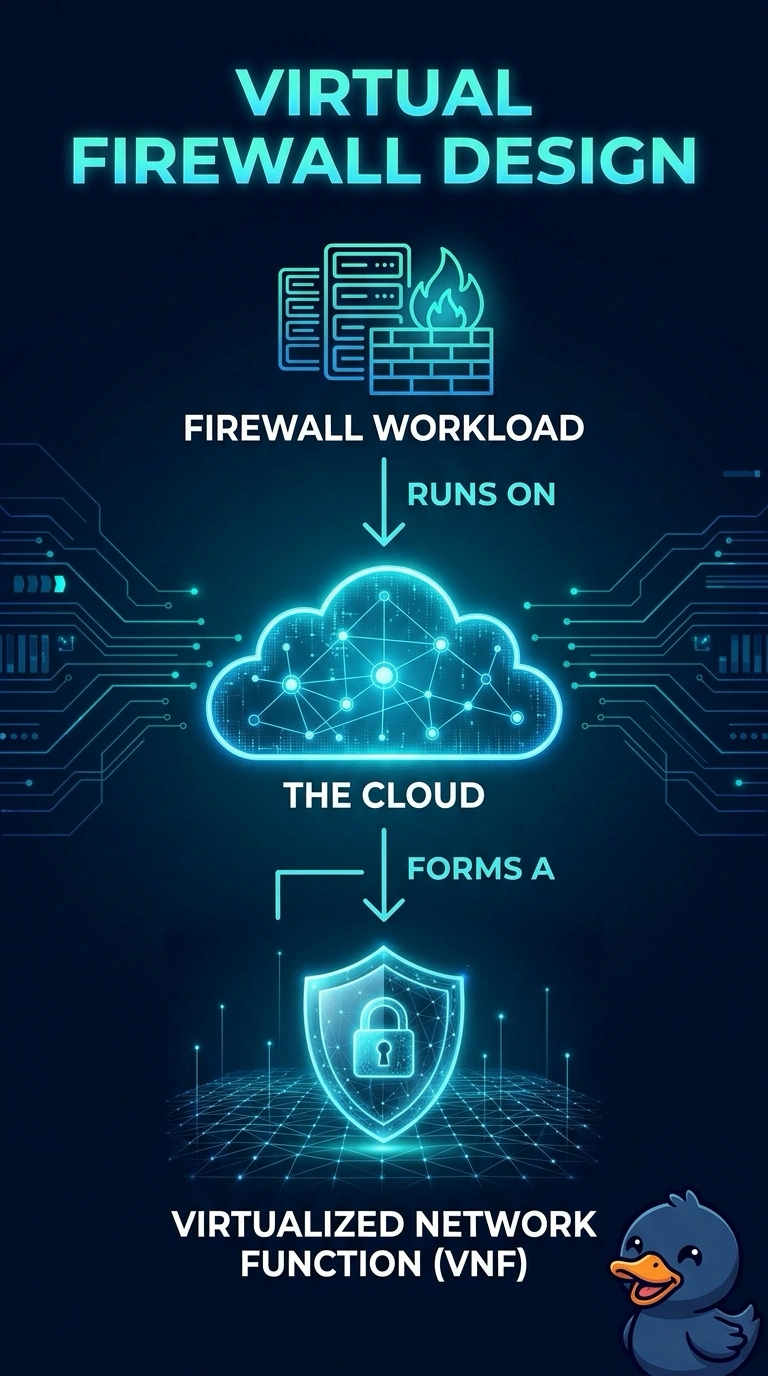
The musician on stage is not the style of music, the conductor, or the concert hall. You are looking at the virtualized network function, the firewall workload itself. The NFV approach, NSO service intent, and the VIM that schedules instances are the other roles.
Full Explanation
NFV is the approach of running network functions on shared cloud infrastructure instead of dedicated appliances. The virtual firewall running as a workload is the virtualized network function, the function itself. NSO is the separate system that pushes service intent. The VIM schedules instances, networks, and flavors. Those roles sit around the firewall. They are not the firewall. The virtualized network function formed by the firewall workload running on the cloud is the design that meets this requirement. The NFV approach of placing network functions on shared cloud infrastructure instead of appliances is the wrong fit because it names the approach of moving functions onto cloud infrastructure, not this firewall workload. The NSO orchestrator that receives service intent and pushes the matching device configuration is the wrong fit because it names the orchestrator that pushes service intent, not the firewall running as a workload. The virtual infrastructure manager that creates instances, tenant networks, and flavors is the wrong fit because it names the system that schedules instances, networks, and flavors, not the firewall function. Exam caveat: Calling the firewall NFV, NSO, or the VIM mixes the function with the method, the orchestrator, or the cloud controller. The workload is the VNF even when NSO configures it. Operational check: Confirm the inventory shows the firewall as a workload instance, with NSO recorded separately as the intent system and the VIM as the cloud controller.