
Fiber from a top-of-rack switch to a virtual firewall host crosses a shared cage, and the frames on that Ethernet hop must be encrypted. Neighboring tenants can see the strand. What control matches the hop?
Select an answer to reveal the explanation.
Short Explanation
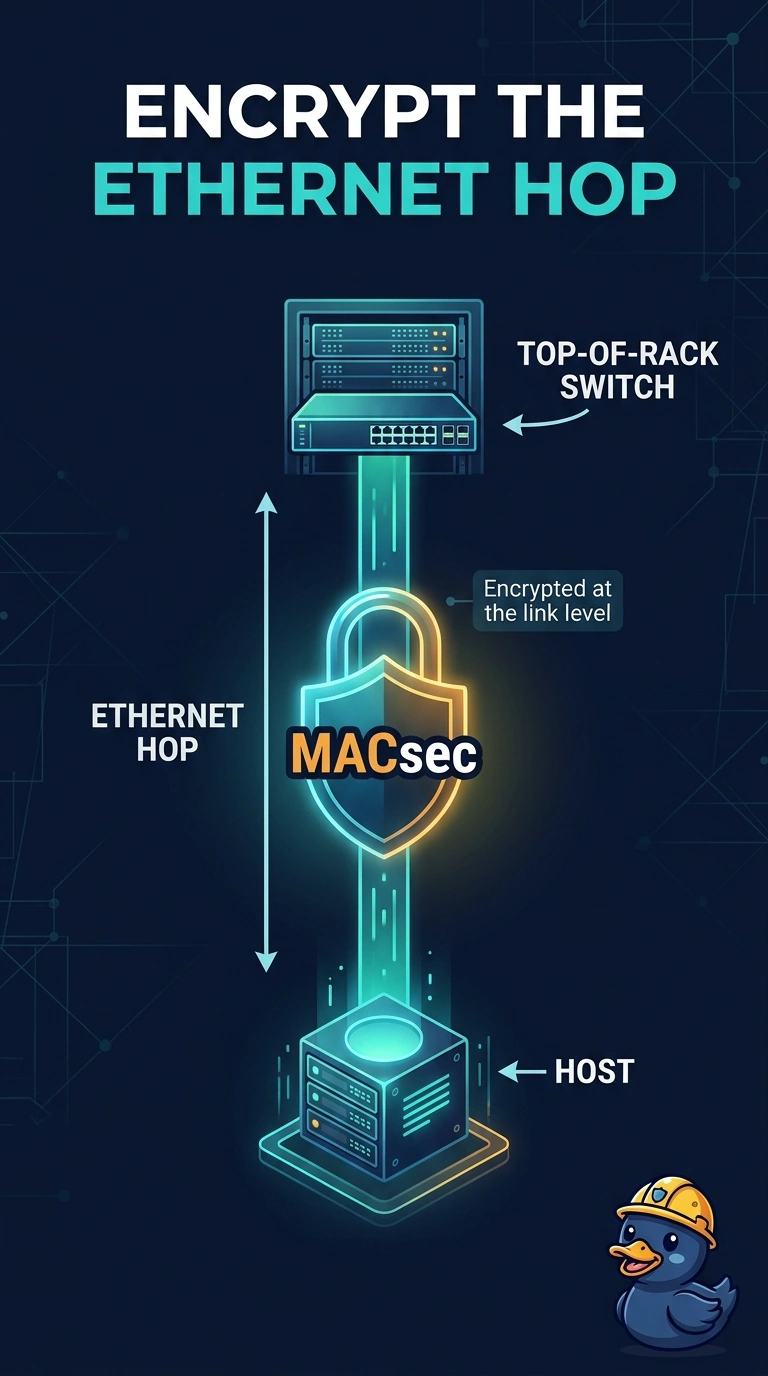
You’ve identified a shared-cage Ethernet hop where neighboring tenants could see the frames. MACsec between the top-of-rack switch and the host encrypts that hop; TACACS, an access list, and BGP flowspec do not encrypt its frames.
Full Explanation
MACsec on the Ethernet hop between the top-of-rack switch and the host meets the requirement because it encrypts frames on the specific hop that crosses the shared cage. Encryption must be enabled at both ends of that hop; filtering traffic or authenticating administrators does not hide frames from a neighbor who can see the strand. TACACS for administrators who log into the top-of-rack switch and the host does not fit because TACACS authenticates device administrators, not Ethernet frames. An access list that filters packets but leaves Ethernet frames readable does not fit because filtering does not encrypt the frames on the strand. A BGP flowspec filter distributed to routers that are not this Ethernet hop does not fit because it distributes a router filter and does not encrypt this hop. Exam caveat: MACsec protects only the Ethernet hop where you enable it and does not authenticate administrators. Practical check: confirm both ends show MACsec up, then verify that a tap on the shared-cage strand sees ciphertext rather than readable firewall frames.