
An allowed application flow is exploiting a container, and DNS queries from that container look ordinary. Where should exploit detection sit?
Select an answer to reveal the explanation.
Short Explanation
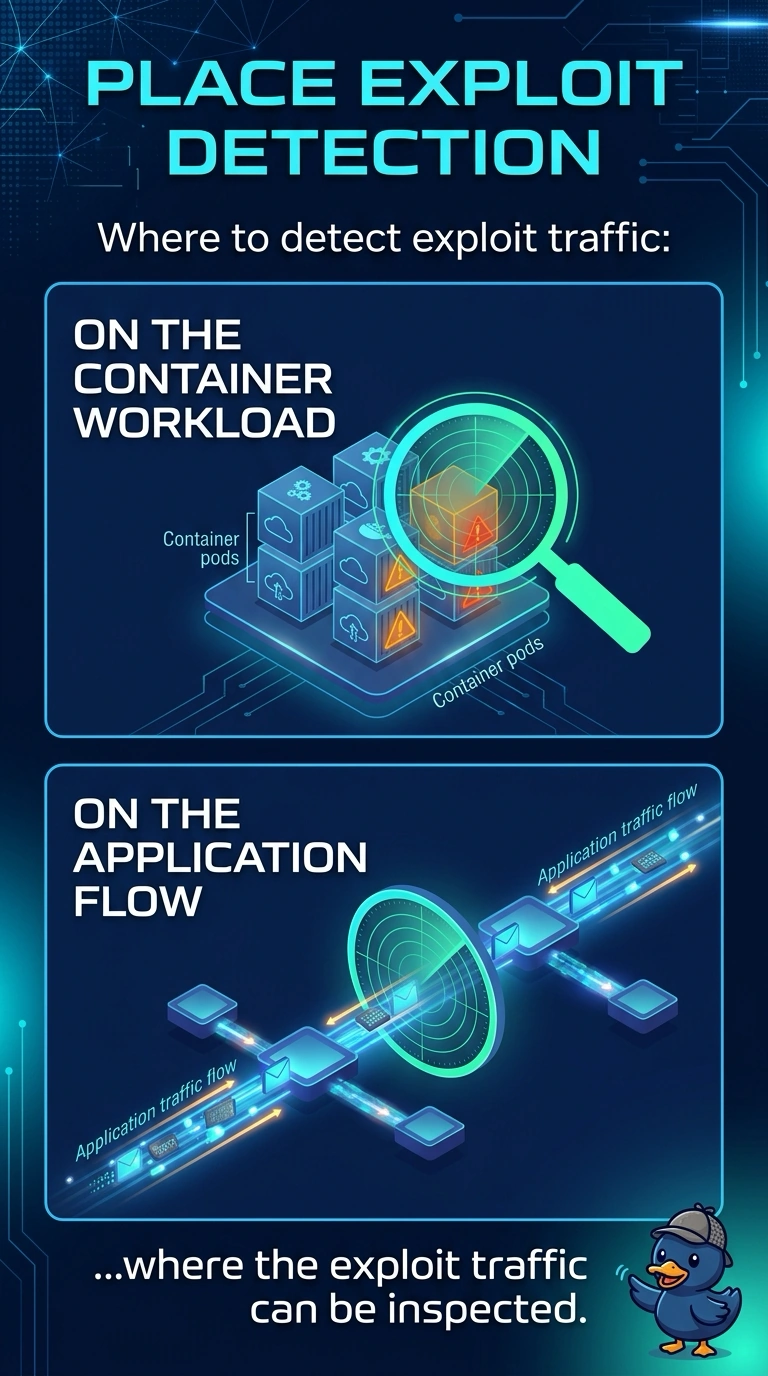
A smoke alarm belongs in the room that is burning, not on the mailbox. You place exploit detection on the workload or on the flow that carries the exploit. DNS security on the resolver, a disk malware scan, and another DNS filter only see queries or stored files.
Full Explanation
Exploit detection has to see the workload or the flow it was placed on. This exploit rides an allowed application flow while DNS stays ordinary, so a DNS security service will not observe it. Malware detection that scans a disk looks at stored content and does not watch the live flow. A second DNS filter is still a view of queries. The sensor has to sit where the exploit packets or the exploited container can be inspected. On the container workload or on the application flow where the exploit traffic can be inspected is the design that meets this requirement. On the DNS resolver, where a DNS security service sees queries and not the exploit flow is the wrong fit because DNS security sees queries, and these queries look ordinary, so it does not observe the exploit flow. On a disk scan that looks for stored malware and does not watch the live application flow is the wrong fit because a disk malware scan looks at stored content and does not watch the live flow that carries the exploit. On a second recursive DNS filter that still sees only names and query patterns from the container is the wrong fit because another DNS filter is still a query view and cannot see an exploit that never shows up in DNS. Exam caveat: Exploit detection on a flow sees the traffic it is placed on, and it does not answer recursive DNS or scan a disk the way those other services do. Operational check: Confirm the exploit detector is attached to the container or to the application flow, and confirm the ordinary DNS queries are not the feed being used to catch this exploit.