
An orchestrator calls a VIM API, and the design must prove both the calling client and the API server on that call. Which control proves both parties?
Select an answer to reveal the explanation.
Short Explanation
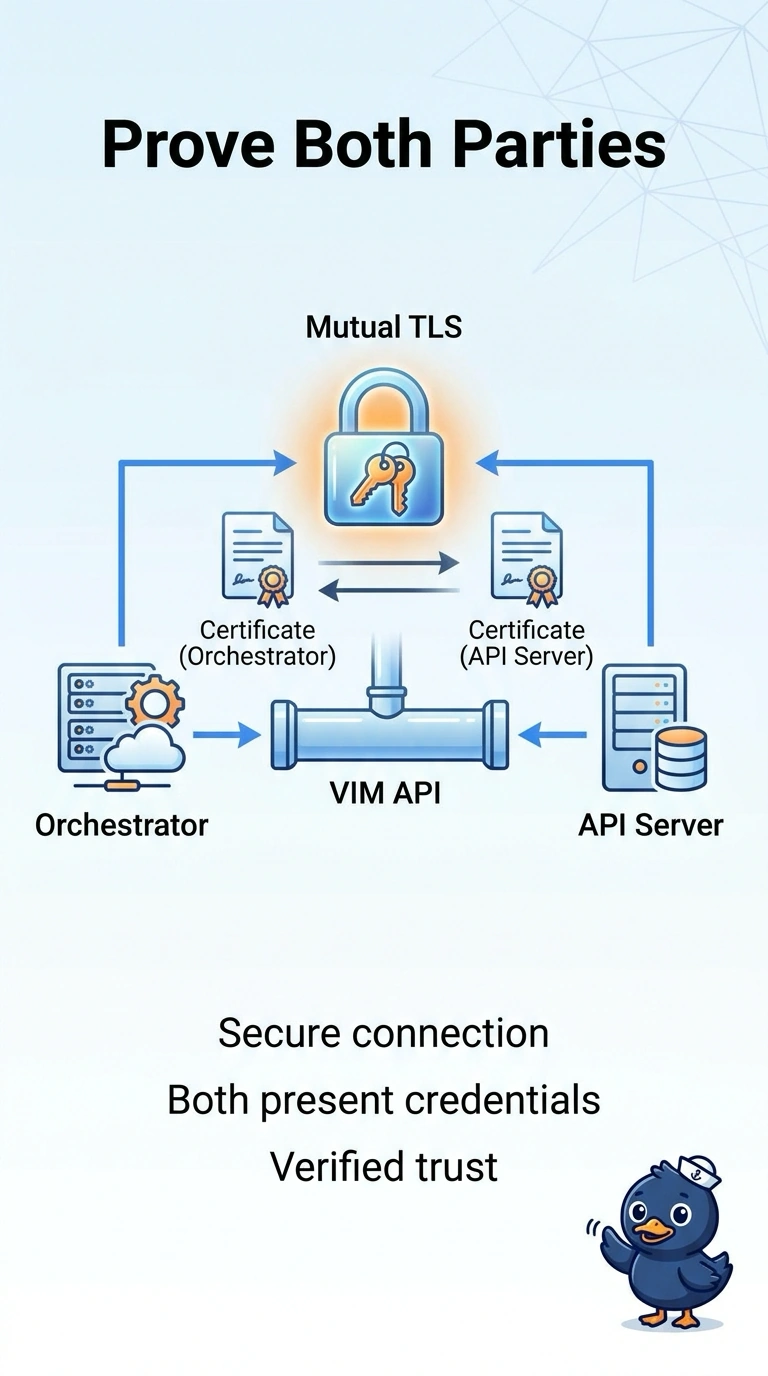
A door that checks only the building badge is not the same as both of you showing badges. You require mutual TLS so the orchestrator and the VIM API each prove identity. Server-only TLS, tenant segmentation, and hiding the API from tenant networks do not prove the caller.
Full Explanation
Mutual TLS proves both the client and the server, with each side presenting a certificate. TLS that authenticates only the server protects the channel and leaves the orchestrator unproven. Tenant segmentation keeps workloads apart. Keeping the cloud control plane off tenant routes stops guests from reaching the API, and it does not identify the caller. The requirement on this VIM call is proof of both parties. Mutual TLS on the VIM call, with a certificate from both the orchestrator and the API server is the design that meets this requirement. Server-only TLS on the VIM call, proving the API server and leaving the client unproven is the wrong fit because server-only TLS proves the API server and protects the channel, and the calling orchestrator remains unauthenticated. Tenant segmentation that separates workloads without identifying the orchestrator client is the wrong fit because segmentation keeps tenants apart and does not present a client certificate when the orchestrator calls the API. Removal of tenant routes to the VIM API, keeping guests away without proving the caller is the wrong fit because removing tenant routes to the API keeps workloads off the control plane and does not prove the caller identity. Exam caveat: TLS that checks only the server still protects the channel, but it does not prove the client. Segmentation and an unreachable API are separate controls from mutual authentication. Operational check: On a test call, confirm the VIM API rejects a client with no certificate and accepts the orchestrator only when both certificates validate fully.