
Cloud on-ramp traffic must follow a low-latency provider core path and fail onto a second engineered path. Encryption is already handled elsewhere. What steers those core paths?
Select an answer to reveal the explanation.
Short Explanation
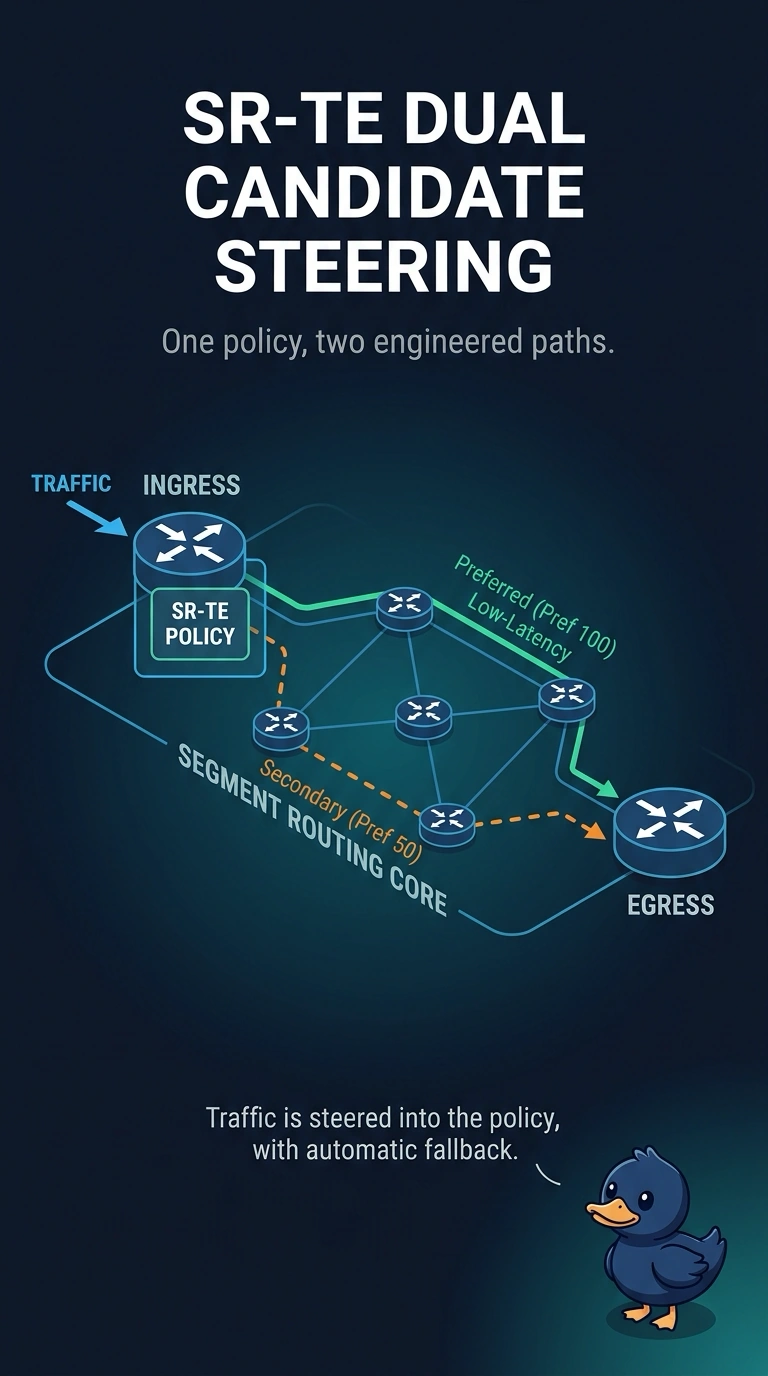
Track switches steer a train, and a padlock on the cargo does not pick the rail. You steer the traffic into that SR-TE policy with a preferred low-latency candidate and a backup candidate ready. A private interconnect, IPsec, and GRE do not select those core paths.
Full Explanation
A private interconnect is a dedicated entry into the cloud and does not steer the provider core. Configure an SR-TE policy with a preferred low-latency candidate and a secondary candidate at a lower preference; steer the traffic into that policy to pin the on-ramp flow to low latency and fail to the second engineered path. IPsec adds encryption, which this scenario already handles elsewhere. GRE encapsulates without selecting a path. Configure an SR-TE policy with a preferred low-latency candidate and a secondary candidate at a lower preference; steer the traffic into that policy is the design that meets this requirement. Treat the private interconnect as the tool that steers the provider core paths is the wrong fit because it only provides cloud entry and does not steer core paths. Add an IPsec tunnel and rely on it to select the low-latency provider core path in that other design is the wrong fit because IPsec encrypts and does not choose the engineered core path. Add a GRE tunnel and rely on it to select the low-latency provider core path is the wrong fit because GRE encapsulates and does not select a low-latency core path. Exam caveat: Segment routing steers the provider transport, IPsec does not select an engineered core path. Operational check: Verify the path change under a controlled primary failure.