
A hospital forbids the internet as the path into its cloud and wants a dedicated attach, with no request to encrypt an untrusted path. Which design fits?
Select an answer to reveal the explanation.
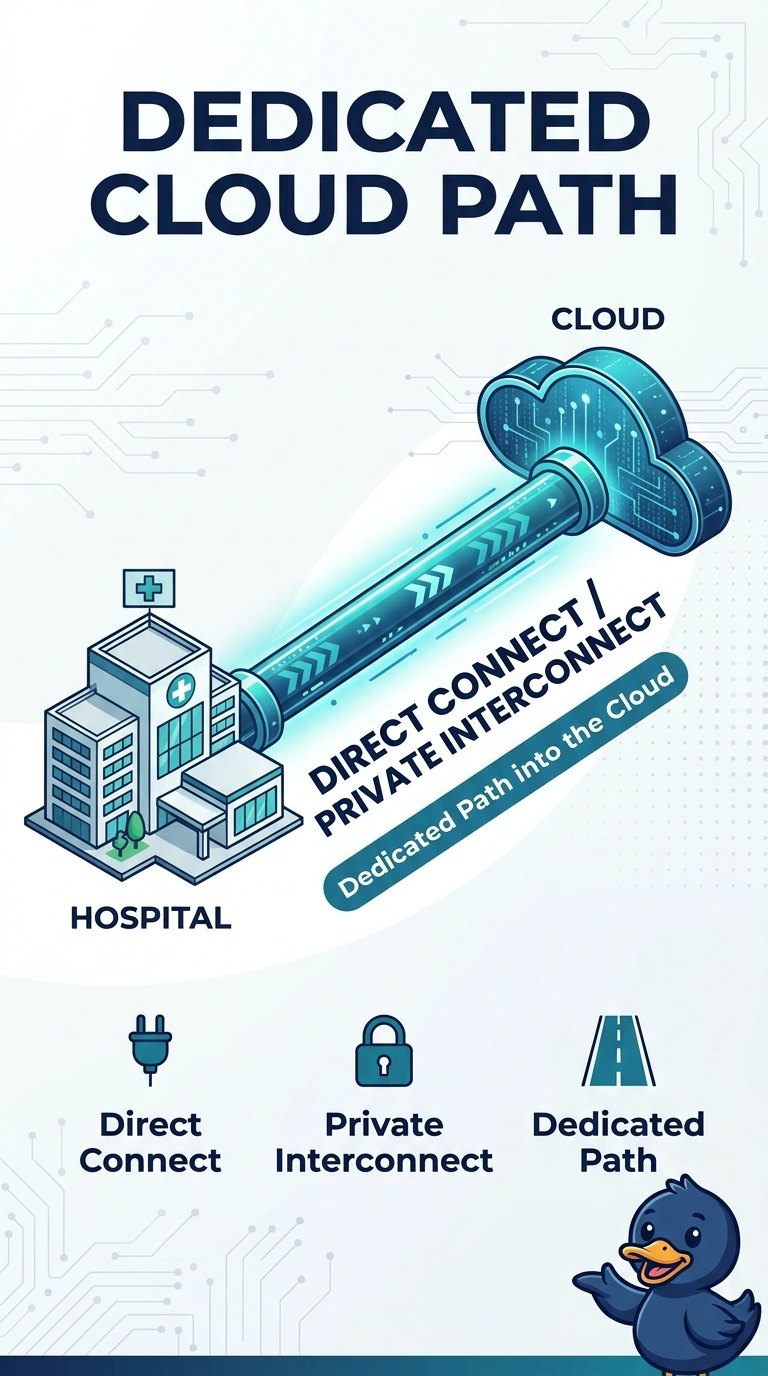
Short Explanation
Think of a private driveway as different from a lock on a public road. You need a direct connect or private interconnect because you want a dedicated path, not encryption. IPsec over the internet, provider MPLS or segment routing, and a generic routing encapsulation tunnel each miss that requirement.
Full Explanation
A direct connect or private interconnect gives the hospital a dedicated path into the cloud, matching the requirement: the hospital rejects the internet as its path and does not ask to encrypt an untrusted path. A dedicated attachment is a path choice, not encryption by itself. IPsec over the internet encrypts an untrusted path, but still uses the internet path the hospital refused. Provider MPLS or segment routing supplies provider transport; treating that core transport as the dedicated cloud attach confuses transport within a provider network with the required attachment into the cloud. A generic routing encapsulation tunnel can carry routed traffic, but it is neither a private interconnect nor a cipher, so it does not meet the dedicated-attach requirement. Exam caveat: a direct connect or private interconnect does not guarantee end-to-end encryption; use IPsec ESP with encryption wherever policy requires network-layer confidentiality, including over a private circuit. Practical check: confirm the hospital’s cloud path is a dedicated interconnect rather than an internet circuit, and verify that IPsec was not added as though encryption were needed to satisfy this request.