
An insurer's private interconnect into the cloud is up, and an IPsec overlay between the same two edges is also up. Both still cross one congested link inside the provider core. Which change can steer around that congested core link?
Select an answer to reveal the explanation.
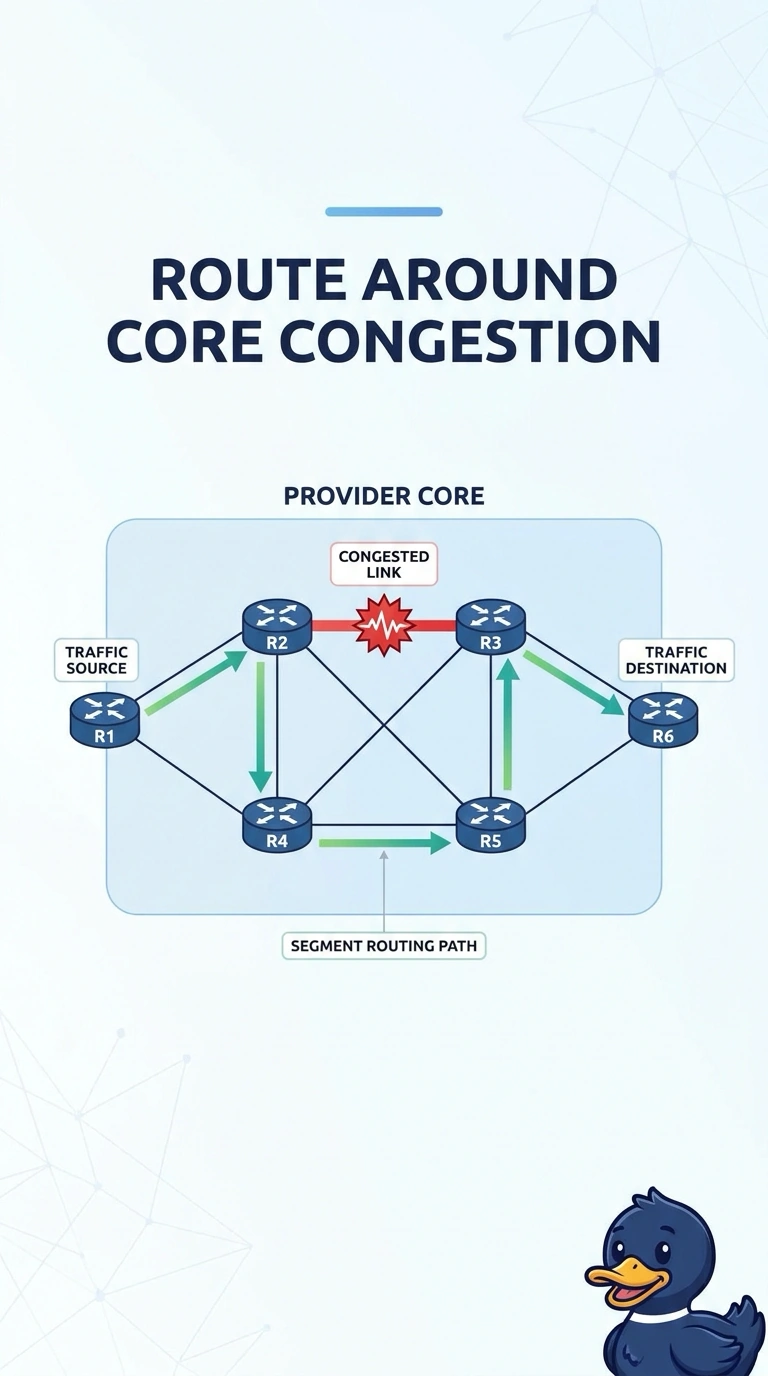
Short Explanation
Painting a second logo on the same truck does not get it off a jammed highway. Both attachments already exist, and both still cross the congested core link. You steer the provider core with segment routing onto a path that avoids that link.
Full Explanation
Segment routing on the provider core chooses the path across the core, so a policy that avoids the congested link changes the underlay both attachments are stuck on. The private interconnect and the IPsec overlay already reach the cloud; the remaining problem is which core link they cross. Another IPsec overlay between the same two edges is still forwarded by that core and, with no new steering, crosses the same congested link. Another private interconnect that is forced onto that same link repeats the congestion by definition. A new VLAN identifier on the guest changes a local tag and does not select a core path. Exam caveat: segment routing here is transport steering, not encryption and not a substitute for the cloud attachment the insurer already has. Operational check: trace the core path before and after the policy and confirm the congested link is no longer on the path while the interconnect session stays up. After the policy, the interconnect and the overlay can stay exactly as they are; only the core hop list has to change.