
A water utility must advertise its real plant prefixes into a cloud virtual network, and the contract forbids any path across the public internet. Segment routing already steers the provider core. Which attachment meets the requirement?
Select an answer to reveal the explanation.
Short Explanation
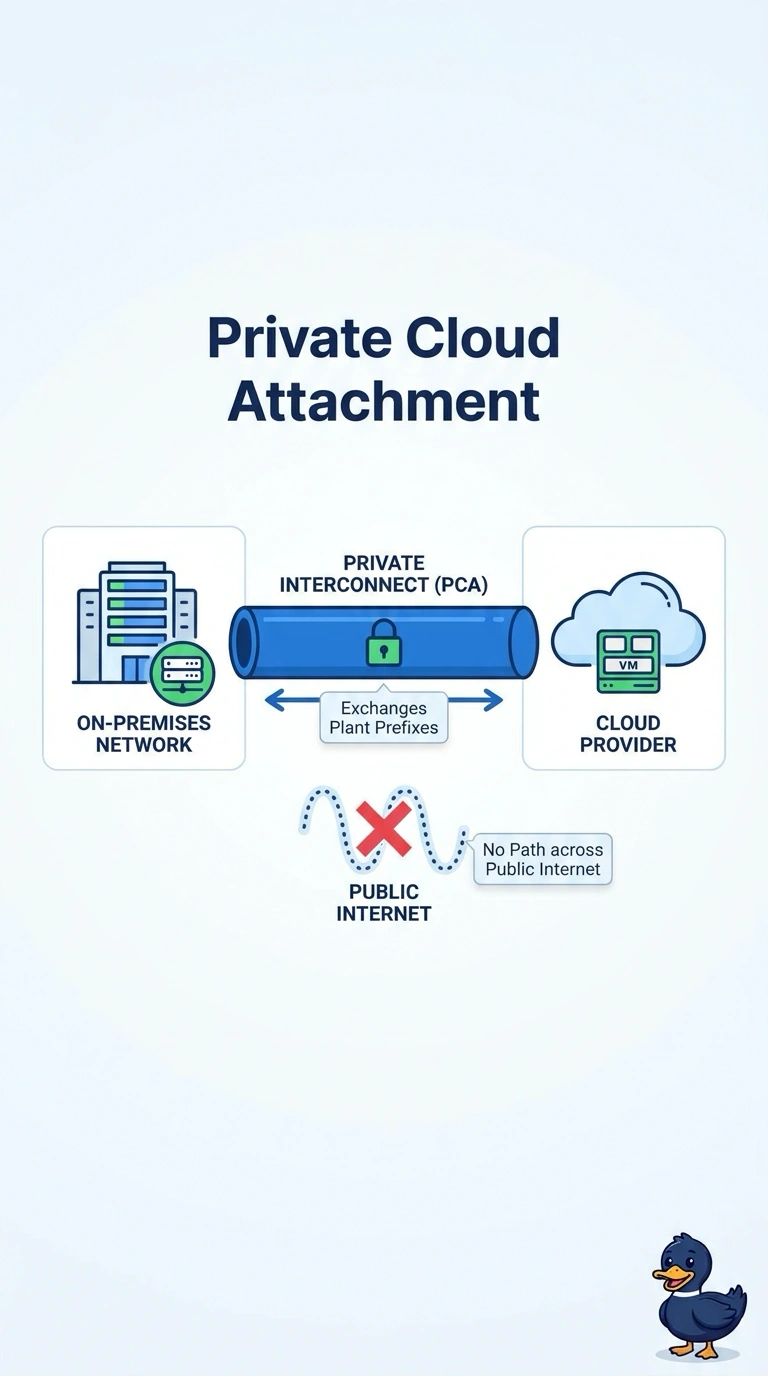
Think of a private road into the warehouse instead of a truck that still drives the public highway. You need the real plant prefixes in the cloud, and the contract keeps you off the internet. The private interconnect is the attachment that does both.
Full Explanation
A private interconnect provides a private cloud path on which the utility can exchange its plant prefixes. The contract forbids the public internet, so the attachment has to stay on the private path. Segment routing is already steering the provider core; it moves traffic among core paths and does not itself attach the plants to the cloud virtual network. An IPsec overlay that crosses the public internet violates the contract even though it can encrypt. A second internet tunnel that hides the plants behind one address both uses the internet and fails to advertise the real prefixes. Exam caveat: a private interconnect is not encryption by itself; this requirement did not ask for confidentiality, it asked for a private path and the real prefixes. Operational check: Check the effective route for each plant prefix and verify its next hop uses the private attachment rather than the public internet.