
A manufacturer wants the experience of an outside visitor opening the public parts-booking site, without a scripted login. Which agent style fits?
Select an answer to reveal the explanation.
Short Explanation
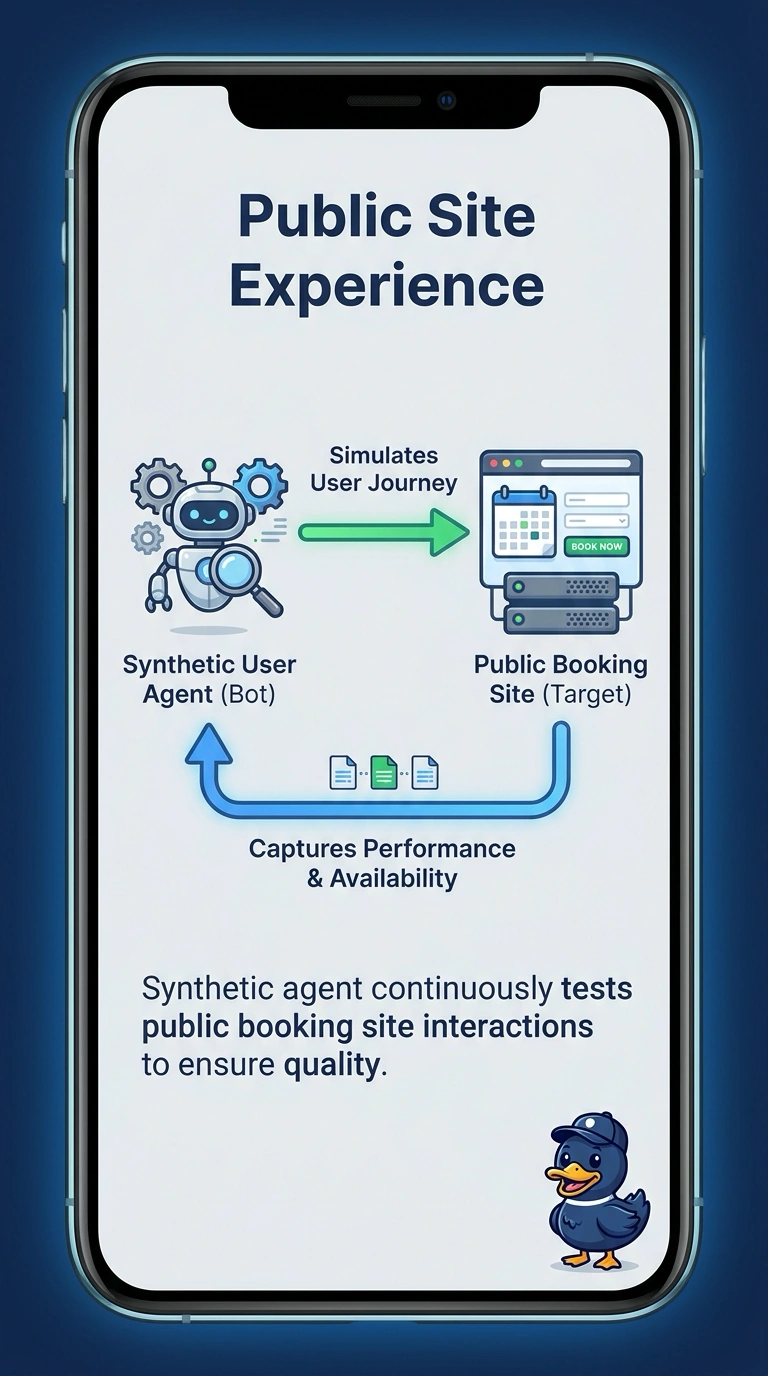
An outside visitor at the booking door is a walk-up customer, not a clerk running an order and not a camera on the factory floor. You aim a synthetic user agent at that public site to learn the visitor's experience. A scripted order, a factory LAN collector, or a packet capture that never opens the site measures something else.
Full Explanation
The manufacturer wants the experience of an outside visitor opening the public parts-booking site, and the test is not a scripted login. A synthetic user agent aimed at that public booking site performs the visit and reports that visitor-style page experience. A scripting agent that logs in and submits a parts order is the style for an authenticated transaction. It measures a logged-in order, which is a different request from an outside visitor who is not signing in. A local collector on the factory LAN that measures loss and delay sits inside the plant and samples the segment. It does not behave like an outside visitor hitting the booking site. A packet capture that records frames and never walks the booking site can store packets. It does not open the site as a visitor, so it cannot describe the booking-page experience. Exam caveat: use a synthetic user when the job is a visitor-style page experience, and use a scripting agent when the job is a scripted transaction. Operational check: run the synthetic agent against the public booking site and confirm the result is a visit to that site, not a logged-in order and not a factory LAN loss sample.