
A hospital campus wants proof that the patient-portal checkout still logs in, fills the required fields, and reaches the confirmation page after each release. Which agent style fits that job?
Select an answer to reveal the explanation.
Short Explanation
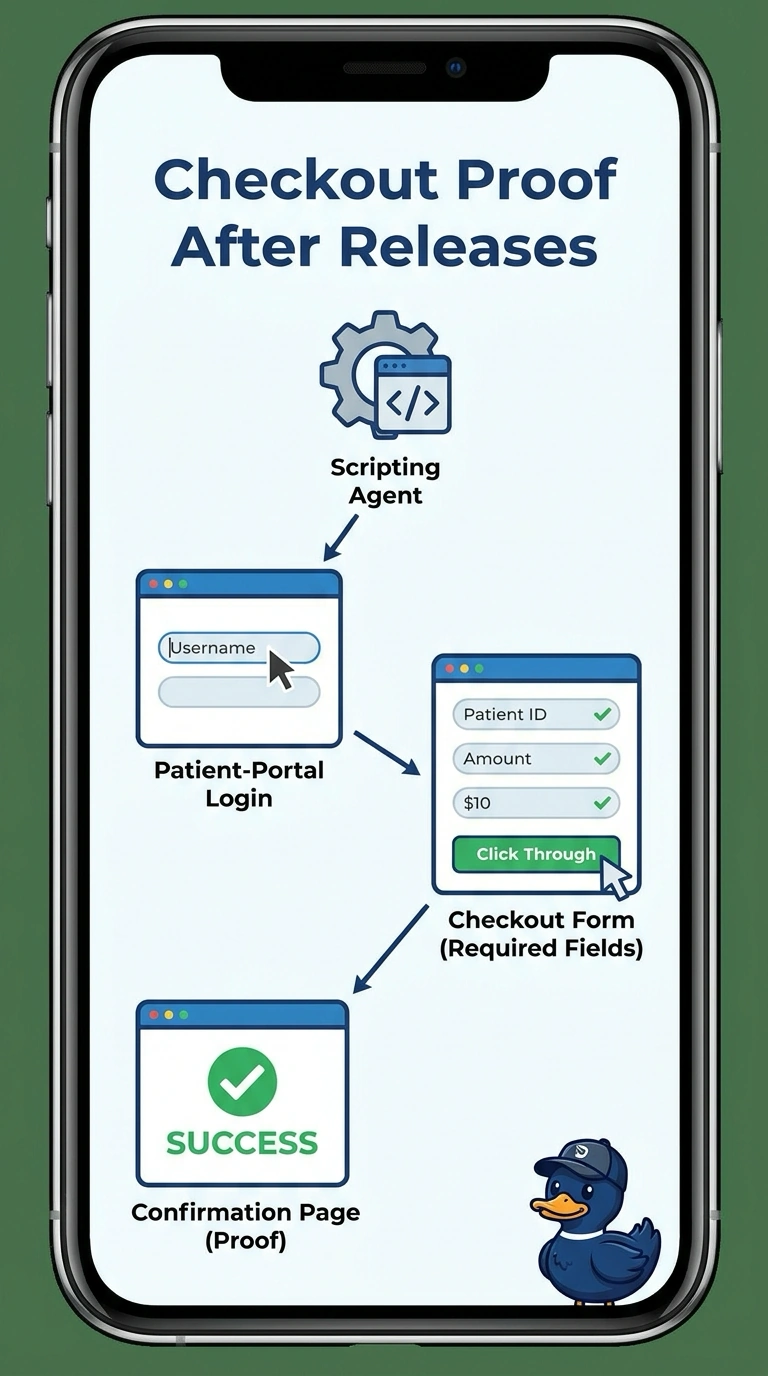
A checkout is a clerk who signs in, fills the form, and hits confirm, not a camera filming the lobby. You want a scripting agent that performs those same steps, or a broken field stays invisible. The trap is treating a packet capture or a bare page load as if the transaction had been walked.
Full Explanation
The hospital checkout is a transaction with a login, required fields, and a confirmation page, and only an agent that performs those steps can prove the release still works. A scripting agent that logs in, fills the fields, and clicks through checkout fails when a field is rejected or the confirmation page never arrives, which is the evidence the campus asked for. A synthetic visitor that only loads the public home page shows that one URL can be fetched. It never submits credentials or advances the form, so a checkout that breaks after login still looks healthy. A local collector that samples loss on the ward segment reports how that LAN is behaving. It does not open the portal, and a clean segment can sit beside a checkout that never reaches confirmation. A packet capture that records frames and never opens the portal can show that traffic existed. It does not enter credentials or press through the form, so it cannot tell a reached confirmation page from a stalled checkout. Exam caveat: pick the agent style by the user action that must be repeated, because a network sample and a finished transaction are different evidence. Operational check: run the scripted checkout against a known-good portal, confirm it reaches the confirmation page, then withhold that page in a test system and confirm the same agent reports the failure.