
A manufacturer's plant uplink stays full through production shifts, and the team is about to add a third alert for that same saturation. What should the capacity report recommend instead?
Select an answer to reveal the explanation.
Short Explanation
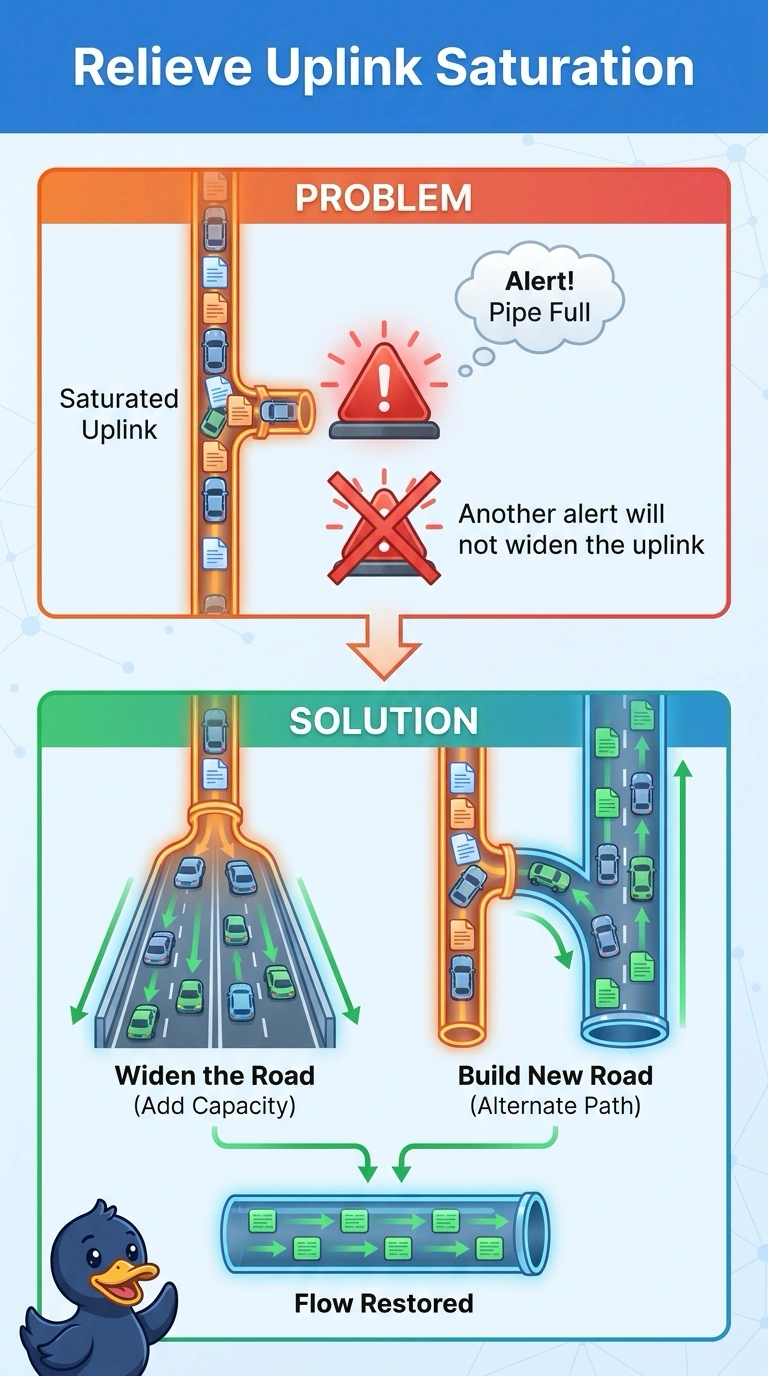
Paging the fire department a third time does not lay a wider road. You recommend real capacity for the manufacturer's full plant uplink instead of another alert on the same pain. Renaming the dashboard or sampling the link again still leaves the pipe the size it is.
Full Explanation
A link that stays full through production has a capacity problem, and the report should recommend added capacity or an alternate path. Either one changes how much traffic the plant can carry. Creating a third alert so the same operators are paged again when the uplink is full adds another notification of a condition two alerts already describe, and a page does not widen the uplink. Renaming the plant dashboard so the saturated uplink has a clearer title helps a person find the chart and does not alter the circuit, the path, or the policy. Scheduling another probe that samples the same full uplink and changes nothing about the design collects another copy of the saturation evidence without a capacity action. Exam caveat: an alert is how you notice the full link, not the recommendation you make once the fullness is already known. Operational check: after the recommended path or capacity is in place, confirm the production shifts no longer fill the original uplink for the whole shift. If utilization is unchanged, the report only added noise.