
A hotel chain's guest-experience alert fires during a dip and then clears while that dip is still in progress, so the page ends before the experience recovers. What should the team do to validate the rule?
Select an answer to reveal the explanation.
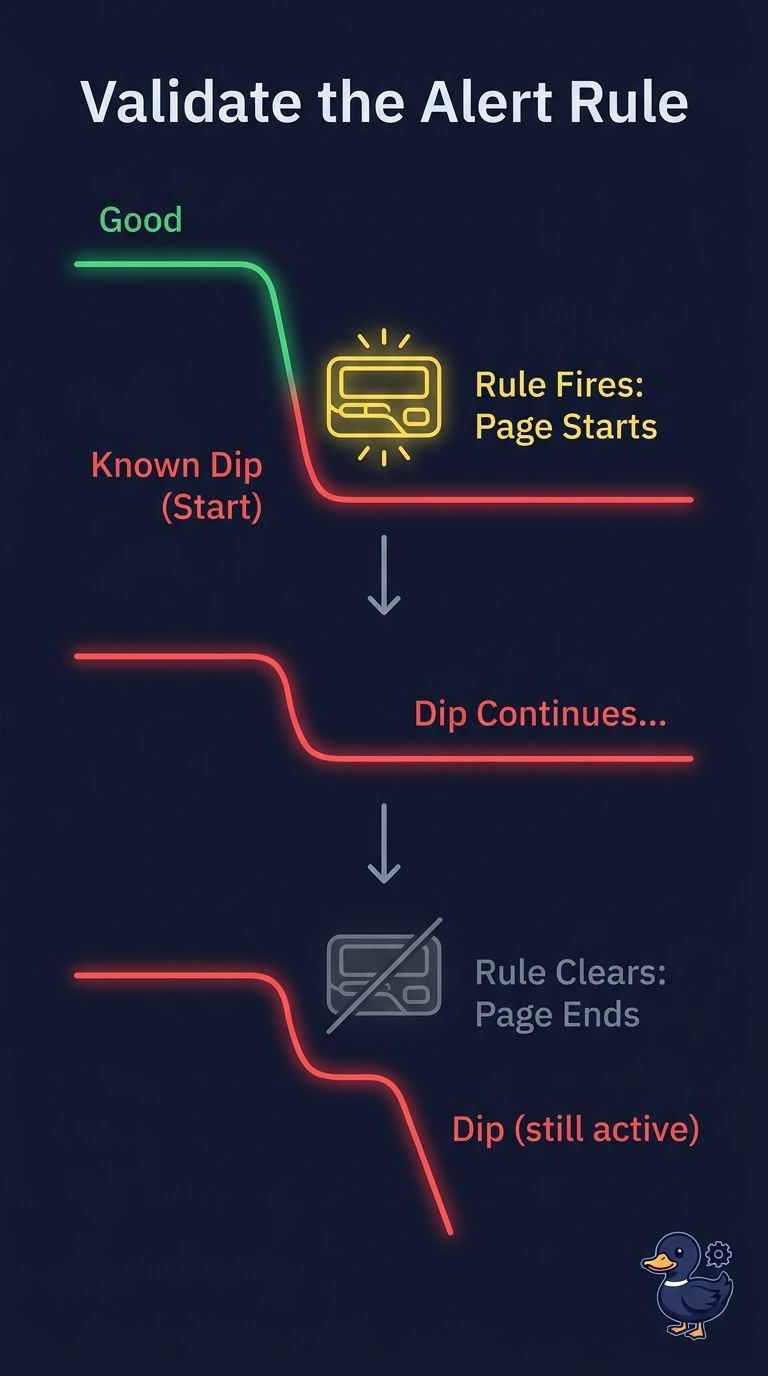
Short Explanation
A kettle alarm that goes quiet while the water is still boiling has not finished its job. You prove the hotel rule fires and then clears against a known dip that is still underway when the page stops. The trap is lowering every threshold, deleting the rule after one page, or trusting it because somebody saved it.
Full Explanation
The hotel rule pages when the guest-experience dip starts and then clears while that dip is still underway, so the notification ends before the experience has recovered. Validation has to cover both edges: the rule must fire when a known dip is present, and it must stay in the alert state until that known dip is actually over. Proving fire and clear against a dip that outlasts the current page shows whether the clear is racing ahead of the condition. Lowering every guest-experience threshold changes how sensitive the rule is and does not test whether the clear lines up with the end of the dip. Deleting the rule after one early page removes the control before anyone has watched a full fire-and-clear cycle on a known condition. Trusting the rule because the clear condition was saved only shows that a definition is stored, and the live behavior already demonstrates that a stored clear can complete too soon. Exam caveat: a rule is validated on both the raise and the clear, and a clear that arrives while the condition remains is a failed check, not a healthy rule. Operational check: hold a known dip open, confirm the rule fires, keep the dip in place past the moment the page currently stops, and record whether the rule is still active until the dip ends.