
A SaaS company with remote staff pointed an alert rule at a new test and left the previous test in place. What should the team do before trusting pages from that rule?
Select an answer to reveal the explanation.
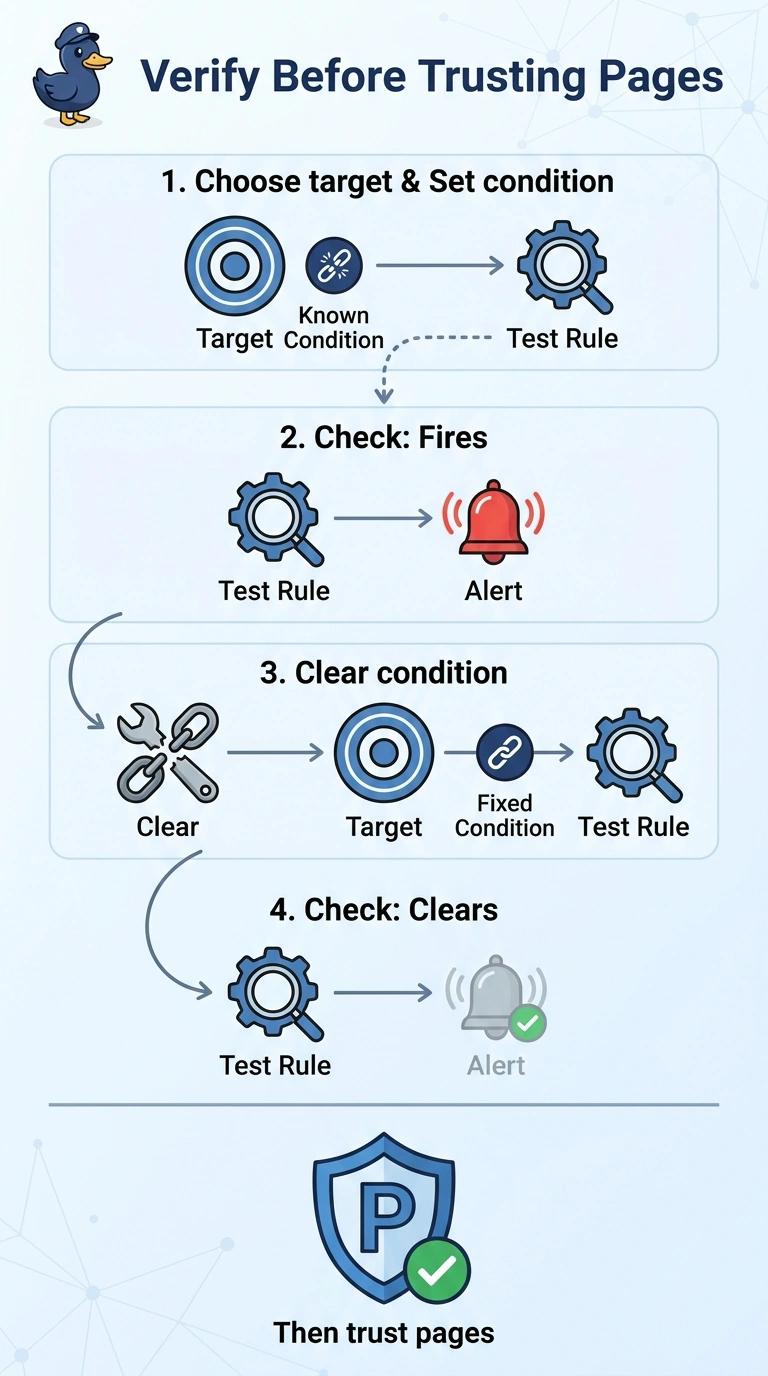
Short Explanation
Moving the bullseye and leaving the old target on the wall means you can still hit the wrong mark. You prove the rule fires and clears against a known condition on the target the SaaS team intends, not on the test they left behind. The trap is lowering every threshold, deleting the rule after one page, or trusting it because the edit was saved.
Full Explanation
The alert was pointed at a new test while the previous test was left in place, so a saved edit does not tell the remote-staff team which target will actually page them. Before those pages are trusted, the rule has to fire and clear against a known condition on the target they intend, which also shows whether the leftover test is still in the match. Lowering every threshold so both the retired test and the new test page less often dulls the rule without identifying which target it is bound to. Deleting the rule after the next page erases it before anyone has proved the new target fires and clears, and the rewrite later starts the same uncertainty over. Trusting the rule because the edit was saved, while the old test remains, accepts storage as proof and leaves the leftover target able to page. Exam caveat: after a target change, validation is a known condition on the target you mean, and a successful save does not retire the test you forgot to remove. Operational check: drive a known failure on the intended target only, confirm this rule fires, restore the target, confirm the rule clears, and verify the old test did not produce the page.