
At a SaaS company with remote staff, operators were sent the monthly executive trend and executives were sent the live alert-rule pack. Operations now asks for the pack that belongs to operators. Which deliverable should operators receive?
Select an answer to reveal the explanation.
Short Explanation
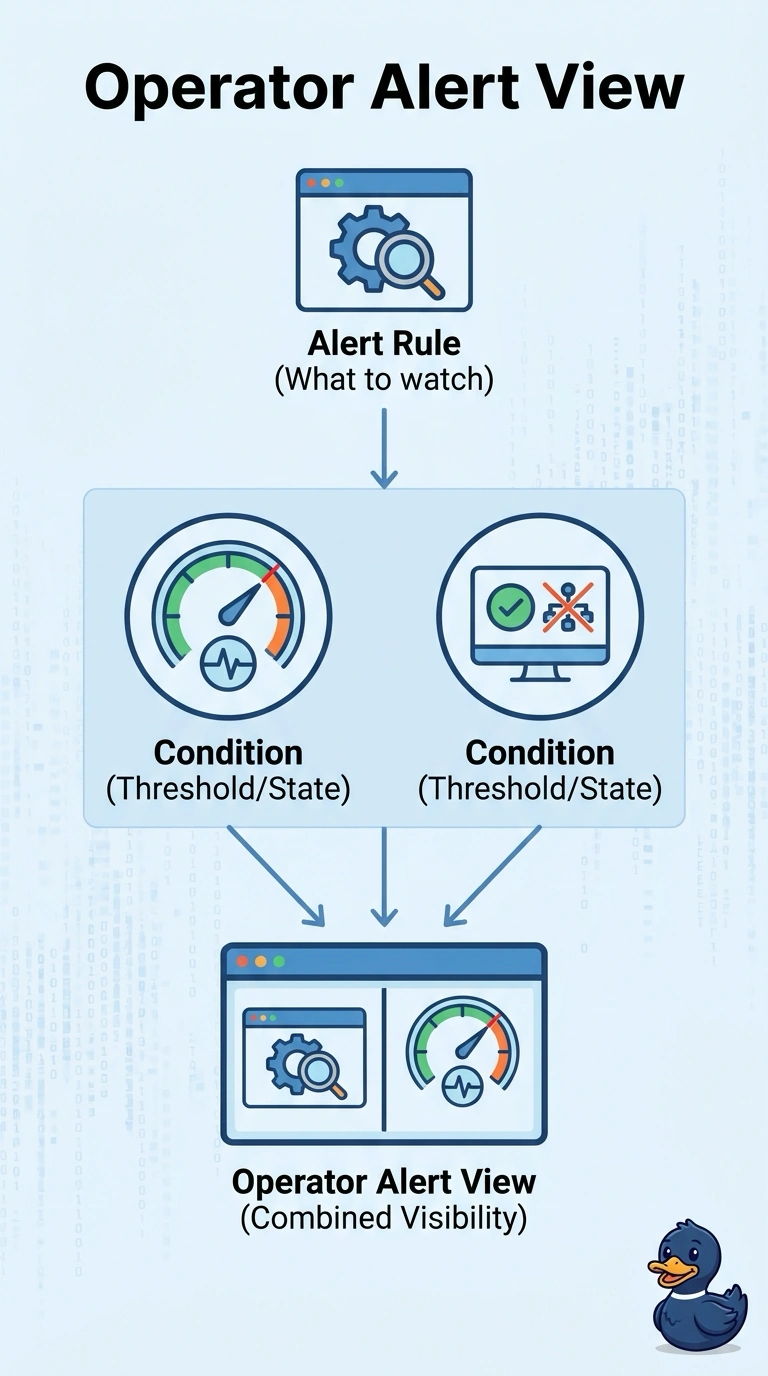
Two swapped briefcases still look official, and you only notice when you open the one in your hand. Operators should receive the view of the alert rule and the condition it watches, which is the pack built for their job. Leaving them with the executive trend, or handing them a ticket history or an object breakdown, repeats the swap.
Full Explanation
The operations request names operators as the audience that needs its own pack back after the two audiences were given each other's material. Operators work the rule itself, so they should receive an operator view of the alert rule and the condition it watches, which is the pack that lets them see what will fire and why. A support history of tickets opened against that same firing alert is the production-support record of past work, useful when a desk is closing tickets, and it is not the rule definition operators were missing. An application breakdown of the slowest objects in the customer web app belongs with the application team that owns those objects, not with the network operators asking for their rule pack. An executive trend of weekly experience across the remote workforce is the leadership summary that was wrongly sent to operators, and returning that trend to operators leaves the swap in place. Exam caveat: when two packs were exchanged, follow the audience named in the request rather than the pack that happens to be in their inbox. Operational check: confirm the operator distribution now contains the alert rule and watched condition, and that the weekly experience trend is routed to executives instead.