
The network operations center at a manufacturer is working from executive slide decks and missing live faults. Which deliverable should that operations center receive?
Select an answer to reveal the explanation.
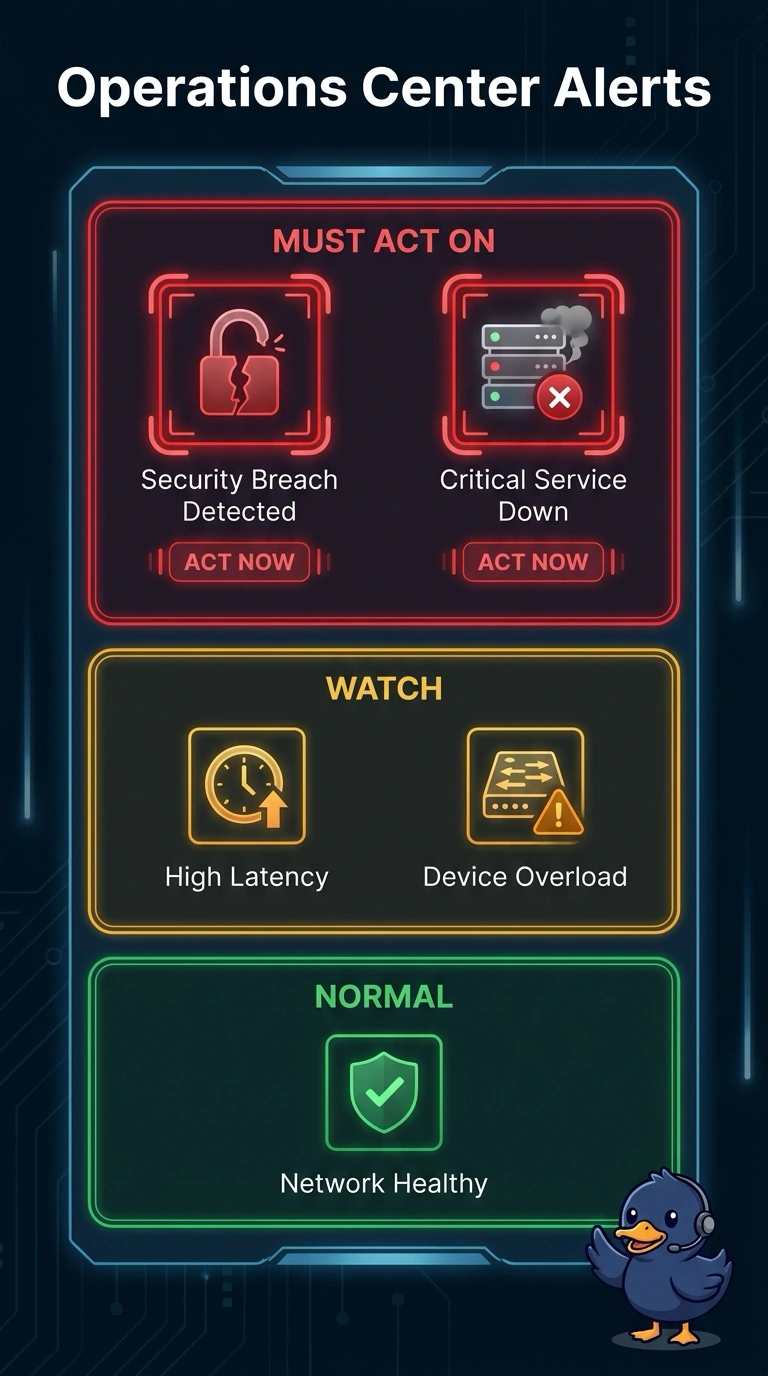
Short Explanation
The night crew needs the alarm panel, not the slide deck from the board meeting. You give the operations center the operational alert view, because executive slides are what they are drowning in. A support packet, an application trace, or another weekly score keeps the wrong audience in the chair.
Full Explanation
The network operations center is working from executive slide decks and missing live faults, so the deliverable they need is an operator alert view of the conditions they must act on. An operations desk works current faults, and a slide prepared for leadership does not surface a condition when it fires. A weekly executive score with no live fault detail is the format already crowding them, and another copy of it does not create an operational alert. A production-support packet written for an incident bridge is the handoff after an incident is being worked, not the live view the operations center lacks. An application-team trace of one slow user transaction isolates a single flow for developers and is not the alert board for the operations shift. The exam trap is meeting an operations overload with a prettier executive summary. In production, put the live alert view where the operations center works and leave the weekly slides for the leadership meeting. Support can still receive an incident packet when a bridge is open, and the application team can still receive a transaction trace, without replacing the operator view.