
Developers at a hotel chain ask which reservation API call slowed down after last night's release. Which deliverable should they receive?
Select an answer to reveal the explanation.
Short Explanation
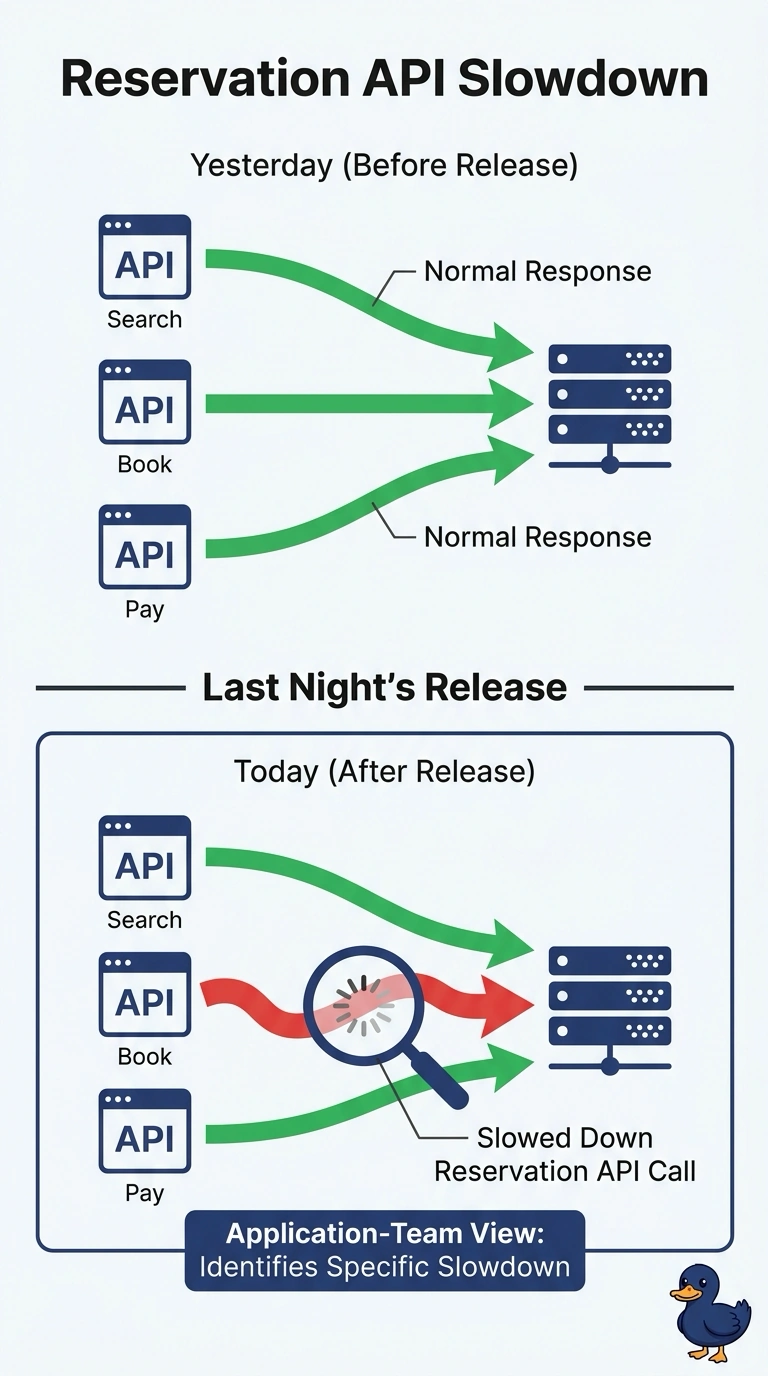
The developers asked which reservation call got slower after the release. You give them an application-team view of the reservation API call that regressed. Firewall session counts, an acknowledgement timeline, or a weekly guest-network score serve another audience.
Full Explanation
Developers asked which reservation API call slowed down after the release, so they need an application-team view that identifies the call that regressed. That audience debugs a specific request, and a firewall counter or a guest-network score does not name the call. An operator board of firewall session counts shows how busy a firewall is and does not identify which API call changed. A support timeline of the alert and who acknowledged it records incident handling, not the request that got slower. An executive score of guest-network experience for the week is a leadership summary of the guest network and is silent on the reservation API. The exam trap is handing developers the acknowledgement log or the guest score because those views are already on a dashboard. In production, show the reservation API timings before and after the release and confirm the view names the call that changed rather than a guest-network total. Operators can keep the firewall counts, and support can keep the acknowledgement timeline, while the developers work the API view.