
A government agency's production support desk needs proof that last night's network alert both fired and later cleared so the ticket can close. Which deliverable matches that request?
Select an answer to reveal the explanation.
Short Explanation
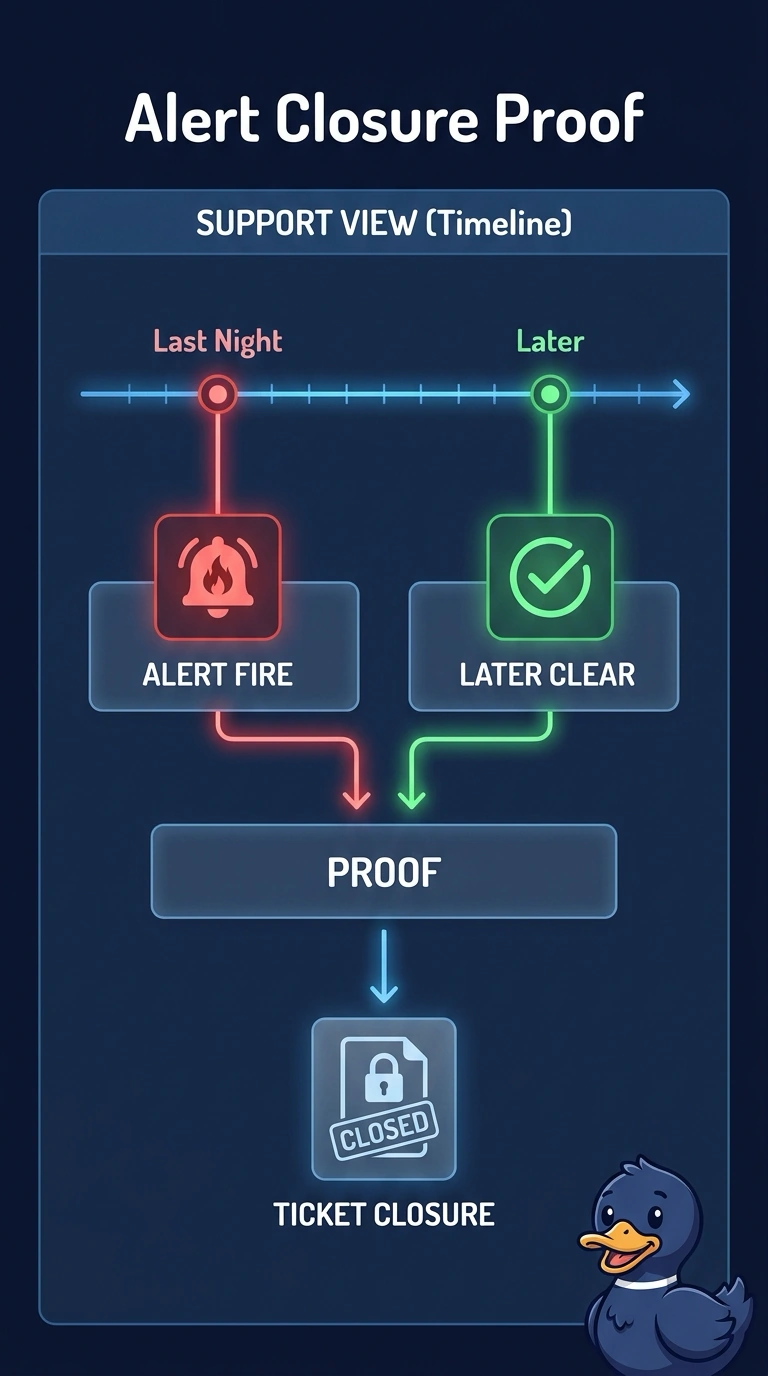
A ticket is like a door, and you are not done until you know it opened and that it shut. Give production support a view that shows the alert fired and later cleared, or the ticket stays open on a guess. The trap is handing that desk a rule dump, a page-load chart, or a leadership trend that never records the end of the event.
Full Explanation
Production support closes a ticket when the record shows that a monitored condition started and that the same condition later ended. The deliverable that matches the request is a support view recording both the alert fire and the later clear, because those two timestamps are the evidence the desk attaches to the ticket. An operator packet with the alert rule text and the probe it watches explains how the rule is defined and where it measures, which is what operators use to maintain the rule, and it does not state that this incident recovered. An application report of page-load time on the citizen portal tells the people who own the page how rendering behaved, and it is silent on whether the network alert fired or cleared. An executive monthly trend of availability across agency sites summarizes a period for leaders and does not give a desk a per-incident clear time. Exam caveat: a chart that is accurate for a different audience is still the wrong handoff when the question names the job that must be finished. Operational check: open one closed ticket from the night in question and confirm the support record shows both the fire time and the clear time for that alert, while operators, the application team, and executives keep their own separate views.