
A manufacturer pages the network on-call from a core-router SNMP trap each time a laptop roams between access points. Which rule fits this symptom?
Select an answer to reveal the explanation.
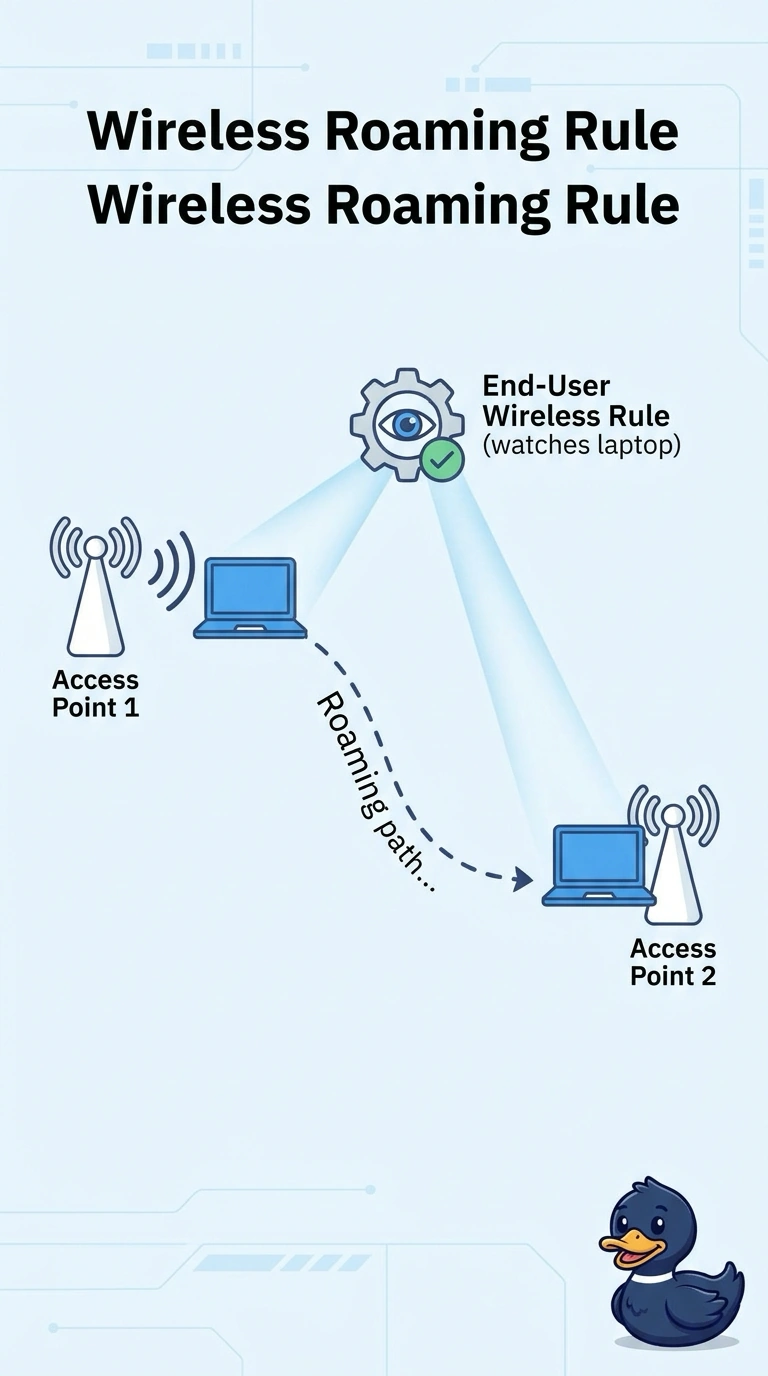
Short Explanation
A roam is the laptop changing rooms, and a core-router trap is a fire alarm in a building across town. You alert from the endpoint wireless signal, because that is what changes when the laptop roams. Paging on a core interface or a plant-edge routing session describes gear the roam does not touch.
Full Explanation
The event being paged is a laptop roaming between access points, and the current page comes from a core-router SNMP trap. A roam is an endpoint wireless event, so the rule that fits is an end-user wireless rule that watches the client as it moves. A BGP-state alert on the plant edge watches routing sessions that do not change when a laptop changes access points. Keeping the SNMP interface alarm on the core router as the paging rule continues to wake the network on-call for an interface that is not the roam. A weekly executive email can report plant trends, and it does not watch the client radio or replace a real-time page with the right signal. The on-call page should name the laptop roam so the wireless owner gets it, rather than a router interface that did not move. Exam caveat: an SNMP trap from core gear is a network-device signal, and it is the wrong tool when the symptom lives on the endpoint. Operational check: roam a test laptop and confirm the page comes from the end-user wireless rule, while the core-router SNMP trap no longer pages for that roam.