
A university VPN drop is visible in endpoint data, but the only notice today is a weekly executive dashboard the on-call team does not read. What should notify the people who respond?
Select an answer to reveal the explanation.
Short Explanation
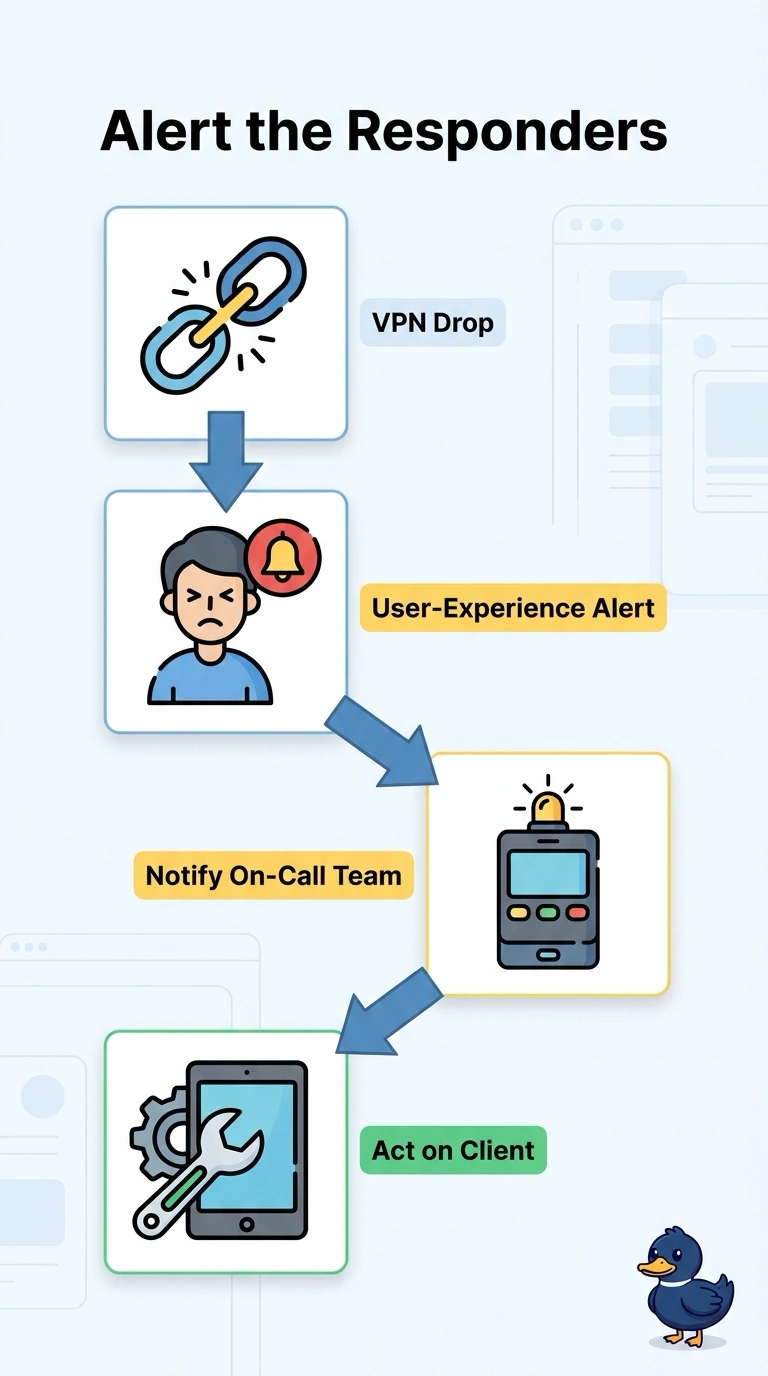
A weekly dashboard is the newspaper on the desk, and a VPN drop needs a pager in your pocket while you are on call. You send a user-experience alert to the on-call team that can work the client. A routing alarm or a core-interface trap pages a different layer than the endpoint VPN.
Full Explanation
The VPN drop is already visible in endpoint data, and the only notice is a weekly executive dashboard that the on-call team does not read. The gap is the paging path, not a missing measurement: a user-experience alert for that VPN drop has to reach the on-call team that can act on the client. A BGP-state alert on campus edge sessions watches routing adjacencies, which is a different signal than an endpoint VPN drop and would page the routing owners for the wrong event. An SNMP interface alarm on the core uplink watches a router interface, and it does not tell the on-call team that client VPN sessions are dropping. Leaving the weekly executive email as the notice keeps the same failure mode, because that mail summarizes trends and does not page anyone when the VPN drops. Exam caveat: an executive view can be accurate and still be the wrong channel for an event that needs a response during the shift. Operational check: trigger a test of the VPN user-experience rule and confirm it reaches the current on-call path, while the weekly executive mail stays off that path.