
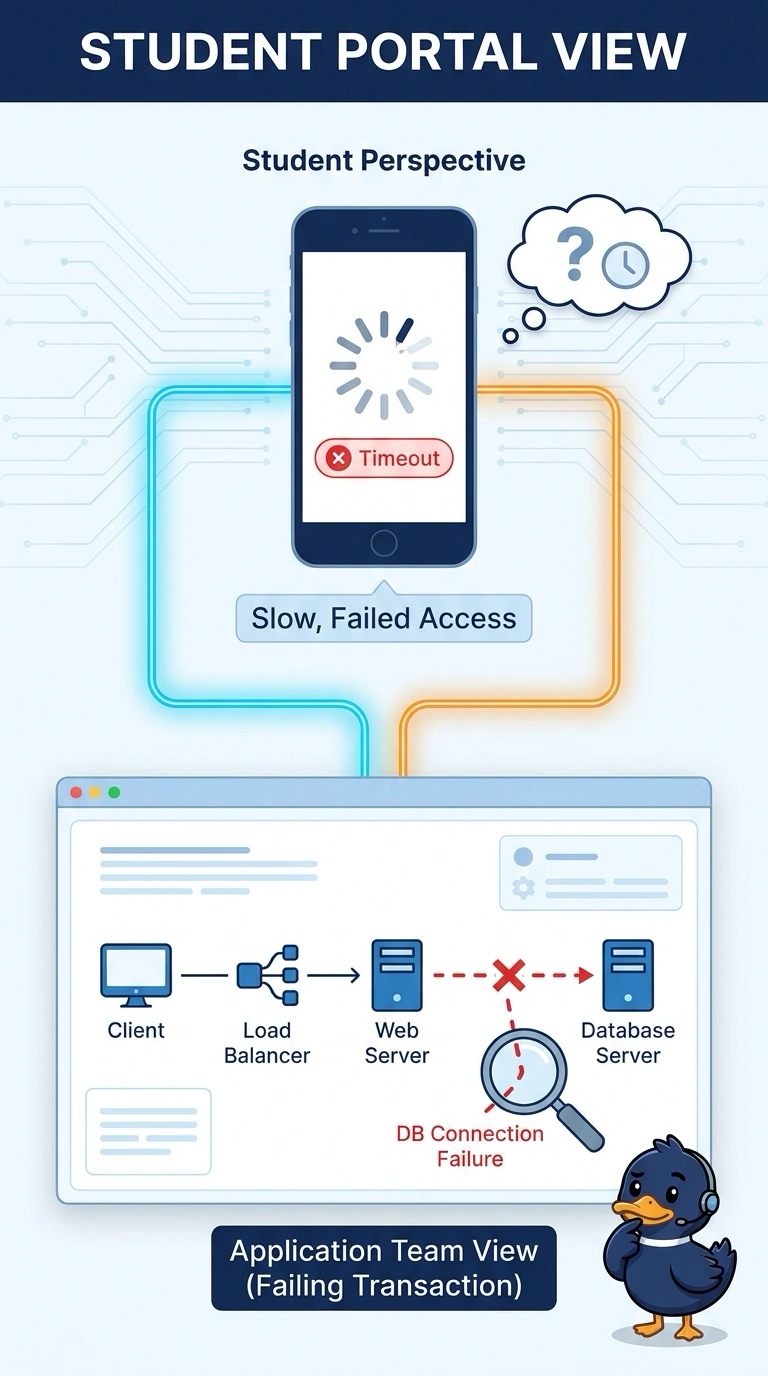
At a university, the application team asks which student-portal transaction is failing and says interface SNMP graphs do not help them. Which view should they receive?
Select an answer to reveal the explanation.
Short Explanation
The kitchen asked which dish burned, and the electric meter will not tell you. You hand the application team the failing student-portal transaction they asked for. An interface board, a support timeline, or a campus score serves people who asked for something else.
Full Explanation
The application team asked which student-portal transaction is failing and said interface SNMP graphs do not help them, so they should receive a view of that failing transaction. Application owners debug a user flow, and a counter on a switch does not name the step that failed. An operator view of interface errors and device reachability is the SNMP picture they already set aside. A production-support packet built around an alert timeline helps people running an incident bridge, and it does not isolate the portal transaction. An executive summary of weekly campus experience scores is a leadership readout, not a debugging view of one portal flow. The exam trap is sending the application team the interface graphs or the executive rollup because those views are easier to export. In production, confirm the pack they receive names the failing portal transaction and its slow step, and that interface counters stay on the operator view. If the pack still leads with interface utilization, it is the wrong audience's deliverable even when the numbers are accurate.