
Hospital network operators need a live view they can act on tonight when a clinical path degrades. Which deliverable matches that audience?
Select an answer to reveal the explanation.
Short Explanation
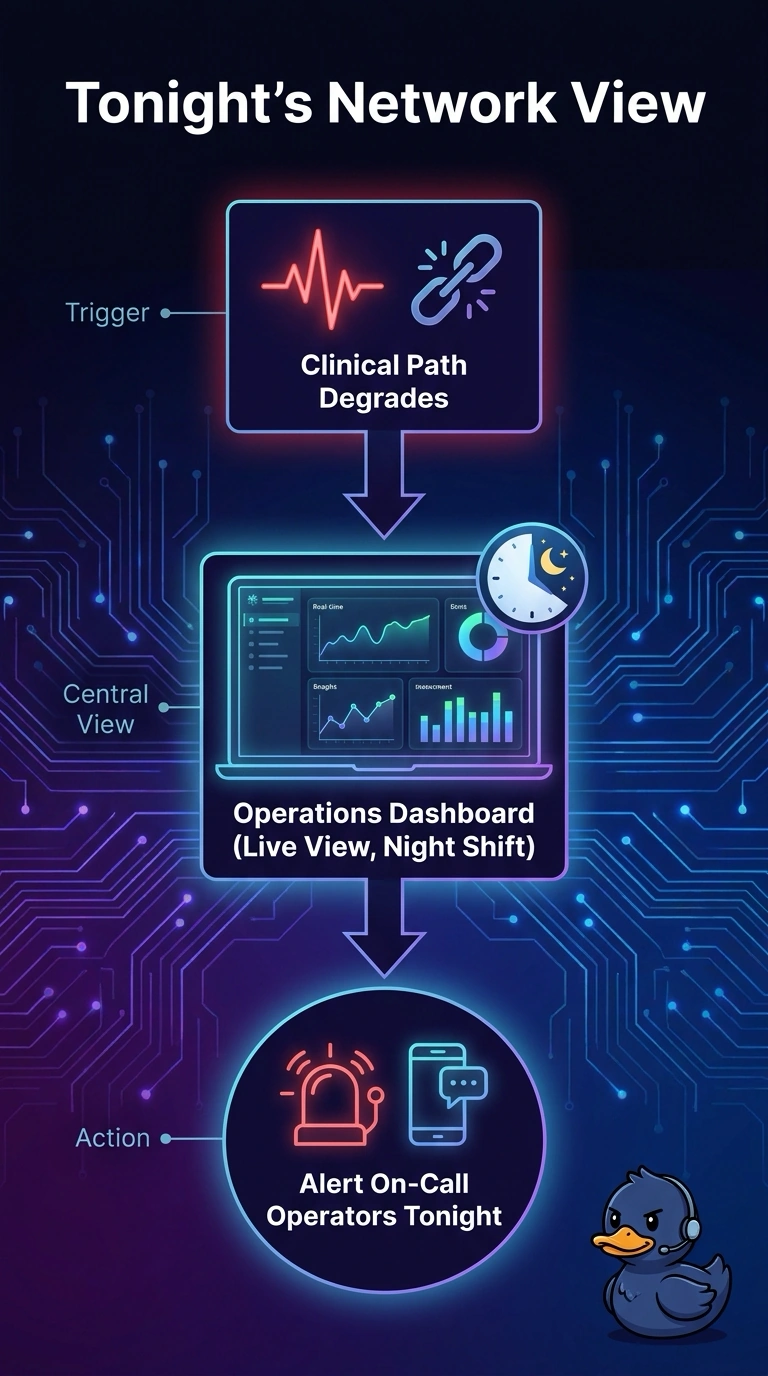
Operators on a night shift need a live board and a pager, the way a charge nurse needs the ward monitor rather than next month's packet. You give them an operations dashboard and an alert they can act on tonight. A leadership summary, a planning write-up, or a next-morning digest is built for someone else.
Full Explanation
The audience is the network operators, and they need something they can act on tonight when a clinical path degrades. An operations dashboard plus an alert gives the on-call team a live view during the shift and a page when the path drops, which is the deliverable that matches that job. A weekly executive summary is the leadership view: trends for people who are not sitting the night console, and it does not page the operator who has to move tonight. A planning report for the application team serves a later working session about the application, not the operator who needs to act on the path during this shift. A production-support digest the next morning tells support what already happened after the shift, which is too late for the operator who needed the live view tonight. Exam caveat: the same data can feed several audiences, and the deliverable is chosen by who must act and when, not by which chart is easiest to export. Operational check: sit with the night operator, confirm the dashboard is the view on the operations display, and confirm the alert reaches that on-call role before the shift relies on it.