
At a hospital campus, browser tests fail only on laptops running one Endpoint Agent version, while every other version reaches the same portal. Which alert matches that pattern?
Select an answer to reveal the explanation.
Short Explanation
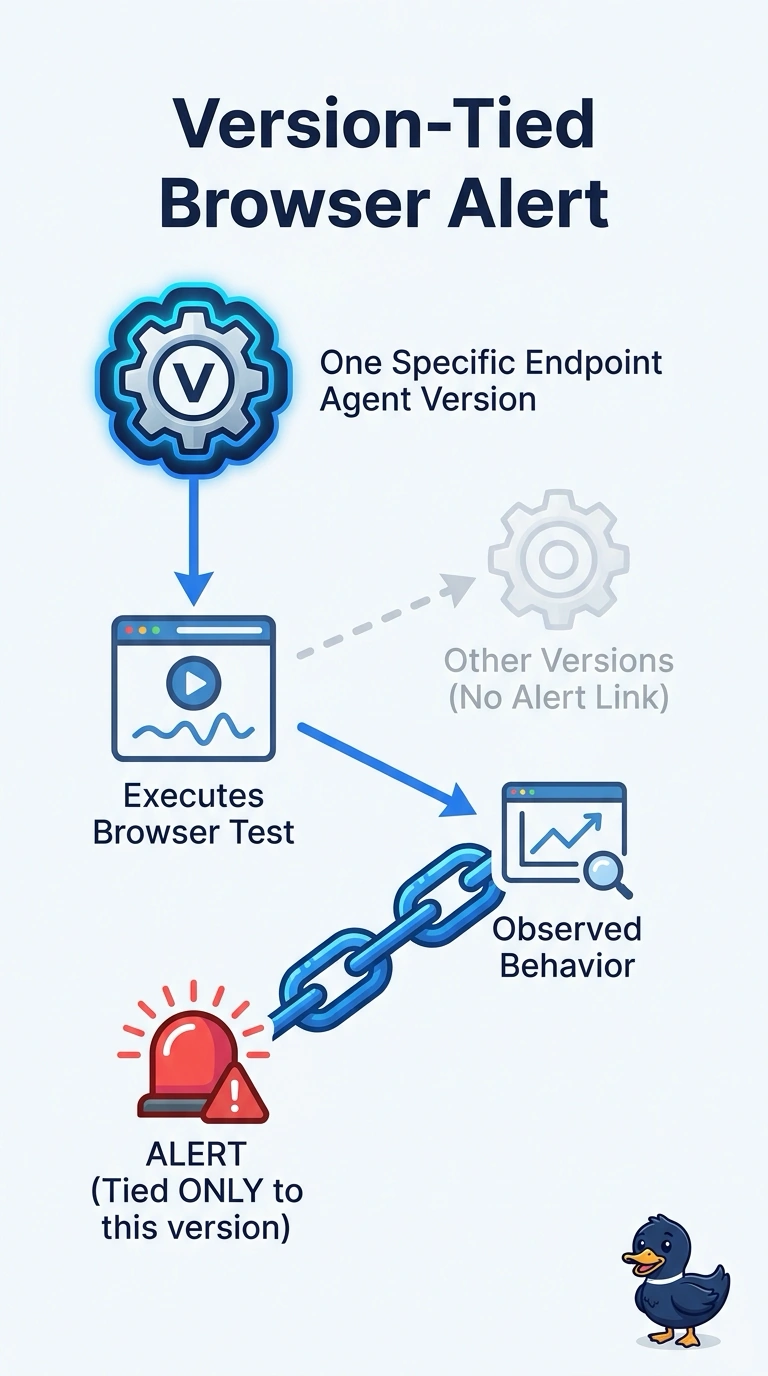
This is like one batch of smoke detectors chirping while every other batch in the building stays quiet. You alert on the browser behavior tied to that agent version, because that is where the failures cluster. A routing-state page or a core-interface trap would send you after a path the other laptops already reach.
Full Explanation
The browser tests fail only on laptops running one Endpoint Agent version and succeed on every other version aimed at the same portal. That pattern is a client-experience signal: the page is reachable, and the failures travel with the agent build on the endpoint. An alert on browser behavior for that version pages the people who can compare the bad build with a good one. A BGP session-state alert watches whether edge routers keep their routing adjacencies, which other laptops have already shown is not the thing that changed. An SNMP interface alarm on the campus core uplink fires when that router interface has a problem, yet the same portal works from every other agent version, so the core path is not what isolates the failures. A weekly executive email can summarize trends later, and it does not watch the client or wake anyone when this browser test starts failing. Exam caveat: a client-version cluster is a reason to alert on the endpoint experience, and it is not by itself proof that the WAN path moved. Operational check: group the browser-test results by Endpoint Agent version and confirm the alert fires for the failing build and stays quiet for builds that still reach the portal.