
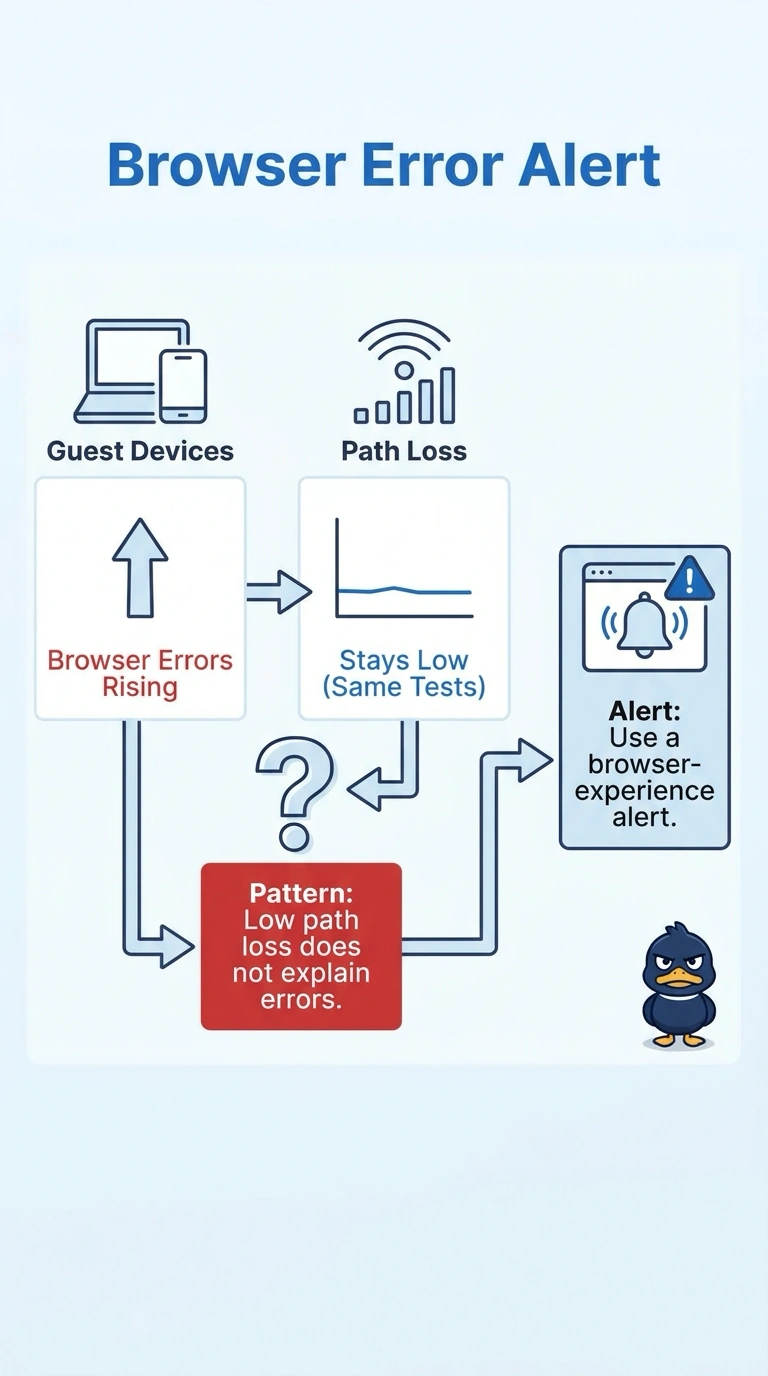
A hotel chain sees the browser error rate climb on guest devices while path loss on the same tests stays low. Which alert fits that pattern?
Select an answer to reveal the explanation.
Short Explanation
A cracked windshield can ruin the drive on a road that is perfectly smooth. You alert on browser experience, because the error rate is climbing while path loss on the same tests stays low. BGP state, a core interface alarm, or a weekly mail that skips the browser is watching the road and missing the glass.
Full Explanation
Path loss staying low means the network tests are not showing the failure mode the browsers are hitting. A rising browser error rate is an end-user signal, so the matching rule is a browser-experience alert for that error rate. It pages on what the guest device is seeing in the browser rather than on a path metric that remains quiet. A BGP-state alert on routers the low-loss path tests do not flag watches routing sessions those tests have not blamed, so a session change is not the pattern in front of you. An SNMP interface alarm on a core router while path loss stays low watches a core interface the loss figures do not support. A weekly executive mail that never inspects the browser error rate can brief leadership later and still never evaluates the signal that is climbing. Exam caveat: low path loss does not cancel an application-layer complaint; it tells you the alert should sit on the browser evidence. Operational check: graph browser errors against path loss for the same tests and bind the rule to the browser error rate while loss remains low.