
Branch laptops at a retailer show climbing Wi-Fi retries on the endpoint while the store WAN circuit stays clean. Which alert should page the team?
Select an answer to reveal the explanation.
Short Explanation
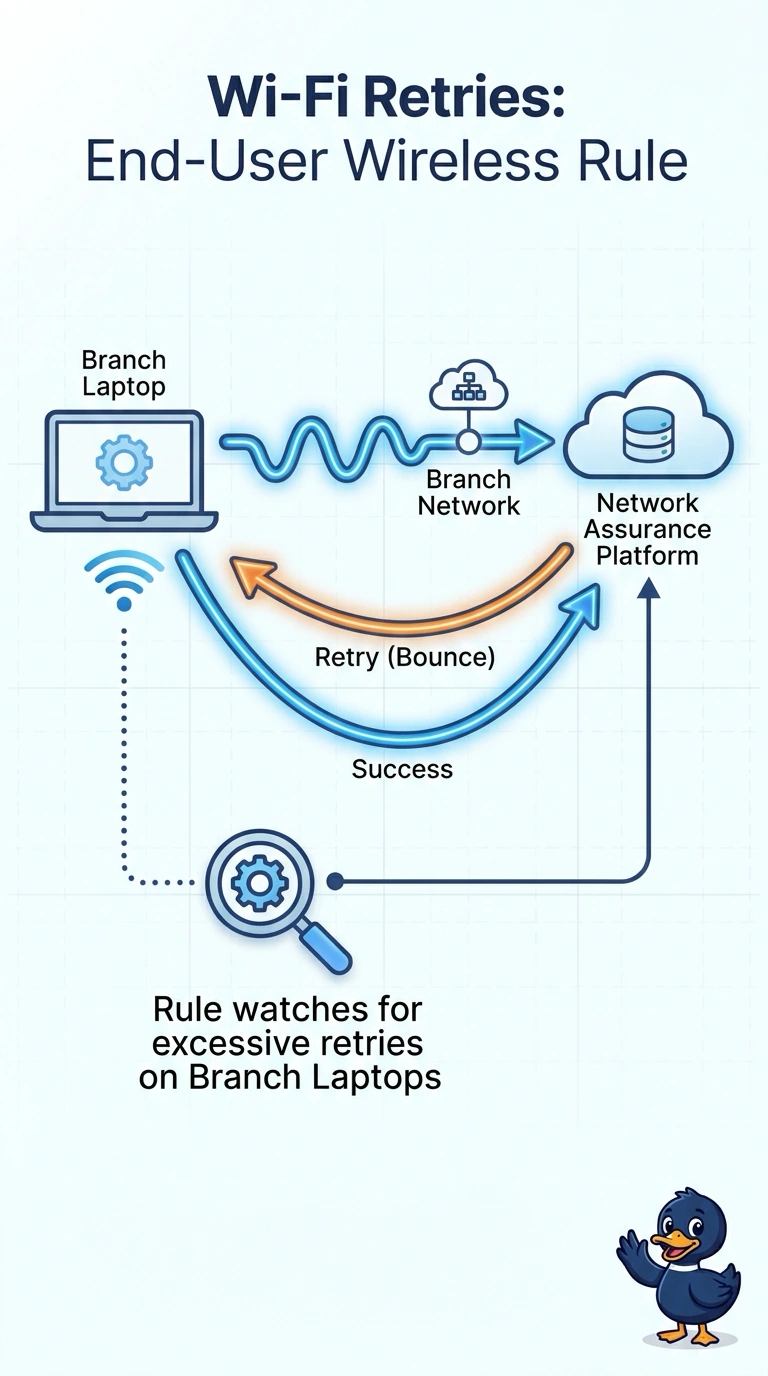
Think of the laptop radio as a walkie-talkie that keeps asking for a repeat while the highway outside town is empty. You page on the Wi-Fi retries at the endpoint, because that is the signal that is climbing. A core-router trap or a routing-state alert would wake the WAN on-call for a circuit that still looks clean.
Full Explanation
The climbing signal is Wi-Fi retries on the branch laptops, and the store WAN circuit is clean over the same period. An end-user wireless rule watches that client radio behavior and pages when the endpoint experience is the thing degrading. A BGP-state alert on prefixes from the store edge watches routing adjacencies and advertisements, which are not the retries on the laptop radio. An SNMP interface alarm on the core router that aggregates the stores fires for a router interface, and the clean WAN circuit already says that path is not the source of the retries. A weekly executive email can show store trends after the fact, and it does not watch the client radio or page anyone while retries are climbing. Exam caveat: wireless pain on the endpoint can be real on a WAN circuit that is otherwise healthy, so the paging rule has to sit on the client signal. Operational check: during a noisy interval, compare Wi-Fi retries on the affected laptops with the store WAN circuit and confirm the page comes from the wireless rule rather than the core router.