
Cashiers at a retailer move from the wired counter onto the wireless floor, and the point-of-sale application drops during that change. Which alert matches the user symptom?
Select an answer to reveal the explanation.
Short Explanation
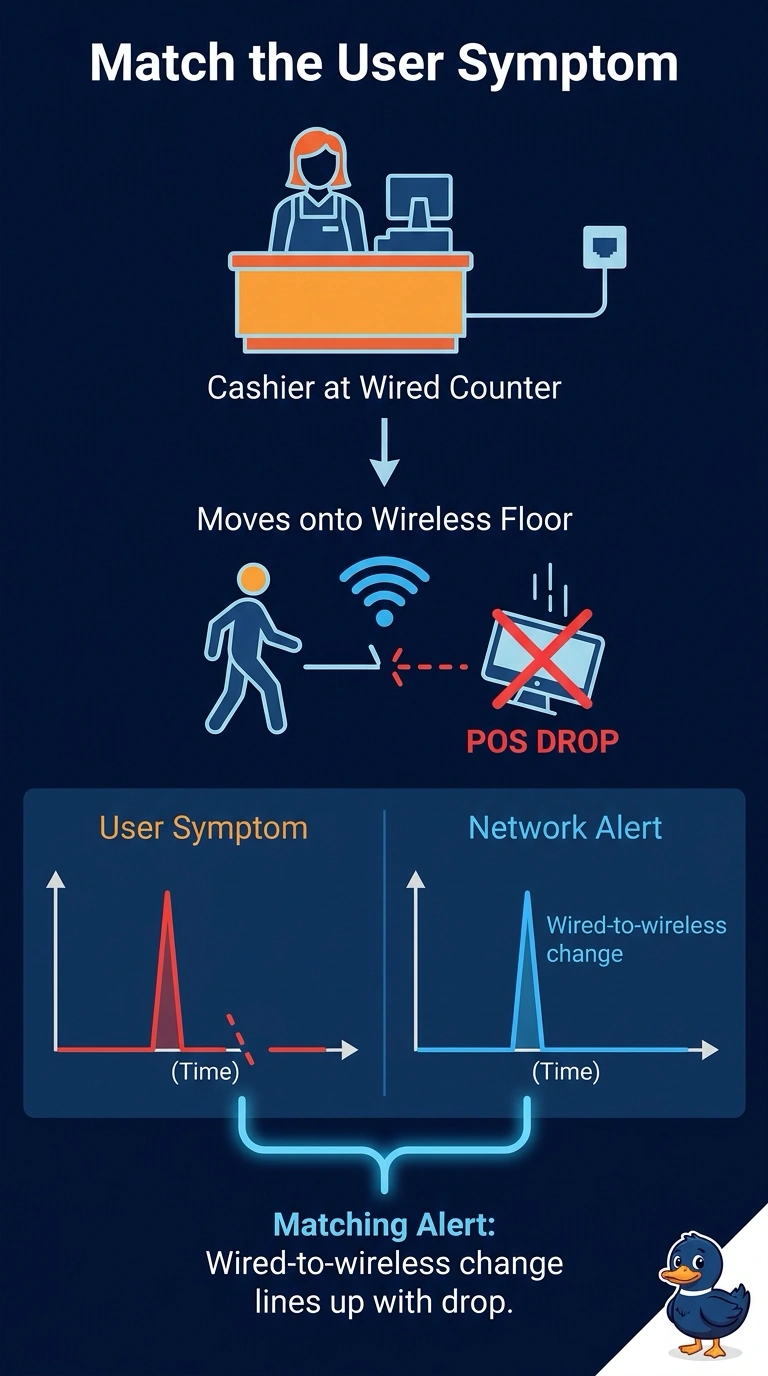
The app dies in your hand when you unplug the dock and step onto the shop floor. You alert on that wired-to-wireless change, because the drop lines up with the move. A BGP-state alert, a core-router SNMP alarm, and a weekly executive mail don't watch the cashier's link change.
Full Explanation
The point-of-sale application drops when cashiers move from the wired counter onto the wireless floor, so the matching alert is on that wired-to-wireless change. The connectivity change and the application drop are the same moment, which is the user-experience symptom to watch. A BGP-state alert on the store edge watches routing sessions and does not watch the cashier's link change. An SNMP interface alarm on a core router does not see the handoff at the register. A weekly executive mail about store uptime does not watch the cashier client during the move. Edge routing, a core interface, and a weekly summary can all stay quiet while the cashier's link is what changed. The cashier's move from the wired counter to the wireless floor is the experience event the alert has to name. Exam caveat: a user who moves from wired to wireless needs an alert on that connectivity change, not an edge-routing alarm. Operational check: correlate point-of-sale drops with the wired-to-wireless transition on the cashier device and confirm the alert is armed on that transition.