
At a manufacturer, user tickets open at the same minutes the client Wi-Fi signal collapses, and the WAN path stays quiet. Which alert matches that evidence?
Select an answer to reveal the explanation.
Short Explanation
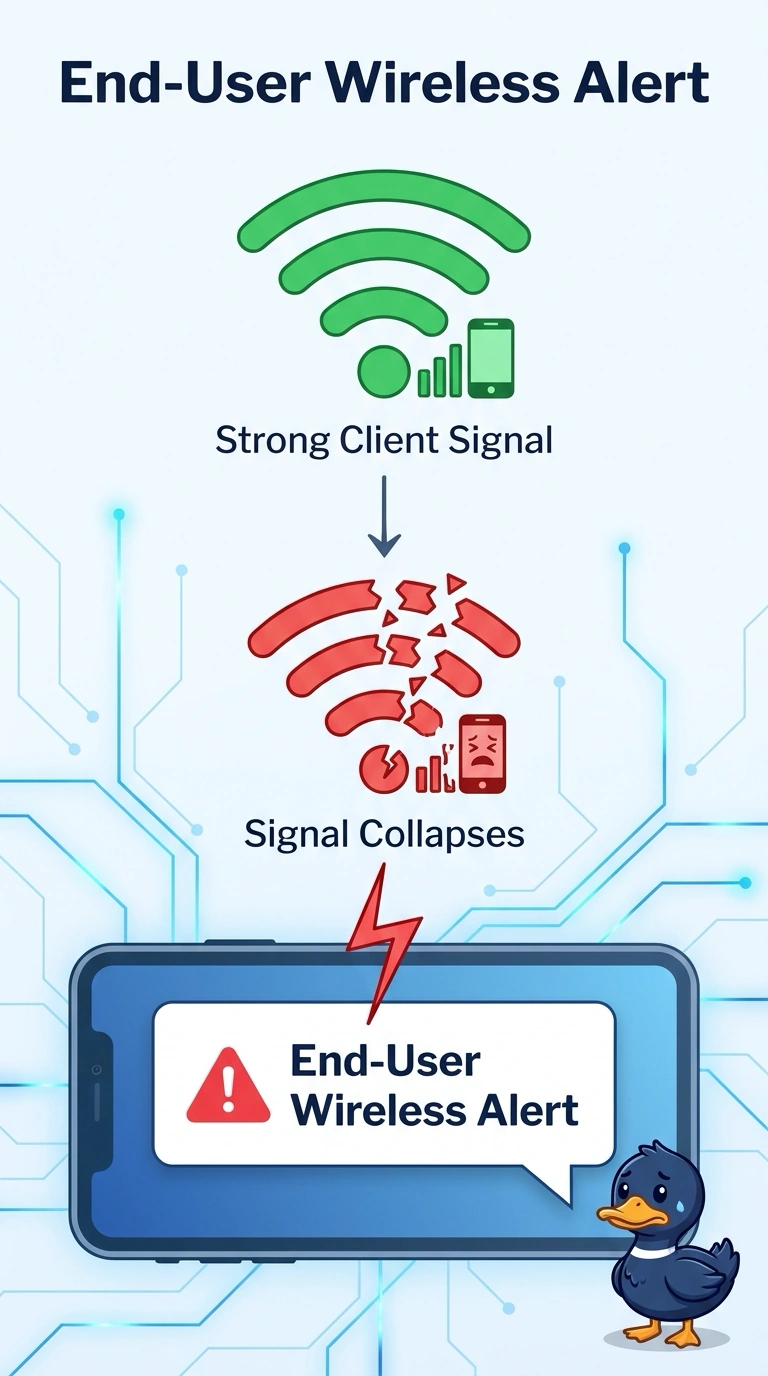
You can trust the timing: the client signal collapses just as the tickets open, while the WAN path stays quiet. Alert on the end-user wireless signal; a BGP-state alert, a core-router SNMP interface alarm, or a weekly executive mail does not watch that client signal.
Full Explanation
The tickets open at the same time the client wireless signal collapses, while the WAN path stays quiet, so an end-user wireless alert tied to that signal matches the evidence. It monitors the client experience where the problem appears and can alert when the signal changes. A BGP-state alert on routers that do not appear in these client tickets watches routing-session state that the reported pattern does not implicate; it does not match the client signal collapse. An SNMP interface alarm on a core router far from the affected clients monitors a different device and interface, not the wireless signal at the client, and the quiet WAN path offers no evidence pointing to that core router. A weekly executive mail that never watches the client wireless signal cannot detect or alert on the minute-by-minute collapse when tickets open; it is not a timely signal-matched alert. Exam caveat: match the alert to the layer named by the evidence. When the WAN path stays quiet and the client wireless signal changes with the tickets, a path or distant core-device alarm is a mismatch. Practical check: compare ticket opening times with the client signal timeline, then confirm that the alert rule triggers from that signal rather than from BGP state, a core-router interface, or a weekly mail schedule.